


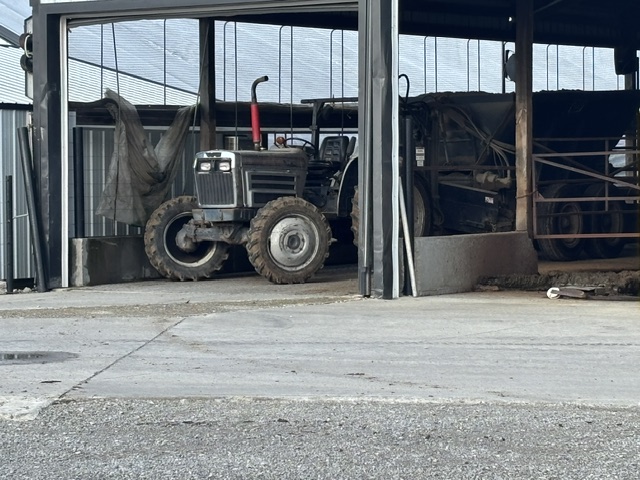
unusual sighting but not a necessarily rare tractor

INCase

Well-known Member
Saw this and thought I'd share this White Iseki tractor there hooked to a TMR. They aren't necessarily rare or valuable but I can't say i've seen many in the wild or many still in active use especially on a daily chore machine on a dairy. only other tractor I noticed from the road was a Farmtrac.

This was Friday night while having ice cream at the Kuehnert dairy north west of Fort Wayne IN. they are a bottle their own and retail setup. very nice outfit but they are pretty proud of their milk $. the similar outfit closer to my house (south of Elkhart IN) is about 1/2 the price / 1/2 gallon.


1786972716325.jpeg
 
White's financial troubles prevented it from putting its best foot forward during the late 1970's. Although a lot of the products were good farmers worried about the future in terms of product support. The Iseki-Whites were just as good as the Fiat-Whites that they replaced. The HP crept up as the US companies could not compete in the 70-75 HP class with domestically made units. The 2-70 was replaced by the Iseki made 2-75. JD's production moved to West Germany. 1980 was the last year for the 686 which was not a big profit maker for IH.
 
The history of White could be a great Gilded age through 20th century American company case study for some useless Ph.D. thesis- between rapid growth, expansion, and success, to gross mismanagement, wars, unions, government intervention, bankruptcy, and demise, etc., they had it all.
 
White's financial troubles prevented it from putting its best foot forward during the late 1970's. Although a lot of the products were good farmers worried about the future in terms of product support. The Iseki-Whites were just as good as the Fiat-Whites that they replaced. The HP crept up as the US companies could not compete in the 70-75 HP class with domestically made units. The 2-70 was replaced by the Iseki made 2-75. JD's production moved to West Germany. 1980 was the last year for the 686 which was not a big profit maker for IH.
Likewise with AC. After a 12 year run at Main&Pinckney I quit when AC died. It was sad to watch the demise. The newest tractor we had at home was a 6060. Great engine and cab, with an archaic Fiat rear end. Kind of a desperate last gasp.
 
The history of White could be a great Gilded age through 20th century American company case study for some useless Ph.D. thesis- between rapid growth, expansion, and success, to gross mismanagement, wars, unions, government intervention, bankruptcy, and demise, etc., they had it all.
White through Oliver had a chance to lead the farm equipment industry by the 1970's in terms of product innovation but blew it. White used farm equipment profits to fund other businesses that it did not stand a long term chance in such as large frame trucks. There was room for one of the second tier farm equipment companies to jump up to be on par with JD and IH but they all blew it.
 
White through Oliver had a chance to lead the farm equipment industry by the 1970's in terms of product innovation but blew it. White used farm equipment profits to fund other businesses that it did not stand a long term chance in such as large frame trucks. There was room for one of the second tier farm equipment companies to jump up to be on par with JD and IH but they all blew it.
Exactly right. White Motors milked Oliver as a cash cow for years. There were projects in development that would have buried the competition if they had gone in to production, but White wouldn't spend the money to tool up to build them. Going with the cheapest sources instead of staying with the tried and true had already hurt Olivers reputation in the late 60 and early 70s. Going from Perkins to Waukesha in the 1855 and 1955 was a good example. Those early Fiat models were another nail in the coffin.
 
The article in one of the recent issues of HPOCA or Oliver Heritage did a good job of outlining the financial timelines, but I almost felt as if it was an apologist article for White. I do find this video entertaining however:

 
Exactly right. White Motors milked Oliver as a cash cow for years. There were projects in development that would have buried the competition if they had gone in to production, but White wouldn't spend the money to tool up to build them. Going with the cheapest sources instead of staying with the tried and true had already hurt Olivers reputation in the late 60 and early 70s. Going from Perkins to Waukesha in the 1855 and 1955 was a good example. Those early Fiat models were another nail in the coffin.
I thought that going away from Perkins was an availability issue on the part of Perkins. That they could not guarantee availability as tractors were built. But nonetheless Oliver had new engines meant for a new line that could have been used. Going with Waukesha was a cheaper out for White so in that respect so your point holds.
 
Exactly right. White Motors milked Oliver as a cash cow for years. There were projects in development that would have buried the competition if they had gone in to production, but White wouldn't spend the money to tool up to build them. Going with the cheapest sources instead of staying with the tried and true had already hurt Olivers reputation in the late 60 and early 70s. Going from Perkins to Waukesha in the 1855 and 1955 was a good example. Those early Fiat models were another nail in the coffin.


Those late Oliver/White 1365/1370/2-60 were great tractors however. Into the White line and eventually sharing a lot with the little Ford/New Hollands, they were easily 7500+ hour tractors with basic maintenance and an operator who wasn't an idiot. There were plenty running around the vineyards and orchards around here.
 
Those late Oliver/White 1365/1370/2-60 were great tractors however. Into the White line and eventually sharing a lot with the little Ford/New Hollands, they were easily 7500+ hour tractors with basic maintenance and an operator who wasn't an idiot. There were plenty running around the vineyards and orchards around here.
I think that Randy was referring to the earlier Fiat-Olivers like the 1250. But there were other goofs beyond tractors. The 7600 combine did not have the greatest reputation in terms of durability. We had an Oliver 575 plow with the hydraulic reset bottoms and the support plates that bolted to the main beam broke frequently. All companies have failures but Oliver coming late in the full line game versus IH and JD meant an uphill battle to gain market share. But at least Oliver did not pee away market share like Ford when Ford could not figure out the next step after the N series tractors.
 
I think that Randy was referring to the earlier Fiat-Olivers like the 1250. But there were other goofs beyond tractors. The 7600 combine did not have the greatest reputation in terms of durability. We had an Oliver 575 plow with the hydraulic reset bottoms and the support plates that bolted to the main beam broke frequently. All companies have failures but Oliver coming late in the full line game versus IH and JD meant an uphill battle to gain market share. But at least Oliver did not pee away market share like Ford when Ford could not figure out the next step after the N series tractors.

He was referring to the early models. That's how I understood it. And yes, there were plenty of other mechanical problems on lots of other equipment. My old man mechanic friend had fixes for tractors he shared with engineering and mechanic leads at service school because a lot of bigger equipment was out here before it was in widespread use in the midwest and elsewhere.
 
He was referring to the early models. That's how I understood it. And yes, there were plenty of other mechanical problems on lots of other equipment. My old man mechanic friend had fixes for tractors he shared with engineering and mechanic leads at service school because a lot of bigger equipment was out here before it was in widespread use in the midwest and elsewhere.
Yep, if those 1255, 1265, 1355 and 1365s had been the first Fiat Olivers, it would have made a huge difference in their reputation. The early ones were the hot stove that nobody wanted to lay their hand on again. If they had put a 354 Perkins in the 1855 and a 372 in the 1955, they would have had a great tractor.
 
Just have to remember when talking about Oliver and White that the blame needs to be pointed at the right White because there was White Motors and then White farm equipment operating as a subsidiary of White motor. The guys I got to talk to in Charles city said the upper management of White farm knew what the problem areas were and they were trying their damndest to fix it but White motor bucked them at every turn because they didn’t want to spend any money of farm equipment. The problem was also exacerbated after Moline was brought into the fold and the farm equipment management was moved to Hopkins Minnesota for a time. Since Moline never had any interest in building smaller tractors the Moline management wanted to kill off the large frame Oliver’s and replace them with the large frame Molines, then use the small frame Oliver’s to fill the lower end of the line. That’s why the 2050 and 2150 were killed off and never developed farther. That was Molines doing. That was also one of the reasons for the turbocharged 310 in the 1950T. At the time Hopkins management thought they were gonna make that the last large frame Oliver model. All of this lead to a LOT of head bashing between Charles city and Hopkins. Ironically, after just a few years the Moline line was killed off entirely and Management and production of the last few models of Yellow tractors were moved back to Charles city. But at that point the damage was done.
 
Just have to remember when talking about Oliver and White that the blame needs to be pointed at the right White because there was White Motors and then White farm equipment operating as a subsidiary of White motor. The guys I got to talk to in Charles city said the upper management of White farm knew what the problem areas were and they were trying their damndest to fix it but White motor bucked them at every turn because they didn’t want to spend any money of farm equipment. The problem was also exacerbated after Moline was brought into the fold and the farm equipment management was moved to Hopkins Minnesota for a time. Since Moline never had any interest in building smaller tractors the Moline management wanted to kill off the large frame Oliver’s and replace them with the large frame Molines, then use the small frame Oliver’s to fill the lower end of the line. That’s why the 2050 and 2150 were killed off and never developed farther. That was Molines doing. That was also one of the reasons for the turbocharged 310 in the 1950T. At the time Hopkins management thought they were gonna make that the last large frame Oliver model. All of this lead to a LOT of head bashing between Charles city and Hopkins. Ironically, after just a few years the Moline line was killed off entirely and Management and production of the last few models of Yellow tractors were moved back to Charles city. But at that point the damage was done.
They had a lot of points where the damage was done.
 
Yep, if those 1255, 1265, 1355 and 1365s had been the first Fiat Olivers, it would have made a huge difference in their reputation. The early ones were the hot stove that nobody wanted to lay their hand on again. If they had put a 354 Perkins in the 1855 and a 372 in the 1955, they would have had a great tractor.
If the corporate tractor had been seen to completion the 18 and 1955 would have never been a problem to begin with. They were literally down to ironing out some lubrication issues in the new power shift transmission when White Motor pulled the plug.
 
If the corporate tractor had been seen to completion the 18 and 1955 would have never been a problem to begin with. They were literally down to ironing out some lubrication issues in the new power shift transmission when White Motor pulled the plug.
Ya, if I remember right, there were quite a few built and tested, but they were all destroyed.
 
Ya, if I remember right, there were quite a few built and tested, but they were all destroyed.
All except the one at the Museum in Charles city. Which I guess technically doesn’t count since it was rebuilt from found original parts. Several ex employees in CC said there is a guy that swears there is a complete Corporate tractor in a grove in Nebraska but he wont produce any pictures and won’t tell anyone where it is.
 
All except the one at the Museum in Charles city. Which I guess technically doesn’t count since it was rebuilt from found original parts. Several ex employees in CC said there is a guy that swears there is a complete Corporate tractor in a grove in Nebraska but he wont produce any pictures and won’t tell anyone where it is.


In some random grove out rotting away? Someone would've posted pics by now this day in age....
 
In some random grove out rotting away? Someone would've posted pics by now this day and age....
That’s the general consensus among the guys that told me as well. But it’s fun to think about. The story went that it belonged to some farmer out there and he knew it was special. But he passed away and the family is very private and doesn’t want anyone nosing around. If nothing else it’s a good story.
 
That’s the general consensus among the guys that told me as well. But it’s fun to think about. The story went that it belonged to some farmer out there and he knew it was special. But he passed away and the family is very private and doesn’t want anyone nosing around. If nothing else it’s a good story.


Sure is fun. I would imagine someone like Sherry probably knows right where it's at if it does exist.
 
Yesterday's Tractor Forums

We sell tractor parts! We have the parts you need to repair your tractor - the right parts. Our low prices and years of research make us your best choice when you need parts. Shop Online Today.

Back
Top