Poison Hemlock Question Again

Texasmark

Well-known Member
Surely this would be the place to learn of "real life" experiences with this noxious weed. I am soliciting my fellow posters to share some of your real life experiences with this nuisance plant. All I can glean off the www is "dooms day" reports. I have a problem with that in that if it was as bad as sources are indicating, then why haven't I ever heard of it at 84 years old and having this farm since 1978? You'd think it would be headline news one would think....I do! On having this farm since 1978 this is the first time I ever saw it much less on this property......it's like a drone flew over and dropped seeds all over the place!!!!!!

I have some plants that are stiff and brown, got them when the blooms were young with more than a generous soaking with Glyphosate. Been several weeks now since dosing and I have some around some implements I want to use but don't know the right way to get rid of them so that I can get to the implements.

Your actual experience may seem trivial to you but may be what I have been waiting to hear.....and no I am not about to eat it or use it for shaving soap.

I really would like to hear from you.
Thanks,
Mark
 
Last edited:
Well sir,welcome to the club. I've made 81 trips around the sun while my feet were firmly planted in Texas and this is the first I heard it mentioned. After viewing several pictures on WWW. , I realized I've been wading around in it all along. You are correct, to here them tell it I should have died decades ago. IDK for certain but willing to lay odds lawyers are behind all the chicken little hype. People writing about it don't want to risk liability over failure to fully warn readers. Did your mother and grandmothers prepare Polk Salad (or similar name) when you were a kid? Served fresh as the name might suggest, will give you a bad case of back trots at best, kill you at worst or a host of elements between.

If you have reason to believe you are allergic to skin exposure, do as I do with Greenbriar. Greenbriar must have a little snake blood in it because it strikes out when cut or even brushed against. A hedge trimmer attachment on my string trimmer allows me to stay a safe distance while clearing briars. You can cut Hemlock then use rake to clear paths to your implements.
I did come away from WWW with a piece of good information. It requires 2 years for maturity and seed production then dies. In first year it has a few large leaves flat on ground called rosette then in second year towers up producing blossoms and seed. Broom Weed, a common nemesis of grazing and hay land starts as the same rosette. Never once has an ag extension agent or herbicide label pointed this out but half the amount of herbicide recommended for control will kill Broom Weed in rosette stage. Sooo if you want Bermuda to remain, try spraying during rosette stage with 2-4D rather than Roundup.
 
Thank you sir for taking the time to share your experiences and thoughts. I agree that the CYA effect is out of control...examples hit us in the face daily where big nnalert has a product designed to do you some good and then in the fine print there are 25 reasons you don't want to buy it. Surely the same applies to this weed as everybody seems to be singing the same song.

With them talking about it taking a month or two for the root to get killed, I may do a minimum of cleanup, just around the things I need, and wait on the rest of it. Then, later on in the summer get in some kind of monkey suit and investigate the flower pods for seeds. If I think I sprayed it before seeds formed, then I'll clean up the mess. If not, I'll wait till this fall, or next spring (data says it blooms twice a year) and use the dead plants to identify where the seeds have fallen, sprouted a new plant, and kill them early on.

Remedy (the main ingredient) with a surfactant, is said to be the only thing besides Glyphosate that kills it. The thing about Remedy is that it doesn't kill grass like Glyphosate.....but I bought 2.5 gallons of Roundup for $75 but 1 gallon of Remedy was $99......from 2 different suppliers which may be the reason for the price disparity, maybe not.

Again, thank you sir for your reply.
 
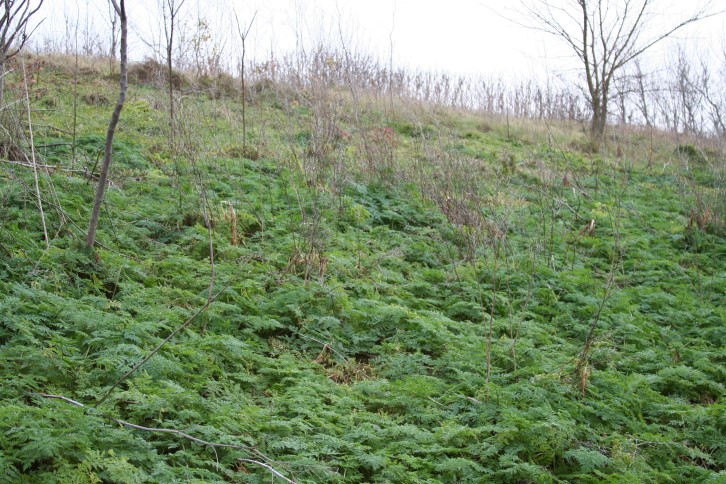
I am not sure we to are talking about the same plant here. What I have known as poison hemlock starts out as a kind of ferny plant in the fall and grows to tall strong shoots 6' tall, flowers and makes lots of seeds. The shoots dry into a pithy forest.
I have never been able to get rid of it completely. This is on the West coast of California. I have always heard it was toxic but have not seen anything sickened by it. On the other hand the herbicides you mentioned are far more toxic and should be used with extreme caution.
 
Socrates had some trouble with it in 399 BC. Been around a very long time. Hard to kill but in some jurisdictions it is illegal to fail to at least try to kill it if is growing on your land.
 
It belongs to the carrot family of plants. https://www.thespruce.com/poison-hemlock-identification-removal-6265664
1783188610784.png

1783188786205.png
 
It can be confused with Queen Annes Lace. Poison hemlock has reddish stems, and is prolific seeder-30,000 to 100,000 seeds per plant. It is poisonous, and I won't be surprised if it becomes law to eradicate it on your own land. Here in Kentucky, there are places where a few years ago there were a few plants, that now half acre and larger sections are covered. It loves a bare dirt-old feeding areas for example. I am fighting hard to keep it off my land, but neighbors who don't causes problems for me. Mark.
 
Last edited:
It can be confused with Queen Annes Lace. Poison hemlock has reddish stems, and is prolific seeder-300,000 to 100,000 seeds per plant. It is poisonous, and I won't be surprised if it becomes law to eradicate it on your own land. Here in Kentucky, there are places where a few years ago there were a few plants, that now half acre and larger sections are covered. It loves a bare dirt-old feeding areas for example. I am fighting hard to keep it off my land, but neighbors who don't causes problems for me. Mark.
Ray's second picture looks a lot like Queen Annes Lace but the first fern pictures are correct for it as a just sprouted plant.

On the 100,000 seeds per plant, I find that highly optimistic.....maybe with plants as large as in picture #2 but I have plants less than 3' tall, most in the 2' height, with 2 or 3 stems with 4 or 5, 5 pedal blossom clusters per stem. I have no experience, but if each flower could die a natural death and produce at least one seed I can understand that......for one flower to produce hundreds, or thousands of seeds seems like a stretch of the imagination....coming from an uneducated learner on the subject.
 
It can be confused with Queen Annes Lace. Poison hemlock has reddish stems, and is prolific seeder-300,000 to 100,000 seeds per plant. It is poisonous, and I won't be surprised if it becomes law to eradicate it on your own land. Here in Kentucky, there are places where a few years ago there were a few plants, that now half acre and larger sections are covered. It loves a bare dirt-old feeding areas for example. I am fighting hard to keep it off my land, but neighbors who don't causes problems for me. Mark.
Now that I have gotten into the research on the subject, easy to separate the two visually. One of the easy indicators is the location of the different plants.....Lace is found in improved pastures.....the pest is at (forest) tree lines, barren soil areas, and around the base of trees primarily. Then there are several other easily identified distinctions.
 
What really blows my mind on this infestation this year is that, as mentioned, for over 40 years I have owned this farm and it never existed. Then, out of the blue, this spring, it's everywhere in the places it likes to grow around the whole farm as mentioned above........thank goodness its not in my hay patches.....the well improved pastures! Thanks guys for your contributions.
 
Last edited:
It's only poisonous if you eat it. Pull it, weed eat it, mow it, push it over and step on it. Whatever way you want. Just don't let the wife put it in your salad.
AaronSEIA
 
It's only poisonous if you eat it. Pull it, weed eat it, mow it, push it over and step on it. Whatever way you want. Just don't let the wife put it in your salad.
AaronSEIA
I would really like to believe you Aaron! I would really enjoy a dose of cold, hard, facts, to back up what you said....and no I am not about to eat it! Probably others on here would too. All I can find on the www are CYA responses.
 
I would believe the info from official sources. You could call your county agent and maybe talk to a human that knows. Seems like a really bad invasive.


We’ve been lucky and have only has small infestations of this weed, but I see a lot of it along road sides and unkept ground
Not sure if the seed is mainly distributed by wind or birds but I’ve found plants growing in hay fields that have never had it anywhere in or around those fields
I carry a pair of gloves in the tractor toolbox to handle the plant after mowing it down in a hay field or when pulling it out of the ground in ares I can’t mow. I have sprayed some where there were to many to remove by hand and couldn’t mow
It’s normally taller than my grass hay when mowing in May/June so after mowing it down I put my gloves on a pack it to the edge of the field so it doesn’t end up in a bale
If you cut it while in the leaf stage it’s done and won’t grow back, if it’s in the flower stage the seeds are already developing and it’ll like come back again. In my fields were I cut and removed the plant it hasn’t came back and none has grown where I tossed the cut plant that was not in flower stage
Early detection is key and revisiting the locations you found it in the fall and following spring to eliminate it before it flower will get it under control
Here a couple of identifying photos I found that may help

IMG_0529.jpeg

IMG_0530.jpeg
 
It's only poisonous if you eat it. Pull it, weed eat it, mow it, push it over and step on it. Whatever way you want. Just don't let the wife put it in your salad.
AaronSEIA
My understanding is different. Our county extension agent reported a local farmer had been bushhogging a large patch of it, open station tractor, and he got sick. And touching it is to be avoided. Mark.
 
Last edited:
Ray's second picture looks a lot like Queen Annes Lace but the first fern pictures are correct for it as a just sprouted plant.

On the 100,000 seeds per plant, I find that highly optimistic.....maybe with plants as large as in picture #2 but I have plants less than 3' tall, most in the 2' height, with 2 or 3 stems with 4 or 5, 5 pedal blossom clusters per stem. I have no experience, but if each flower could die a natural death and produce at least one seed I can understand that......for one flower to produce hundreds, or thousands of seeds seems like a stretch of the imagination....coming from an uneducated learner on the subject.
Here in Kentucky, it will grow over 6' tall easily, with LOTS of blooms. And the seeds are very tiny. Where a few years ago there were a couple of pants, there now are 1/2 acre patches. It spreads exponentially, prolifically, very quickly, and very heavily. It stays poisonous in hay. Spray for it early in the spring, before it grows too big. Ask your county extension agent about controlling it. Poison hemlock is bad news. Mark.
 
My understanding is different. Our county extension agent reported a local farmer had been bushhogging a large patch of it and he got sick. And touching it is to be avoided. Mark.
That is understandable sir as if he was doing what you say, he had numerous opportunities to ingest it via one the human corridors....nose for one. Thanks for the follow up.
 
We’ve been lucky and have only has small infestations of this weed, but I see a lot of it along road sides and unkept ground
Not sure if the seed is mainly distributed by wind or birds but I’ve found plants growing in hay fields that have never had it anywhere in or around those fields
I carry a pair of gloves in the tractor toolbox to handle the plant after mowing it down in a hay field or when pulling it out of the ground in ares I can’t mow. I have sprayed some where there were to many to remove by hand and couldn’t mow
It’s normally taller than my grass hay when mowing in May/June so after mowing it down I put my gloves on a pack it to the edge of the field so it doesn’t end up in a bale
If you cut it while in the leaf stage it’s done and won’t grow back, if it’s in the flower stage the seeds are already developing and it’ll like come back again. In my fields were I cut and removed the plant it hasn’t came back and none has grown where I tossed the cut plant that was not in flower stage
Early detection is key and revisiting the locations you found it in the fall and following spring to eliminate it before it flower will get it under control
Here a couple of identifying photos I found that may help

View attachment 156474
View attachment 156475
"Not sure if the seed is mainly distributed by wind or birds but I’ve found plants growing in hay fields that have never had it anywhere in or around those fields". We have a lot of wind out of the South around here. Probably it arrived from that but curious that it only habited the places it likes to habit, not my hay patches. I spent an enormous amount of time inspecting my hay patches and they were weed free....thank goodness for that!!!!!

With your response about how you actually interface personally with the weed, that's the kind of real world data I was looking for......I really appreciate that input!!!!!!!!

As I mentioned earlier, I am going to don appropriate clothing and pick a few flower pods and disect them over a white sheet of paper. Then with a magnifying glass I am going to inspect the sample and see where I stand on seeds or not, and what to expect for next season and what efforts are appropriate to deal with it as necessary to do the farming things that needed to be done. None of the 5 groups of flowers with 5 pedals occupied more than about an inch and a half in total diameter, and as I said most plants are 12" or so tall.

Thanks again Destroked for your reply.
 
Yesterday's Tractor Forums

We sell tractor parts! We have the parts you need to repair your tractor - the right parts. Our low prices and years of research make us your best choice when you need parts. Shop Online Today.

Back
Top