cracked block

keitherb

New User
I had a large 8 inch long crack along the top right side of my block on the 1929 John Deere d. Had it welded by an experienced welder buy I don't think he heated the block enough so now I am getting hairline cracks in the area of the weld. I can do additives to the radiator to plug the cracks but was wondering if any body has used any of the exterior applied products that might help seal as well as help keep the cast from moving quite so much when heating during the run time so as to avoid more cracking. Dont really know what to do. Any ideas.
 

Attachments

  • 1000001594.jpg
    1000001594.jpg
    1.3 MB · Views: 0
I've seen a lot of cast iron welding jobs over my 81 years and also a lot of brazing jobs. Brazing always seems to be a better way to go. For one thing you don't have the sudden bursts of heat and cold. Just my opinion and it is free for whatever it is worth. 👨‍🌾
 
Upvote 1
Were you there to see him pre-heat or not pre-heat the block? How much pre-heat should have been done???do you know???Whatever the outcome nows not the time to second guess your fix. Move on from here, you hired an "experienced welder" he did the job best he could. A lot of should ofs and could ofs and I'll never do that again when we repair old iron. move on gobble
 
Upvote 0
wondering if any body has used any of the exterior applied products that might help seal as well as help keep the cast from moving quite so much when heating
A layer of JB weld over it will likely seal it. It will not keep the metal from moving around during heat/cooling cycles. I doubt there is any material that will do that beyond the weld being removed and rewelding it.
 
Upvote 0
Yea, thanks, I am familiar with that product. What my concern is as the tractor is heated and cooled during operation will the cracks continue to elongate and if so when does it end. There is one or two that are applied on the outside with a fiberglass or steel mesh embeded that claim to keep the metal from expanding and stop additional cracking. Was hoping to find someone that used them and had success at arresting the travel.

thanks.......
I know on the ford forum there’s some lock and stitch products. I’ve never used them the only holes in blocks I’ve done have been jb weld and fill in the hole like suggested above it works

One particularly large hole I saw filled with epoxy the individual used a paint roller with a textured roller when he had it placed and it looked more like cast.

Lock and stitch you are gonna see it and a 29 d is an order of magnitude more metal than an 8n block

And I’m sure you are aware the only true fix to this is finding your casting number and being on the lookout for one everything else is a might not work solution
 
Upvote 0
From a recalling a past attempt to farnall c 113 repairing . They welded it using a mild steel rod 6013 resulted in a zone of harden engine block 3/4 of an inch from the center of edge of the weld , that require a carbide end mill to successfully remove the harden fracturing zone , This attempt was a total failure . The amount of braze to repair was large gap in of block . The weld integration that much carbon from the cast iron results in a new potential fracture zone if not removed .
My recommendation is since this crack will continue to propagate is heat. the braze will fracture following the block micro fractures crack .
Suggest using the JB weld solution to your block .
Best I can advise from the photo.
 
Upvote 0
I had a large 8 inch long crack along the top right side of my block on the 1929 John Deere d. Had it welded by an experienced welder buy I don't think he heated the block enough so now I am getting hairline cracks in the area of the weld. I can do additives to the radiator to plug the cracks but was wondering if any body has used any of the exterior applied products that might help seal as well as help keep the cast from moving quite so much when heating during the run time so as to avoid more cracking. Dont really know what to do. Any ideas.
To stop a crack you will need to drill a hole at ends of the crack . If the drill will penetrate the hardened casting. I’d like see a better photo to suggest more about this .
 
Upvote 0
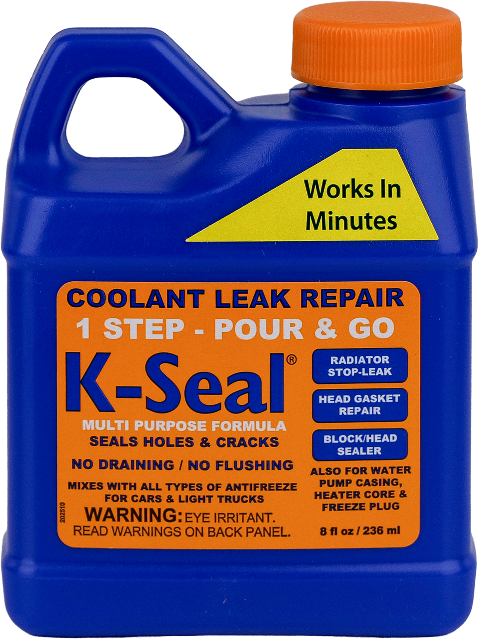
Consider K seal fleet
That stuff's junk. It's just a little bit of Aluma-Seal in water. If you're going to use Aluma-Seal, then just buy dry in the tube and skip the water. The parts store here quit selling K Seal.
 
Upvote 0
To stop a crack you will need to drill a hole at ends of the crack . If the drill will penetrate the hardened casting. I’d like see a better photo to suggest more about this .
The problem now is all the perpendicular cracks coming from the original weld the guy did. too many to try the drill and fill process. Almost like if a chunk could be cut out of the side of the block and a piece put back in using brazing or something.
 
Upvote 0
The problem now is all the perpendicular cracks coming from the original weld the guy did. too many to try the drill and fill process. Almost like if a chunk could be cut out of the side of the block and a piece put back in using brazing or something.
Well then I suggest to get a magna flux crack penetrating kit . To see the extent of the cracking .
An inexpensive attempt would be kerosene and ag lime to expose the cracks extent . The kerosene will draw the fine lime into the cracks exposing the extent of cracks out lines for you to plan your repairs .
 
Upvote 0
I have seen brazed repairs and JB Weld repairs, and both have been successful. Don't worry about it until it leaks.
Paint it and use it.
I'm kind of this school of thought. It's not perfect, but there's quite a good chance it'll hold coolant and still outlive many other components of the tractor (and everyone here). If it does fail, it's most likely to stary weeping little by little, in which case you'll notice and be able to fix it then pretty much just as easily as fixing it now. I doubt it's going to be a catastrophic, sudden failure.

If it were mine and I was at all worried, I'd probably grind a very shallow, rounded groove over the weld zone and cover it with braze, then grind smooth. Pre-heat a goodly amount so some braze will wick its way into any weld porosity and hairline cracks by capillary action. Don't think you'd get much better than that for any cast block repair.

If you're really worried about what might happen over time during all the expand/contract cycles when running, you could cross-bolt it - assuming you have the room and nothing's in the way inside that part of the block. I've done this for a couple of old blocks that have cracked between cylinder sleeves (a pretty common problem in a lot of old tractors). When they're cracked between sleeves like that you usually don't have to worry about it, but a couple of times when I've been a little more concerned I've drilled right through the block between sleeves. Put a piece of stainless threaded rod through and acorn nuts with a bonded sealing washer on either side of the block to make it look a little more "finished". You don't need to go excessively heavy on your threaded rod and torque. You're not really trying to pull the block back together, but rather just make sure there's still lots of positive pressure trying to close the gap up so any stress zones are always in compression during the cyclic loading and the cracks don't open up any more. I did that between cylinders 2 & 3 and 3 & 4 on a big Continental 382 diesel in and old Massey 555. Ground out the crack a little and smushed some good quality high-temp flexible gasket maker in there before tightening the threaded rod. I wanted something that would move and flex with the expansion/contraction of the block. I used that Massey for some pretty regular and heavy tillage for years after that (as well as running the sawmill), and I still get regular pictures & videos from the guy I sold it to showing him still using it for tillage and manure spreading. The block fix seems to be holding up dandy.
 
Last edited:
Upvote 0
I'm kind of this school of thought. It's not perfect, but there's quite a good chance it'll hold coolant and still outlive many other components of the tractor (and everyone here). If it does fail, it's most likely to stary weeping little by little, in which case you'll notice and be able to fix it then pretty much just as easily as fixing it now. I doubt it's going to be a catastrophic, sudden failure.

If it were mine and I was at all worried, I'd probably grind a very shallow, rounded groove over the weld zone and cover it with braze, then grind smooth. Pre-heat a goodly amount so some braze will wick its way into any weld porosity and hairline cracks by capillary action. Don't think you'd get much better than that for any cast block repair.

If you're really worried about what might happen over time during all the expand/contract cycles when running, you could cross-bolt it - assuming you have the room and nothing's in the way inside that part of the block. I've done this for a couple of old blocks that have cracked between cylinder sleeves (a pretty common problem in a lot of old tractors). When they're cracked between sleeves like that you usually don't have to worry about it, but a couple of times when I've been a little more concerned I've drilled right through the block between sleeves. Put a piece of stainless threaded rod through and acorn nuts with a bonded sealing washer on either side of the block to make it look a little more "finished". You don't need to go excessively heavy on your threaded rod and torque. You're not really trying to pull the block back together, but rather just make sure there's still lots of positive pressure trying to close the gap up so any stress zones are always in compression during the cyclic loading and the cracks don't open up any more. I did that between cylinders 2 & 3 and 3 & 4 on a big Continental 382 diesel in and old Massey 555. Ground out the crack a little and smushed some good quality high-temp flexible gasket maker in there before tightening the threaded rod. I wanted something that would move and flex with the expansion/contraction of the block. I used that Massey for some pretty regular and heavy tillage for years after that (as well as running the sawmill), and I still get regular pictures & videos from the guy I sold it to showing him still using it for tillage and manure spreading. The block fix seems to be holding up dandy.
Thanks for the reply . I am attaching the picture incase you didn't see it. There are numerous hairline cracks transverse to the length of the welded area. I would just patch as you say but everything i read is that they will keep extending with heat and cool cycles. Only knowing what I read online I am fearful they would creep all the way aross the block. since there are many seems like the outer wall would be weak. So your saying this brazing process would arrent the creep? The area is about 10 inches long and runs front to back on the right shoulder.
1000001594.jpg
1000001594.jpg
 
Upvote 0
Yesterday's Tractor Forums

We sell tractor parts! We have the parts you need to repair your tractor - the right parts. Our low prices and years of research make us your best choice when you need parts. Shop Online Today.

Back
Top