

4020 cab heater

ster1

Member
Location
Denver, CO
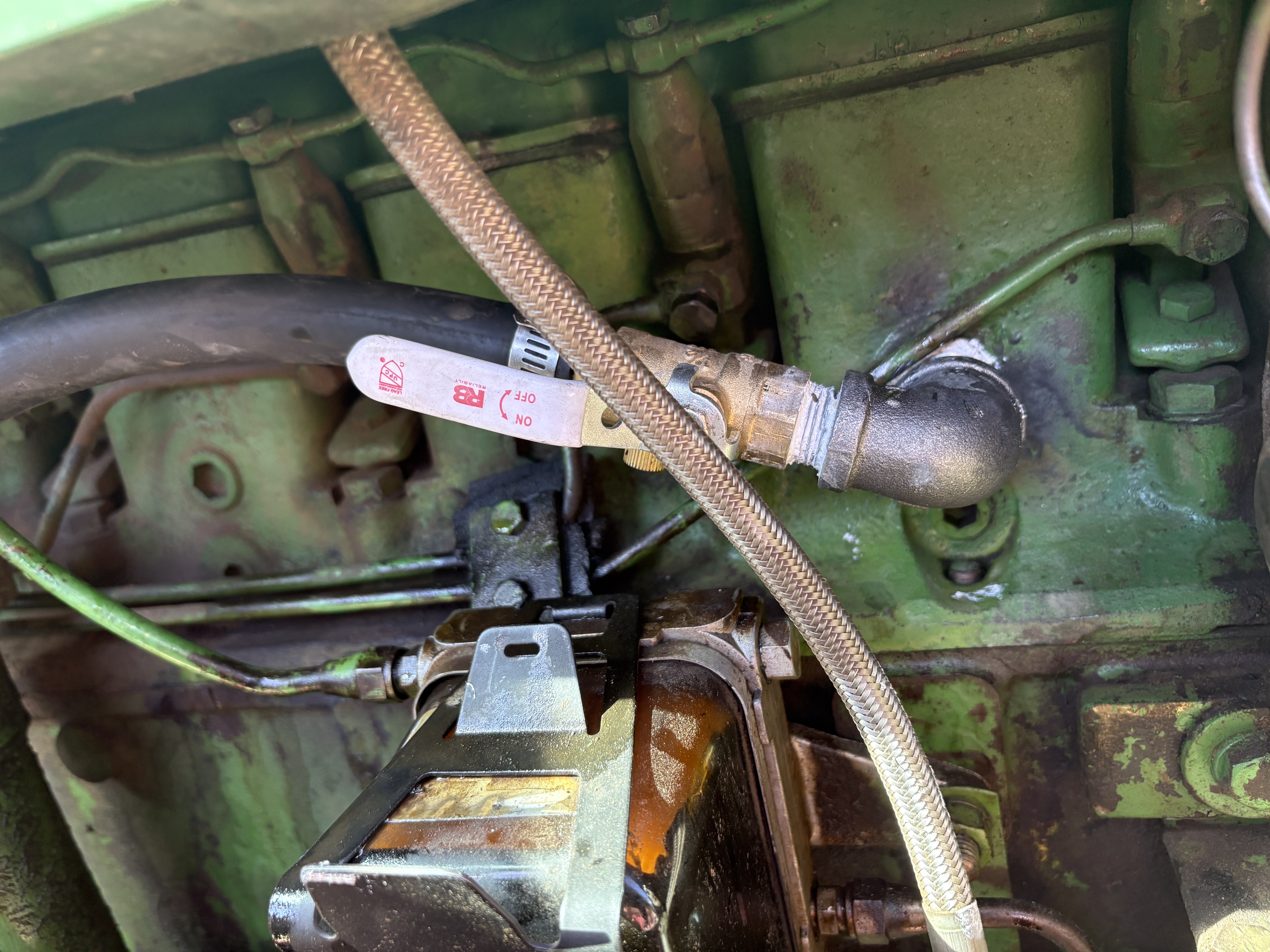
I think I did this wrong. I'm putting a cab heater in a 4020. I tapped into the cooling jacket pressure side from the plug in the head on the right side of the engine
1770955649553.jpeg


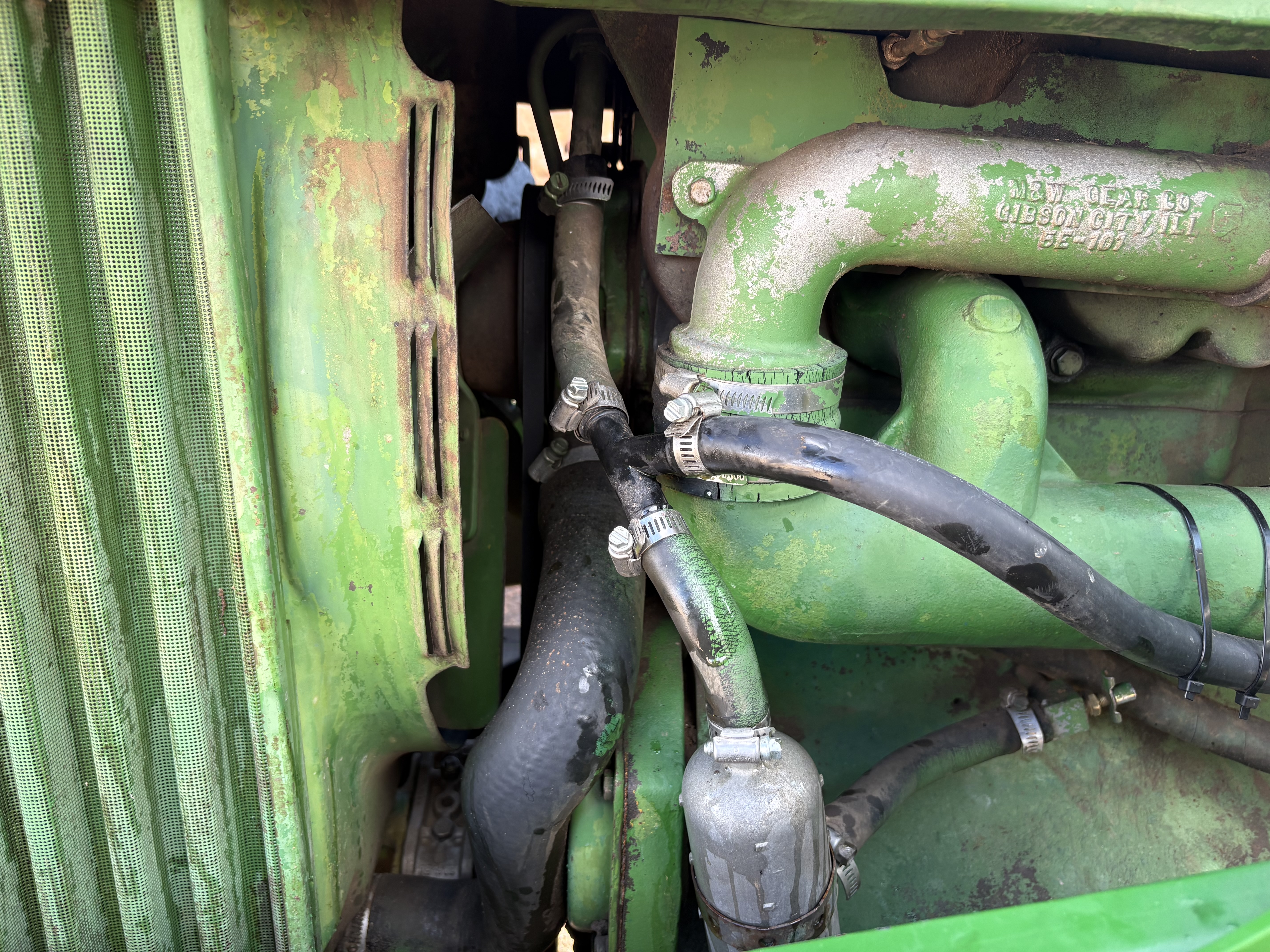
I put that ball valve in there so I could shut it off in the summer if I wanted to. That line goes to the heater. The return is plumbed here:
1770955797465.jpeg


The hose coming from the right is the return from the heater. You can also see the recirculating block heater bottom center. Block drain also visible down there. Anyway I think I did this wrong. I believe not only is my T-fitting in there pointing the wrong way, but I also think it should be much closer to the block drain, on the other side of the block heater. When I take the hose from the heater off that T-fitting, and fire up the tractor, I get positive flow out of the hose, but Im not getting any flow through the heater with it connected like this.

Thoughts?
 
I think I did this wrong. I'm putting a cab heater in a 4020. I tapped into the cooling jacket pressure side from the plug in the head on the right side of the engine

View attachment 142465

I put that ball valve in there so I could shut it off in the summer if I wanted to. That line goes to the heater. The return is plumbed here:

View attachment 142466

The hose coming from the right is the return from the heater. You can also see the recirculating block heater bottom center. Block drain also visible down there. Anyway I think I did this wrong. I believe not only is my T-fitting in there pointing the wrong way, but I also think it should be much closer to the block drain, on the other side of the block heater. When I take the hose from the heater off that T-fitting, and fire up the tractor, I get positive flow out of the hose, but Im not getting any flow through the heater with it connected like this.

Thoughts?
Flow for a cab heater is typically taken from a high point on the head, near where heated coolant is heading towards the radiator, and returned into the water pump, giving a good, positive flow for the cab heater. The plug between the injectors on the right side of the head is a good place to return heated coolant from the block heater. That's where mine was, and it worked great.
This is an interesting picture- first year 4020-updated fuel filter, and M&W turbo!
 
I think I did this wrong. I'm putting a cab heater in a 4020. I tapped into the cooling jacket pressure side from the plug in the head on the right side of the engine

View attachment 142465

I put that ball valve in there so I could shut it off in the summer if I wanted to. That line goes to the heater. The return is plumbed here:

View attachment 142466

The hose coming from the right is the return from the heater. You can also see the recirculating block heater bottom center. Block drain also visible down there. Anyway I think I did this wrong. I believe not only is my T-fitting in there pointing the wrong way, but I also think it should be much closer to the block drain, on the other side of the block heater. When I take the hose from the heater off that T-fitting, and fire up the tractor, I get positive flow out of the hose, but Im not getting any flow through the heater with it connected like this.

Thoughts?
Where is the hose in the photo I circled going? Can’t tell if it is connected to a fitting on the pump or if it is clamped on a pipe that goes up higher? In my opinion the connection at the head should be fine, the pump pushes water into the block then up through the head and water in the head is pressurized against the thermostats. So coolant should come out of any fitting in the head under some pressure.
Edit: My information on coolant circulation in this tractors engine is not correct.
The problem I see is that when you use the engine heater the coolant might circulate through the heater instead of into the engine. It would probably still heat the engine but far less effectively due to heat dissipation in the heater core.
IMG_4509.jpeg
 
Last edited:
As previously stated. Hot coolant to heater is sourced from as close as possible to the underside/engine side of the thermostats . The coolant returning from the cab heat exchanger is returned to the engine via the Suction side of the coolant pump. Not the pressure side of the coolant pump.
 
As previously stated. Hot coolant to heater is sourced from as close as possible to the underside/engine side of the thermostats . The coolant returning from the cab heat exchanger is returned to the engine via the Suction side of the coolant pump. Not the pressure side of the coolant pump.
You said that already :). I'm looking for something a little more specific. Thanks though.

 
Where is the hose in the photo I circled going? Can’t tell if it is connected to a fitting on the pump or if it is clamped on a pipe that goes up higher? In my opinion the connection at the head should be fine, the pump pushes water into the block then up through the head and water in the head is pressurized against the thermostats. So coolant should come out of any fitting in the head under some pressure.
The problem I see is that when you use the engine heater the coolant might circulate through the heater instead of into the engine. It would probably still heat the engine but far less effectively due to heat dissipation in the heater core. View attachment 142535
This is the main source of my confusion, I think. AFAIK, that's the bypass line. That's flow through the head and block before the t-stats. That flows from the pump, down through that hose, down into the block and up out the head, back into the pump, according to the diagram I have. But that doesn't make sense to me. Water flows from the pump to the head no matter what, then down into the block, right?. So that would mean water is flowing up in that hose, back to the pump for bypassing purposes. That would also explain why the block heater shows an arrow with flow going upwards. That's why I put the return there. But no flow...
 
Where is the hose in the photo I circled going? Can’t tell if it is connected to a fitting on the pump or if it is clamped on a pipe that goes up higher? In my opinion the connection at the head should be fine, the pump pushes water into the block then up through the head and water in the head is pressurized against the thermostats. So coolant should come out of any fitting in the head under some pressure.
The problem I see is that when you use the engine heater the coolant might circulate through the heater instead of into the engine. It would probably still heat the engine but far less effectively due to heat dissipation in the heater core. View attachment 142535
Oh, and to your other comment, yes the block heater would theoretically flow through the cabin heater in addition to the engine. That's the other reason I put that ball valve in on the other side. Except that it doesn't. I can run that block heater and the hose you circled (and the block) will get warm, meaning the heater is working. That hose off to the right, stays cold. So, even when the flow is coming from the block heater, I get nothing. It's like there's a blockage in the stuff I installed, but there isn't. When I take that hose that's to the right off, I get positive flow out of there with the engine running. That's coolant coming from the head on the other side of the engine, through the hoses and heater and stuff, and coming back. I'm stymied.
 
That flows from the pump, down through that hose, down into the block and up out the head, back into the pump, according to the diagram I have.
It appears I am not up to speed on coolant flow in this Deere engine. Probably best to route the flow per Jim and Bob’s recommendation in replies 2 & 3.
 
Oh, and to your other comment, yes the block heater would theoretically flow through the cabin heater in addition to the engine. That's the other reason I put that ball valve in on the other side. Except that it doesn't. I can run that block heater and the hose you circled (and the block) will get warm, meaning the heater is working. That hose off to the right, stays cold. So, even when the flow is coming from the block heater, I get nothing.
You have to remember that a coolant heater circuit is a closed thermo-siphon system as were older tractors without a water pump. Heated water coming out of the top of the tank heater is being replaced by cool water coming in it’s inlet. In this case the cold water is drawn out of the bottom of the block at the drain. That coolant is being replaced in the engine by inward flow. Where ever that is dictates the thermo-siphon circuit. In this case it is probably to much restriction or resistance in the heater circuit so it chooses the desired circuit that is heating the engine.
 
You have to remember that a coolant heater circuit is a closed thermo-siphon system as were older tractors without a water pump. Heated water coming out of the top of the tank heater is being replaced by cool water coming in it’s inlet. In this case the cold water is drawn out of the bottom of the block at the drain. That coolant is being replaced in the engine by inward flow. Where ever that is dictates the thermo-siphon circuit. In this case it is probably to much restriction or resistance in the heater circuit so it chooses the desired circuit that is heating the engine.
It's not a thermo-syphon, it has a pump. It's active or forced circulation.
 
It's not a thermo-syphon, it has a pump. It's active or forced circulation.
I would like to see the brand and model number of it. Usually forced circulation heaters are whoppers that wouldn’t fit between the engine and frame where that one is, see link. Zero start forced circulation models
The majority of tank type coolant heaters are sold using the term “circulating” but the just use thermo-siphon to do it.
 
I would like to see the brand and model number of it. Usually forced circulation heaters are whoppers that wouldn’t fit between the engine and frame where that one is, see link. Zero start forced circulation models
The majority of tank type coolant heaters are sold using the term “circulating” but the just use thermo-siphon to do it.
Sorry, the heater itself isn't forced, it's just like a heater core in a car. I meant the cooling system is forced, just like in a car.
 
From what I can see you need to put the upper tank heater hose where the ball valve is. Wright now you are just going through the tank heater.
I would disagree with this assessment. I am linking a 4020 engine block.
4020 example block When in operation a tank type engine heater discharges heated water out of one connection, while at the same time coolant is drawn in to the tank to replace the coolant that exited. With this in mind and looking at the block the coolant has to come in through the head. That flow into the inlet of the tank heater draws the eventual warmed coolant back into the block through the passages in the head where it can again enter the tank heater through the block drain where it is connected.
 
Last edited:
AFAIK, that's the bypass line. That's flow through the head and block before the t-stats. That flows from the pump, down through that hose, down into the block and up out the head, back into the pump, according to the diagram I have.
Is this diagram in a factory manual? Can you take a photo of it and post it? I am deducting the the coolant system major flow pattern must enter the front of the head on one side then it is forced down on that side into the block. Then flows up out of the block on the opposite side up through the head out to the thermostats. Where it exits to the radiator. That means that the connection to the head is on the wrong side of the head. It should be one the left side where the coolant exits to the thermostats. This is based solely on “how I think it works” so I could be dead wrong.
 
Yesterday's Tractor Forums

We sell tractor parts! We have the parts you need to repair your tractor - the right parts. Our low prices and years of research make us your best choice when you need parts. Shop Online Today.

Back
Top