53 jubilee lift problem

I just bouhgt the tractor and the lift worked fine,but the fluid was milky.I changed the fluid but used the wrong kind.It lifted great for a day but when I cranked it up a couple of days later it would not lift at all.I emmediately replaced the fluid to the proper kind but still nothing.what have i messed up?
 
first.. what fluid did you use that you said was wrong?

2nd, have you removed the plug on the pump to bleed the air out? ( which pump ya got.. short square vane one or the cylindrical piston pump. ).. lets start there.

soundguy
 
It was a universal multi-viscosity(10w20) hydaulic oil.I think I have the short square vane one,its on the right side of the motor with 2 lines off it going back to the hydralic resivor.
 
It still want lift,the level shows over full.Just to make sure, the tractor dealer tech. said I should use 80w90 GL5 oil,I reminded him it was for the hydraulics on a 53 tractor.
 
(quoted from post at 19:12:31 08/18/10) So what fluid do I use?
I don't understand your question, as your very first post says, "I emmediately replaced the fluid to the proper kind but still nothing.".

It sure doesn't appear to me that changing fluid again is going to fix your problem. If not air then pump. Anywhere from sump to pump can be suction line air leaks.
 
Read the last page on lubrication for the ohv tractors in the ford service manual.Ford said 80 or 90 GLI depending on temperature.My 640 with a vane pump had been using GL1 with no problem.I used to lose lift power in hot weather.
 
What I don t understand is that if it was working find before how would I have air leaks now when all I did was pull the drain plug and the filler cap?
 
heavy oils can cause cavitation if the pump is not designed for it.

gl rating is basically a wear rating for extreme pressure lubes.. IE. gear lubes.

I don't know of anyone other than 36 that reccomends gear oil in those 00/01 series pumps. Even the cnh dealers don't.. they reccomend UTF fluids. the later 65+ common sump machines also use UTF fluid inthe diffy/hyd compartments vs gear oil.

soundguy
 
(quoted from post at 08:46:01 08/19/10) So 80w90 GL5 can kill my pump but 80or90 GL1 want.What does the GL rating mean?

GL means gear lube - GL1 is a plain mineral oil with anti-corrosion but no anti-wear additives. GL5 has corrosion and anti-wear additives - depending on brand may be mineral oil or synthetic.

Neither one will kill your pump but neither one is designed for hydraulic systems - they are gear lubes. You will get better performance from your hydraulics with a hydraulic fluid of the proper viscosity. We can argue what the "proper" viscosity is until we are blue in the face.

That said your problem isn't the fluid. If all you did was drain and refill you have most likely lost prime on the pump. Or perhaps clogged the suction line port with some gunk that got displaced in the process.

Try this to verify pump operation - remove the pipe plug on top of the plate under the seat and connect a short length of clear tubing to the open port - you can get the tubing and a suitable NPT to hose barb fitting at most any hardware store. Stick the open end of the tubing into the filler for the hydraulic reservoir and start the tractor. You should get a steady stream of oil from the tubing back into the reservoir. If you don't you have a suction line or pump/priming problem.

TOH
 
So is there someone who may have an owners manual or something that can tell me what kind of fluid do I need for a 53 ford NAA, with a vane hydraulic pump ,for the hydraulic?
 
(quoted from post at 09:37:03 08/19/10) So is there someone who may have an owners manual or something that can tell me what kind of fluid do I need for a 53 ford NAA, with a vane hydraulic pump ,for the hydraulic?

The owners manual is going to give you a Ford specification that is no longer made. Use any brand of good hydraulic oil - an AW-46 grade or if your pump/lift is worn and you want a heavier oil AW-68 grade. You can also use a UTF as Sounder suggests - that would almost certainly be what CNH would tell you.

TOH
 
my manual , right here in front of me, from 1954 shows the following:

tranny sae 80 mild ep all temps

rear axle, sae 80 mild ep all temps

hyds.. M-4864-A above 10'

below 10' replace 2qts of above with M-4864-D

My 1962 owners manual shows these specs updated to M2C41

soundguy
 
Ok.. later.. you can figure this one out for yerself, including a quote to 36 out of my 1954 owners manual and 62 manual quoting oil specs.

I just posted the specifics you need.

do whatever you want.

have fun

soundguy
 
Ok.. later.. you can figure this one out for yerself, including a quote to 36 out of my 1954 owners manual and 62 manual quoting oil specs.

I just posted the specifics you need.

do whatever you want.

have fun

soundguy
 
I am sorry if I have affended you in anyway,I do appreciate all of your advise.You have helped me get started on trying to fix my tractor.

Thanks Again
 
(quoted from post at 16:10:26 08/19/10) I am sorry if I have affended you in anyway,I do appreciate all of your advise.You have helped me get started on trying to fix my tractor.

Thanks Again

Never worked on a vane pump,,, have hydraulics with piston pumps and have used 80/90 in the hydraulics with NO complaints.... I do not use straight 90wt in nuttin.... no need to 80/90 is a up-grade from sorry arse 90wt....

Its nuttin much to fight over,,, if all's well UTF works great also.... my guess is your problem is not the fluid....

I did run across a system i could not get to prime,,, had to apply air pressure at the fill up hole on top of the differential to get it to prime....
 
cavitation can/will kill a pump.

if he runs too high of viscosity of oil for a long time.. damage can occur.

I had to help a guy rebuild his hyd system after someone had him put 85/140 in it to 'help' it out.

ford listed the m4864 spec for the hyds in the manual and sae 80 mild ep oil in the tranny and diffy back then. if they wanted the heavy gear oil in the hyds the manual would have saved some paper and just shown it for all 3 IMHO. nford wasn't into waste..

soundguy
 
do whatever you want with it.

me? I'd put utf in it.

if it's wore slap out.. perhaps the aw 68 that TOH mentioned. only problem with that is that the pto shadt passes thru the hyd and rear sump.. very commonly this sel leaks, so your hyd and gear oil can mix.

aw68 is not a gear oil.. if it leaks into the gear sump it will thin the gear oil and reduce it's lube properties... which is not a good thing. that's why using a utf oil in the hyds is ok, as if it gets into the diffy.. no big deal.. utf oil is fine for rear ends.

Or you can get the sump seals and the pump fixed.. IE.. the correct thing to do.

soundguy
 
(quoted from post at 12:09:22 08/19/10) do whatever you want with it.

me? I'd put utf in it.

if it's wore slap out.. perhaps the aw 68 that TOH mentioned. only problem with that is that the pto shadt passes thru the hyd and rear sump.. very commonly this sel leaks, so your hyd and gear oil can mix.

aw68 is not a gear oil.. if it leaks into the gear sump it will thin the gear oil and reduce it's lube properties... which is not a good thing. that's why using a utf oil in the hyds is ok, as if it gets into the diffy.. no big deal.. utf oil is fine for rear ends.

Or you can get the sump seals and the pump fixed.. IE.. the correct thing to do.

soundguy

Cross contamination is a good point - never occured to me as I don't own an NAA or any other tractor with separate sumps. Yet another reason to choose a UTF. For those that care typical viscosities of the various grades/products is roughly as follows. Data is from manufacturer's data sheets - numbers are kinemetic viscosity in cSt at temps shown (ASTM D445).

AW46 (Mobil) = 46@40C, 6.7@100C, VI=95
AW68 (Mobil) = 68@@40C, 8.5 @100C, VI=95
UTF (Shell) = 65.2@40C, 10.2@100C, VI=142
SAE 80W90 (Shell)= 135@40C, 14.6@100C, VI=103

As you can see the UTF also has the better viscosity range - less sensitive to changes in temperature (e.g. higher VI). The 80W90 gets REALLY hard for a pump to suck up when it gets cold.

TOH
 
yep.. when it's cold that's when it will cavitate bad. once she's warmed.. not so bad.

the intercontamination of the hyds to the rear sump could be a big iisue though.. that's why i don't like plain hyd oil in the hyds sump.. though a utf.. even if it did leak into the gear oil should be ok.. both are designed for those applications.

I think the OP has an air lock/or continuing leak or non blee pump.. IMHO...

soundguy
 
I pulled the pipe plug and did the clear tube like you said,Igot nothing at first, but after it warmed up a little, it would just spit a little fluid then stop.I could move the lever down and back up and it would do the same thing, spit some then quit.
 
Google the M4864 numbers they are a GL1 oil 80 90 wt. my shop manual has a 1961 copy right.M2C41 is fo the sos auto transmission.The 6ooo uses M2c41.My vane pump can lift the carry all and cordwood saw at idle speed.With 134 I had to increase to 1000 rpm to get lift.Page 421 lube chart in Ford tractor shop manual.15 bucks worth of gear oil fixed my loss of lift in hot weather.
 
(quoted from post at 15:00:25 08/19/10) I pulled the pipe plug and did the clear tube like you said,Igot nothing at first, but after it warmed up a little, it would just spit a little fluid then stop.I could move the lever down and back up and it would do the same thing, spit some then quit.

There ya go - no output from the pump. Likely loss of prime but perhaps something else like an obstructed suction line/port. I beleive you said you bled th epump already - I'd try again. Let us know how that works.

TOH
 
Heres what my My 600 tractor manual lubrication chart says.Above 10 degrees F use 9 quarts M4864A oil.Google that number and you will find it is 90 wt gear oil with no additives.My tractor has a vane pump and could not lift my cord wood saw in hot weather with 134 fluid.If you will look back at old posts you will find that some who switched to 134 could not get any lift at all.This was posted by a fellow who worked for a Ford dealer.He had to face the PO owners after he said 134 was ok.Some posters on here have great knowledge but they make big mistakes at times.Ford never rec 134 oil in old tractors. CNH did that and they have no interest in keeping old Fords running.They would rather sell you a new Kubota.Went by a CNH dealer sunday, most of the stock was Kubota.I use 90 wt gear oil in my tractors differential.Sulfur is put into some gear oil,its called EP oil, it stinks bad.GL1 has a mild oder.Pumps will get air bound when oil is changed.My pump was slow with the new oil.When you get done fooling around Ill tell you how to prime a hydraulic pump.
 
The vane pump used gear oil when it was new.The vane pump has a higher rating than the piston pump.Vane pump 4.7 gal per min at 1650 engine rpm.Piston pump 4 gallons per min at 2000engine rpm.The vane pump was made by Vickers for Ford.
 
(quoted from post at 15:23:14 08/19/10) Google the M4864 numbers they are a GL1 oil 80 90 wt. my shop manual has a 1961 copy right.M2C41 is fo the sos auto transmission.The 6ooo uses M2c41.My vane pump can lift the carry all and cordwood saw at idle speed.With 134 I had to increase to 1000 rpm to get lift.Page 421 lube chart in Ford tractor shop manual.15 bucks worth of gear oil fixed my loss of lift in hot weather.
Yes we know - you have a worn out pump and have "fixed" it by running a heavy SAE 80W90 or SAE 90 gear oil which works just fine for you down in that He!!ishly hot place you reside. But that doesn't change the fact that it's a lot heavier than anything Ford ever recommended. And here's why:

[list:7f66b016f7]
[*:7f66b016f7]By all accounts including yours M4864A was an SAE 80 gear oil (a grade that is pretty much nonexistant anymore) which means that back in 1950 just like today it had a viscosity of 7.0 to 10.9 cSt @100C
[*:7f66b016f7]The Shell UTF I looked up has a viscosity of 10.2 cSt @100C .Seems like that's right at the top end of the originally recommended SAE 80 range. CNH engineers looking pretty good on that one.
[*:7f66b016f7] Mobil AW 68 hydraulic fluid has a viscosity of 8.5 cSt @ 100C - dead in the middle of SAE 80. Looks reasonable to me but what do I know..
[*:7f66b016f7]And finally what I beleive to be the source of your confusion - SAE 80W90 and SAE 80 are TWO ENTIRELY DIFFERENT VISCOSITY GRADES. SAE 80W90 gear oil is a modern multi-grade that has a MINIMUM viscosity of 13.5 cSt @ 100C and depending on brand can go as high as 18.4 cST @ 100 C. And likelwise when it's cold its way thicker. In all aspects its a much heavier oil than the original M4864A specification. [/list:u:7f66b016f7]

And of course both the UTF and the AW68 have much higher VI's than the original M4864A/SAE 80 and do not requiring thinning in cold weather. The Ford recommendation was to dilute the M4864A by 25% with the much thinner M4864D when temps were 10F or less. Why? To make the hydraulics more responsive and avoid the cavitation dangers Sounder mentioned.

If you are going to quote old recommendations you need to know how they match up to current products and grades. And to do that you need to understand the grading system both then and now.

But of course we've been down this road before and your mind is so closed and you are so entrenched I've undoubtedly wasted my time.

TOH
 
a non worn pump would fix your loss of lift in hot weather vs heavy oil.

I believe when ford started dabbline with the ohv tractors they changed the 4864 spec. in the 54 manual, they list 80 mep for the tranny and diffy.. but one of the 4864's for the hyds. had that all refered to an 80mep.. they would have said so.

As we all know, ford experienced high early failure rate on the vane pumps.. My guess is they wised up and figured out they couldn't pump gear oil with them.. after enough of them blew up, they went to the piston pump and the thinner oil spec.

the info TOH posted shows just how thick a 80w oil is and how different it is from an 80w90

what you put in your extremely worn pump is one thing.. what you should advise someone else to use in there's is another.

soundguy
 

you beat me to it.

old oil specs are not the same as the new heavy oil he is using...

we are both wasting our time..

soundguy
 
You miss the point.Ford said gear oil for the vane pump.Google the Ford numbers, you will come up with 80 and 90 GL1.
 

you miss the point.

our modern 80w90 is not like the ep 80.. and while you can get straight 90 now.. I don't see too many places to get straight 80.

soundguy
 
(quoted from post at 19:06:00 08/19/10) You miss the point.Ford said gear oil for the vane pump.Google the Ford numbers, you will come up with 80 and 90 GL1.

Nice try but the discussiion is viscosity of the hydraulic fluid not what it's called. If that's the totality of your point then we can discuss the shortcomings of gear oil as a plain hydraulic fluid vis-a-vis either UTF or an AW hydraulic oil which are both superior in that application.

I Googled the Ford numbers - all I got was old forum discusiions and speculation. I found absolutely zero definitive - just someones post that the OEM label on M4864A said "SAE 80 mild EP gear oil" (GL1 is not EP) so I gave you that factoid despite the fact that the rest of that post was a garbled mish-mash of misinformation re oil grades. If you have a link to something more definitive post it.

Clearly M4864D was thinner - it was recommended as a viscosity reducing additive by Ford and was reportedly (same source) labeled "Ford loader oil". So we have SAE 80 gear oil as the max recommended viscosity with thinning of that with Ford "loader oil" required in cold weather. I gave you the actual viscosities for SAE 80 and SAE 90 gear oil plus a few modern UTF and AW oil formulations that didn't exist in 1950 and don't get graded by the SAE as final drive gear lubes. Those numbers speak for themselves. Any SAE 90 or SAE xxW90 grade gear oil is [u:430cc924f6]substantially[/u:430cc924f6] heavier than the old M4864A. And the viscosity and EP properties of modern day UTF is a near perfect match for the original "M4864A - SAE 80 Mild EP gear oil" specification you are so fond of quoting. That plus the greatly improved R&O additive package in UTF is undoubtedly why CNH recommends it today.

TOH

PS> Vickers (Eaton's)) current recommendation for mobil equipment vane pumps is AW32/46/68 depending on ambient temperature.
 
(quoted from post at 16:59:21 08/19/10) cavitation can/will kill a pump.

if he runs too high of viscosity of oil for a long time.. damage can occur.

I had to help a guy rebuild his hyd system after someone had him put 85/140 in it to 'help' it out.

ford listed the m4864 spec for the hyds in the manual and sae 80 mild ep oil in the tranny and diffy back then. if they wanted the heavy gear oil in the hyds the manual would have saved some paper and just shown it for all 3 IMHO. nford wasn't into waste..

soundguy

Not yet,,,, no complaints.... it does get colder than a witches t-i-t around here.... if i were to rebuild the pump it would get the thin chit,,, warranty purpose y'all got me skeered till then all the used worn out chit gets 80W90,,, the fluid is not his problem :!: ,,, I bet he would luv to get it primed even if it took the goofy chit....

On the one that gave me a fit I installed a know good pump,,, still a NO GO,,, had to pressurize the system to get it to pick/suck up the oil,,, I was at the point of standing the tractor on its nose are tap'n the suction side and force feed'n it...

Not disputing what has been said,,, so will leave it as do'n case study

:lol:

If you ever get inside one of these worn out trans and rear diff,,, it will seam impossible to keep cross contamination from happening,,, the original style seals are not available are the sleeves they run on either....

You have to use 2 seals instead of one and install 2 replacement seals were the original one went then face them in opposite directions from each other,,, sorta like in a marine application to keep water out and oil in....

 
Thats just what CNH said years ago and I had trouble with loss of lift any time air temp was over 60 degrees.The 90 wt oil has about the same visconsity as the 50 wt my Indian motorcycle used.I could not lift 3 sq bales of hay on the carry all.At 35 degrees I brought in a 12 foot ash log 15 in on the small end from a field edge.Took in some elm logs the same size.
 
(quoted from post at 21:19:45 08/19/10)
Not yet,,,, no complaints.... it does get colder than a witches t-i-t around here.... if i were to rebuild the pump it would get the thin chit,,, warranty purpose y'all got me skeered till then all the used worn out chit gets 80W90,,, the fluid is not his problem :!: ,,, I bet he would luv to get it primed even if it took the goofy chit....

On the one that gave me a fit I installed a know good pump,,, still a NO GO,,, had to pressurize the system to get it to pick/suck up the oil,,, I was at the point of standing the tractor on its nose are tap'n the suction side and force feed'n it...

Not disputing what has been said,,, so will leave it as do'n case study

:lol:

I'm sure you are absolutely right - fluid viscosity is not the PO's problem. Was your pressurization technique something hi-tech like an hair hose and a rag stuffed into the filler or something more Hobo-ish :roll: I suspect the PO would welcome a hint.

TOH
 
(quoted from post at 07:07:28 08/20/10)
(quoted from post at 21:19:45 08/19/10)
Not yet,,,, no complaints.... it does get colder than a witches t-i-t around here.... if i were to rebuild the pump it would get the thin chit,,, warranty purpose y'all got me skeered till then all the used worn out chit gets 80W90,,, the fluid is not his problem :!: ,,, I bet he would luv to get it primed even if it took the goofy chit....

On the one that gave me a fit I installed a know good pump,,, still a NO GO,,, had to pressurize the system to get it to pick/suck up the oil,,, I was at the point of standing the tractor on its nose are tap'n the suction side and force feed'n it...

Not disputing what has been said,,, so will leave it as do'n case study

:lol:

I'm sure you are absolutely right - fluid viscosity is not the PO's problem. Was your pressurization technique something hi-tech like an hair hose and a rag stuffed into the filler or something more Hobo-ish :roll: I suspect the PO would welcome a hint.

TOH
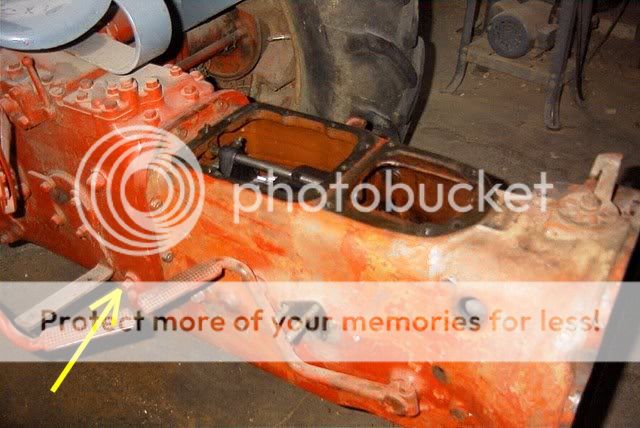
Hows 'bout, suck on this hole.
NAA_tst_port_mkd.jpg
 
(quoted from post at 11:01:41 08/20/10) 68 comes in different visconsitys, go look.

You are still grasping at straws to support your believe and apparently not real familiar with the haystack. That's perfectly understandable - it's an arcane collection of competing technical standards haystack. I did that stuff for a living and I actually still enjoy reading the crap when the subject matter applies to my personal hobbies and interests.

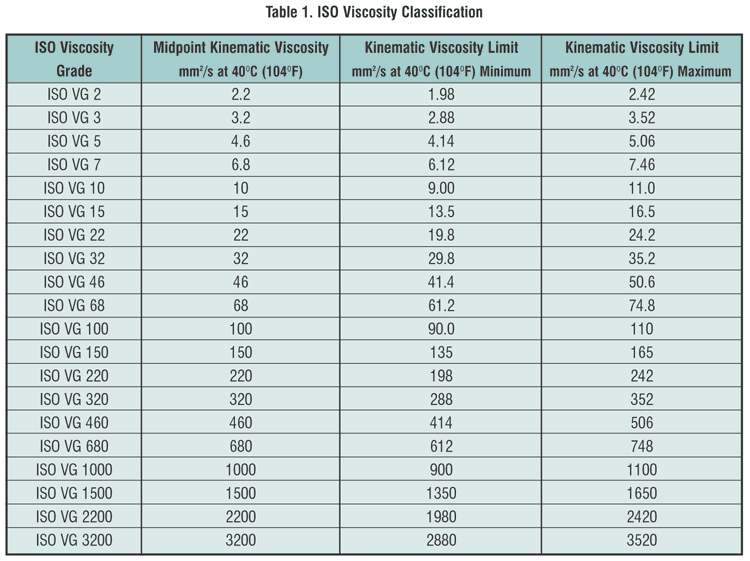
So here's another boring technical explanation of why that assertion is incorrect in any meaningful engineering sense. AW 68 is a generic product description used for any number of different brands and formulations of all weather [b:958ef3cd67]ISO 68 grade[/b:958ef3cd67] hydraulic oils. The ISO grading system attempts to eliminate much of the confusion that plagues the haphazard SAE grade numbering system. ISO grade numbers are the actual measured kinematic viscosity of the lubricant expressed in SUS (Saybolt Universal Seconds), an international scientific unit of measurement for viscosity. That measurement is always made at 40C. So theoretically all ISO 68 grade lubricants have a kinematic viscosity of 68 SUS @ 40C - simple ehh? In practice in order to simplify the system and avoid having several thousand or more different grades corresponding to every possible measurable viscosity ISO defined 20 numbered grades covering the range from 1 to 3200 SUS. The grades have large gaps between them and each grade is allowed a very slight, and I do mean [u:958ef3cd67]very slight[/u:958ef3cd67], variance in the actual measured product viscosity. This grading system is far easier to understand than the SAE system and far easier for the engineer or consumer to identify the actual scientific viscosity of the graded product - e.g. the ISO grade number is the viscosity unlike the SAE system where the grade number is just an arbitrary number that you have to go look up in the specification. The larger the ISO grade number the thicker the oil - always. Not always true of the SAE system - e.g. SAE 50 motor oil has a higher viscosity than SAE 80 gear oil - ugggh!

Here are the 20 ISO grades in all their gory detail. As you can see from the chart any ISO 68 grade lubricant has a measured kinematic viscosity somewhere in the range 61.2 to 74.8 SUS at 40C. While that is most definitly "different" to a mathematician (I are one) it's a pretty darn tight product specification from an engineering standpoint - engineers never work in absolutes - thay always have tolerances. To illustrate how tight that specification actually is, 1 cSt, the unit used by the SAE in their grading system = 31 SSU's. Going back to our good friend the SAE 80 gear oil grade specification (J306 chart) we see it allows a viscosity variance of 4.5 cSt in measured viscosity (7 cSt/11.5 cSt). That is 140 SUS, more than 10 times the variance allowed for an ISO 68 graded oil. So once again I'd have to disagree with you on that idea that an AW 68 oil comes in "different" viscosities. The ISO system is very precise and what it says on the label is very, very, close to what's inside.

TOH

PS> Ever notice how I explain my answer at some length (too long I'm sure for some) and provide additional detailed scientific and engineering data that I base that answer on?

Backup_200107_viscosity_table_1.gif
 
(quoted from post at 15:43:23 08/20/10)
(quoted from post at 11:01:41 08/20/10) 68 comes in different visconsitys, go look.

You are still grasping at straws to support your believe and apparently not real familiar with the haystack. That's perfectly understandable - it's an arcane collection of competing technical standards haystack. I did that stuff for a living and I actually still enjoy reading the crap when the subject matter applies to my personal hobbies and interests.

So here's another boring technical explanation of why that assertion is incorrect in any meaningful engineering sense. AW 68 is a generic product description used for any number of different brands and formulations of all weather [b:681f4f6c54]ISO 68 grade[/b:681f4f6c54] hydraulic oils. The ISO grading system attempts to eliminate much of the confusion that plagues the haphazard SAE grade numbering system. ISO grade numbers are the actual measured kinematic viscosity of the lubricant expressed in SUS (Saybolt Universal Seconds), an international scientific unit of measurement for viscosity. That measurement is always made at 40C. So theoretically all ISO 68 grade lubricants have a kinematic viscosity of 68 SUS @ 40C - simple ehh? In practice in order to simplify the system and avoid having several thousand or more different grades corresponding to every possible measurable viscosity ISO defined 20 numbered grades covering the range from 1 to 3200 SUS. The grades have large gaps between them and each grade is allowed a very slight, and I do mean [u:681f4f6c54]very slight[/u:681f4f6c54], variance in the actual measured product viscosity. This grading system is far easier to understand than the SAE system and far easier for the engineer or consumer to identify the actual scientific viscosity of the graded product - e.g. the ISO grade number is the viscosity unlike the SAE system where the grade number is just an arbitrary number that you have to go look up in the specification. The larger the ISO grade number the thicker the oil - always. Not always true of the SAE system - e.g. SAE 50 motor oil has a higher viscosity than SAE 80 gear oil - ugggh!

Here are the 20 ISO grades in all their gory detail. As you can see from the chart any ISO 68 grade lubricant has a measured kinematic viscosity somewhere in the range 61.2 to 74.8 SUS at 40C. While that is most definitly "different" to a mathematician (I are one) it's a pretty darn tight product specification from an engineering standpoint - engineers never work in absolutes - thay always have tolerances. To illustrate how tight that specification actually is, 1 cSt, the unit used by the SAE in their grading system = 31 SSU's. Going back to our good friend the SAE 80 gear oil grade specification (J306 chart) we see it allows a viscosity variance of 4.5 cSt in measured viscosity (7 cSt/11.5 cSt). That is 140 SUS, more than 10 times the variance allowed for an ISO 68 graded oil. So once again I'd have to disagree with you on that idea that an AW 68 oil comes in "different" viscosities. The ISO system is very precise and what it says on the label is very, very, close to what's inside.

TOH

PS> Ever notice how I explain my answer at some length (too long I'm sure for some) and provide additional detailed scientific and engineering data that I base that answer on?

Backup_200107_viscosity_table_1.gif
"PS> Ever notice how I explain my answer at some length (too long I'm sure for some) and provide additional detailed scientific and engineering data that I base that answer on? "

Sorry, but for you I guess a political career is out......as well as heckler.
 
(quoted from post at 15:57:10 08/20/10)
(quoted from post at 15:43:23 08/20/10)
PS> Ever notice how I explain my answer at some length (too long I'm sure for some) and provide additional detailed scientific and engineering data that I base that answer on?

"PS> Ever notice how I explain my answer at some length (too long I'm sure for some) and provide additional detailed scientific and engineering data that I base that answer on? "

Sorry, but for you I guess a political career is out......as well as heckler.

Way to many skeletons in my closet for a career in politics :oops:

TOH
 
(quoted from post at 16:01:57 08/20/10)
(quoted from post at 15:57:10 08/20/10)
(quoted from post at 15:43:23 08/20/10)
PS> Ever notice how I explain my answer at some length (too long I'm sure for some) and provide additional detailed scientific and engineering data that I base that answer on?

"PS> Ever notice how I explain my answer at some length (too long I'm sure for some) and provide additional detailed scientific and engineering data that I base that answer on? "

Sorry, but for you I guess a political career is out......as well as heckler.

Way to many skeletons in my closet for a career in politics :oops:

TOH
hat sure doesn't seem to stop a lot of them!
 
I put in a new pto shaft over 20 years ago,never saw any sign of leakage.The differential has 80/90 ep gear oil that would stink up the 134 if it mixed.The 9n has the same ring and pinion as a 30 Ford ton and a half Truck.Those trucks used a 140 wt gear oil.Would you fill the truck dif with 20wt 134?
 
(quoted from post at 16:37:17 08/20/10) I put in a new pto shaft over 20 years ago,never saw any sign of leakage.The differential has 80/90 ep gear oil that would stink up the 134 if it mixed.The 9n has the same ring and pinion as a 30 Ford ton and a half Truck.Those trucks used a 140 wt gear oil.Would you fill the truck dif with 20wt 134?

Still looking for a reason UTF is not satisfactory I see. Apparently you have given up on the hydraulics issues and now are concerned about cross contamination with the final drive lube due to the leaky seals in your NAA. And again you like to use the SAE grade numbers that reinforce your view of an engineering reality that quite simply doesn't exist. SAE 20 is a motor oil classification. SAE 80 is a gear oil classification. UTF is neither and carries neither of those grade stamps. The SAE grade numbers do not reflect relative viscosities across those application lines - this is not the ISO system where the numbers do. So stop using them that way and use the [u:034cb30de8]actual measured viscosity[/u:034cb30de8] of the lubricants which are published by the oil companies and which I have provided here time after time and maybe reality looks a little different.

Short answer to your question:

If I owned an NAA,which I don't, I'd use any quality UTF in any or all three sumps with zero qualms. Just like I do on my common sump N's and 4wd Kubota.

Longer answer:

Why do you say that Dan? Because as I said before:

1) UTF is the same viscosity (9..5-10.2 cSt depending on brand) as a traditional SAE 80 gear oil (7.0 - 10.9 cSt depending on brand). You quote chapter and verse from the NAA Owners Manual showing that SAE 80 is the original 1954 Ford recommended [u:034cb30de8]viscosity grade[/u:034cb30de8] for the final drive on the NAA so I'd say a modern UTF is nuts on there. And that's not just my amateur engineer's opinion - the CNH and before that FNH engineers have made that very same recommendation. But of course you have already said they are wrong too so maybe we have all just stayed in one Holiday Inn too many.

2) Further, the specific Shell UTF product I referenced is on the very top of the SAE 80 viscosity range - there are plenty of name brand SAE 80 gear oils on the shelves that have a lower viscosity than that UTF. So if you want to play the SAE grade name game I'd say "Shell UTF is a heavy duty SAE 80 Mild EP final drive oil.

3) And finally, UTF is used in the final drives of many common sump tractors far bigger and far more powerful than an NAA - original OEM specification. What do those engineers know that you don't?

Bottom line is I don't give a rat's a$$ what you want to use in your tractor. I don't care if you'd rather pour heavier and heavier oils into it to compensate for your slap worn out hydraulic pump, leaky seals, and oozing 50 year old gaskets that you are too poor or busy to fix. I don't care if it gets so bad you have to heat the oil to get it out of the can and into the trractor. It's your tractor do what you want with it. Just don't take other folks down with you by trying to convince them it's the way the tractor is supposed to work.

There's been a lot of very good stuff happen in the engineering world since 1954. Folks who listen with an open mind, see and understand the issues, and use that new understanding to take advantage of those advances can have a tractor that works better than Henry Ford's engineers ever imagined back in 1954. And sometimes it's something as simple as using an oil that Henry would literally have paid a small fortune to get if he could have developed it back then.

TOH
 
I dont have an NAA or leaky seals.I wouldnt own an NAA because it has the lousy 8N hubs and a weak center casting that was used for only 1 year, hard to find and costs a lot more than the 600 center.You are a wind bag and full of bs we dont need..134 oil no lift,90wt lift.Thats my last comment.Educated fools I dont care for.
 
(quoted from post at 21:03:24 08/20/10) I dont have an NAA or leaky seals.I wouldnt own an NAA because it has the lousy 8N hubs and a weak center casting that was used for only 1 year, hard to find and costs a lot more than the 600 center.You are a wind bag and full of bs we dont need..134 oil no lift,90wt lift.Thats my last comment.Educated fools I dont care for.
ount me as one for education for otherwise we would all still be living in caves & picking roots & berries.
 

I have one problem with yer conclusion,,, if the pump has cavitation problems the pump are somewhere in the pick up it has issues to begin with....
 
Sorry, I ve been out of pocket a few days, 26th wedding anniv. had to take wife to Dallas for the weekend.Back to my problem, any ideas on how to bleed my system?
 
O.K. I applied air pressure to the dip stick hole and the lift came up, and it will hold but when I remove the air pressure it want lift.As long as I apply air pressure it will lift up and down.Am I loosing prime some how,some where?
 
(quoted from post at 21:21:24 08/23/10) O.K. I applied air pressure to the dip stick hole and the lift came up, and it will hold but when I remove the air pressure it want lift.As long as I apply air pressure it will lift up and down.Am I loosing prime some how,some where?

Sure sounds like you have a suction line leak or a pump that is badly worn. Yet it was working until you drained the old oil - you did nothing else - and now it doesn't work? What fluid do you have in it now?

TOH
 
I still have the 80w90 in it but I m fixin to change it.I have a parts manual that shows a pump kit.I may try to find one and try to re-build the pump.
 

I'm torn between amazingly worn pump and really cold oil that is too thick to pickup and prime in that worn pump.. or both.

is the oil at the correct level?

soundguy
 

so.. when you put air to it, will the hyds stay working even after you remove the air line, as long as the tractor is not shut off?

if so, try this, once you get the hyds working, add a quart of kerosene or diesel to the hyd sump, and continue running the tractor so the oil will mix and thin.

then shut her down and let set enough that she would normally not have hyds again.. then start up and check her. if she has hyds, then you know it's a worn pump / heavy oil prime issue. if no hyds.. then that suxction leak is looking real good.

soundguy
 
(quoted from post at 09:04:42 08/24/10)
I'm torn between amazingly worn pump and really cold oil that is too thick to pickup and prime in that worn pump.. or both.

is the oil at the correct level?

soundguy

I'm still working on the 'I didn't change anything else" issue. Of course I spent a major portion of my 40 year career fixing computer problems for people the "didn't change anything" - or so they thought....

Once he has prime he shouldn't loose it even with SAE 90 - it ain't that thick this time of year. There has to be a suction side leak somewhere that lets the oil drain back.

TOH - a professional help desk skeptic
 
(quoted from post at 10:47:32 08/24/10)
(quoted from post at 09:04:42 08/24/10)
I'm torn between amazingly worn pump and really cold oil that is too thick to pickup and prime in that worn pump.. or both.

is the oil at the correct level?

soundguy

I'm still working on the 'I didn't change anything else" issue. Of course I spent a major portion of my 40 year career fixing computer problems for people the "didn't change anything" - or so they thought....

Once he has prime he shouldn't loose it even with SAE 90 - it ain't that thick this time of year. There has to be a suction side leak somewhere that lets the oil drain back.

TOH - a professional help desk skeptic
ot really a huge number of options for a suction leak on a Jube, it seems to me, so wipe down the pipe to center housing flange, the pipe, the flange at pump, the pump and apply air pressure to dip stick & look for seepage. Probably way too simple to work, but can't cost much to try.
 
(quoted from post at 10:59:18 08/24/10)
(quoted from post at 10:47:32 08/24/10)
(quoted from post at 09:04:42 08/24/10)
I'm torn between amazingly worn pump and really cold oil that is too thick to pickup and prime in that worn pump.. or both.

is the oil at the correct level?

soundguy

I'm still working on the 'I didn't change anything else" issue. Of course I spent a major portion of my 40 year career fixing computer problems for people the "didn't change anything" - or so they thought....

Once he has prime he shouldn't loose it even with SAE 90 - it ain't that thick this time of year. There has to be a suction side leak somewhere that lets the oil drain back.

TOH - a professional help desk skeptic
ot really a huge number of options for a suction leak on a Jube, it seems to me, so wipe down the pipe to center housing flange, the pipe, the flange at pump, the pump and apply air pressure to dip stick & look for seepage. Probably way too simple to work, but can't cost much to try.

Leakage back through the pump seems a very real possibilty - simply siphons back into the sump. But why now and not before? Bleed plug loose - we know for a fact that's one thing that was changed....

Or we can always go with my stock help desk answer - shut it off and remove all electrical power. Reconnect power and restart :twisted:

TOH
 

Still do not believe its the oil,,,, only jub I have worked on the hydraulics the plumb'n goes from the pump to the rear section,,, I would check the o-rings first,,, then figger out some way to check the suction side of the pump,,, 80/90 in the pump should make good suction,,, its possible for a o-ring to leak under a vacuum (draw air) but not under pressure....

What type manifold does the jub have,,, a set of steel tubes are a one piece cast set.... I have only seen the steel tube set.... was a beach to install and line up at the rear :twisted:
 
The answer is probably here, in all these posts.
I'll put some together.

My ways of priming a NAA VANE pump:
Clean the suction tube(the bigger one) and end fittings
with brake cleaner. Let it sit, look for oil seepage.
When you are SURE of no leaks:
On the front of the vane pump, turn the flow-control knob
all the way in.
touch control lever up, tractor running, apply air pressure to the
reservoir.
Fail?
pull the tractor nose down into a steep ditch and try again
Fail?
This next method is messy and dangerous, but usually works:
in the shop with tractor OFF....TRACTOR OFF, touch control lever down,
lift arms at the bottom.
take out the pressure passage plug(JMOR's pic) by the right floorboard--TRACTOR OFF
If 12v, touch control lever up, crank the engine with the key off
with the plug out.
(I DON'T recommend it, but I start the tractor at the lowest possible idle, makes a mess, but it works)
The instant you see oil start to pulse out of the hole, stop cranking,
or TURN IT OFF. Quickly put the plug back in and tighten it with
the TRACTOR OFF------very important-----TRACTOR OFF
full system pressure at that port, it WILL hurt ya
With the plug in and tight, start the tractor
If it works, drive nose down into that ditch again, cycle the lift at various throttle settings,
and bleed air out of that plug/valve under the seat.

That should do it. If it doesn't work or loses prime after you turn it off,
and you are SURE there are NO leaks in the suction tube or its o-rings,
and you didn't do/change anything inside the reservoir,
then your vane pump needs repair. Like 36 said, the vane pump is a stronger pump, but
rebuild/replacement costs are very high.
If you can find a piston pump and tubes for your Jube, switching to a piston pump
will probably be cheaper.
Good luck
 
(quoted from post at 13:04:44 08/24/10) The answer is probably here, in all these posts.

I'm sure it is. Just one comment - when bleeding from the test port or the block off plate port simply screw a NPT fitting into the port and run a hose from the port back to the filler on the sump - no mess as long as you make sure the hose stays in the filler. It can be as simple as a hose barb and 1/2" tubing and you can allow the tractor to run all you want because you have a closed loop from/to the sump. There is no pressure danger because the pump is running against a wide open line and you probably have no more than 20-30 PSI in the lines under those conditions.

TOH
 
TOH,
very good point, Thanks
my way is just my quick and very dirty way to re-prime my known good pumps.(your way is better, cleaner, and much safer)
Also, per the FO-19, you can do the same prime by removing the
small pressure tube right at the vane pump,
and cranking the starter.
I don't do it at the pump, because like Hobo said, those tubes can be a bear to hook back up, and a trip to CNH for those o-rings. (I never re-use o-rings)
 

there is a clue.

with no air to the dipstick port the lift does not work.

IE.. it is air pressure making the lift cycle, not oil pressure.. IE. the pump is not priming or pumping....

soundguy
 
(quoted from post at 17:27:35 08/24/10)
there is a clue.

with no air to the dipstick port the lift does not work.

IE.. it is air pressure making the lift cycle, not oil pressure.. IE. the pump is not priming or pumping....

soundguy
erhaps, if no load on lift, but I don't think his compressor will yield pressures to raise a plow/bush hog/ etc. If he specified load I missed it.
 
(quoted from post at 17:27:35 08/24/10)

IE.. it is air pressure making the lift cycle, not oil pressure.. IE. the pump is not priming or pumping....

soundguy

I had that thought earlier too but if I understand what's going on the lift is functioning with a disc on it. I concluded its very unlikely that you could pressurize the sump sufficiently by holding the rubber tip of an air gun against the dipstick to raise a 3pt disc.

I'm more inclined to think that for some reason the pump simply can't suck oil up but can push it fine. So with just a modest positive pressure in the sump the oil gets "pumped" up to the pump which then pressurizes the lift jcircuit ust fine. Remove the air pressure - pump gets no oil and the lift ceases to work. All it would take is a minor suction side leak and that's exactly what you would get. That's my current WAG and I'm sticking to it.

TOH
 

if he specified that it lifted load I misse dit.. my bad. I kinda dropped out of the thread when we hit the cornhead grease.. :)

yep.. a bad suction side leak would do it.. though I would assume it would also leak a decent amount of oil once the sump was pressurized, with a leak big enough to cause immediate 100% loss of suction.

things that make ya go hmm.

for a sec there I was thinking shaft seal leak... might do that without the oil leak externally...

soundguy
 
(quoted from post at 18:13:01 08/24/10)
if he specified that it lifted load I misse dit.. my bad. I kinda dropped out of the thread when we hit the cornhead grease.. :)

yep.. a bad suction side leak would do it.. though I would assume it would also leak a decent amount of oil once the sump was pressurized, with a leak big enough to cause immediate 100% loss of suction.

things that make ya go hmm.

for a sec there I was thinking shaft seal leak... might do that without the oil leak externally...

soundguy
probably wouldn't rule shaft seal leak out either or yet. Keep air pressure on there for hour or so & maybe the engine dipstick will show increase in level?
 
(quoted from post at 18:13:01 08/24/10)
if he specified that it lifted load I misse dit.. my bad. I kinda dropped out of the thread when we hit the cornhead grease.. :)

yep.. a bad suction side leak would do it.. though I would assume it would also leak a decent amount of oil once the sump was pressurized, with a leak big enough to cause immediate 100% loss of suction.

soundguy

Or perhaps the pump pulls jussst enough to keep the suction side neutral and no external indication.... A zillion possibilities and none easy to diagnose remotely.

TOH
 

if it is a shaft seal leak, and he keeps the pump going with a load for any period.. I bet he would see a higher crank dipstick level.. plus a gear oil smell inthe crankcase oil :).. not to mention lower level in the hyd sump..

pressurized hydro sump might also see some oil make it over to the diffy section..

lotsa possibilities...

soundguy
 
If the implement was removed to reduce out put pressure and the oil thinned a little can you get it to stay pumping ???

Lots of bubbles after a few minutes of pumping would be a good sign of of leak on the suction side .

I would think thinner oil would be easier to suck up and reduce the amount of air it was sucking from a leak .
 
I can't remeber what the housing looks like inside it has been too long since I had one apart. Maybe it was overfull before the first drain and the oil level was above a leak in the suction side.
 
Yesterday's Tractor Forums

We sell tractor parts! We have the parts you need to repair your tractor - the right parts. Our low prices and years of research make us your best choice when you need parts. Shop Online Today.

Back
Top