

Anyone know anything about CANBUS terminators?

wore out

Well-known Member
Deere also calls them ''electronic control units''.

Two or more are used on many late-model tractors, combines, etc. etc..

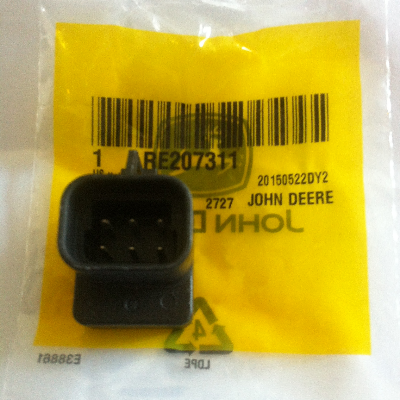
Basically a dummy electrical connector with a 120 Ohm resistor inside used at each end of a CANBUS harness. Part number I was dealing with is RE207311, machine is a 6430 Premium tractor.

Seems like a a simple part unlikely to fail, yet, apparently they DO, causing all sorts of weird electrical glitches.

Anyone here have any experience with them?
 
(quoted from post at 16:44:42 08/23/22) Deere also calls them ''electronic control units''.

Two or more are used on many late-model tractors, combines, etc. etc..

Basically a dummy electrical connector with a 120 Ohm resistor inside used at each end of a CANBUS harness. Part number I was dealing with is RE207311, machine is a 6430 Premium tractor.

Seems like a a simple part unlikely to fail, yet, apparently they DO, causing all sorts of weird electrical glitches.

Anyone here have any experience with them?


Yes, I have had issues with the EOL resistors. My issues were not on JD equipment, but on large manufacturing equipment that utilizes CAN or PROFIBUS communication networks.
 
(quoted from post at 21:31:14 08/23/22) Do you have a picture of this there are a couple of common ones used in class 8 trucks

fbc6f1277173a05ee3d2d5d10db52627.jpg
 
(quoted from post at 10:44:42 08/23/22) Deere also calls them ''electronic control units''.

Two or more are used on many late-model tractors, combines, etc. etc..

Basically a dummy electrical connector with a 120 Ohm resistor inside used at each end of a CANBUS harness. Part number I was dealing with is RE207311, machine is a 6430 Premium tractor.

Seems like a a simple part unlikely to fail, yet, apparently they DO, causing all sorts of weird electrical glitches.

Anyone here have any experience with them?


20 series (8120-8520) tractors and equipment had all sorts of problems. I personally haven't had much to do with them but everyone I work with said the 20 series was one of the worst. 20 series ran what was called the CCD system. Chrysler Collision Detection system. Different manufactures in the early 2000's were using the system. It was basically the early version of CAN Bus.
 

Getting back to my original question, I wonder why such a simple part seems to have a high failure rate?

And close to $100 for a common resistor encapsulated in a multi-pin connector.
 
Welcome to the world of High-Technology !!! You're lucky it wasn't an ECM, which is probably a couple thousand dollars.
 

I work on New Holland equipment for a living. Mostly construction equipment. I've never had a terminating resistor go bad. But most of NH's are inside a component like the ECU or UCM. Now wiring harnesses.... we've replaced a lot of those.
 
CAN is here to stay. Its a great way of sending controlling signals throughout an electronic system. For example, the average car has
over 7 computers using CAN to talk to each other. A digital signal, or wave is sent and changed as it runs through out the CAN loop.

What is the purpose of terminators in a CAN network?
By supplying a load equal to the impedance of the cable, the terminator prevents reflections or standing waves from developing on the
cable. In essence it prevents echos that wreak havoc in the computers trying to send and recieve information/commands. If I remeber
correctly, the CAN signal/wave can be about 140 feet long, so with most of our machines/electronics being much shorter than that it will
reflect and echo back and cause confusion.

I coach FIRST robotics, and we use CAN extensively on the robot to make it function. Good connections, protected wires, quality sensors,
etc are important to keeping the CAN loop from having abreak in it. Rarely we have CAN issues, but when we do, they are very time
consuming in tracing down the culprit.

120 Ohm ressitors are very cheap and with the vibration, heat and cold, they can easly go bad. They are made up of a carbon cylinder with
ceramic coating; easy to crack or fracture under vibration or impact. I like to use silicone or hot melt glue to lock them into place so
that vibration/impact doesn't bump them to cause them to break.
 
Yesterday's Tractor Forums

We sell tractor parts! We have the parts you need to repair your tractor - the right parts. Our low prices and years of research make us your best choice when you need parts. Shop Online Today.

Back
Top