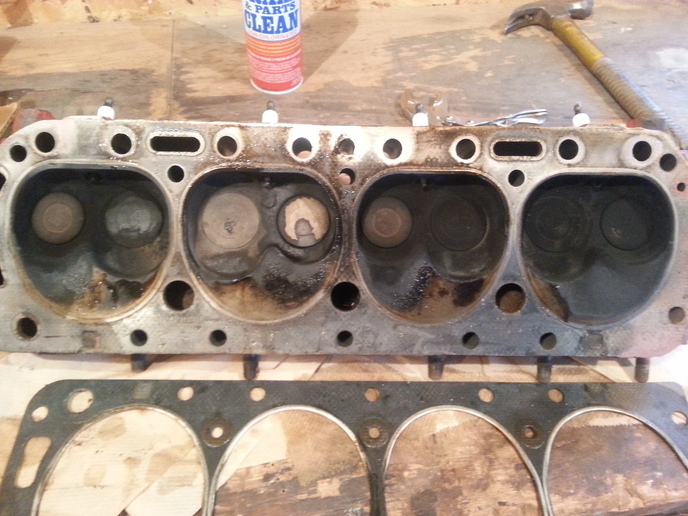
bad head gasket?

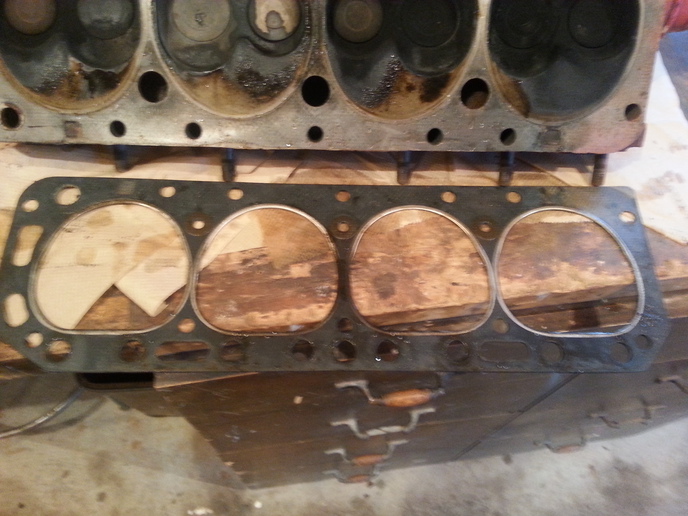
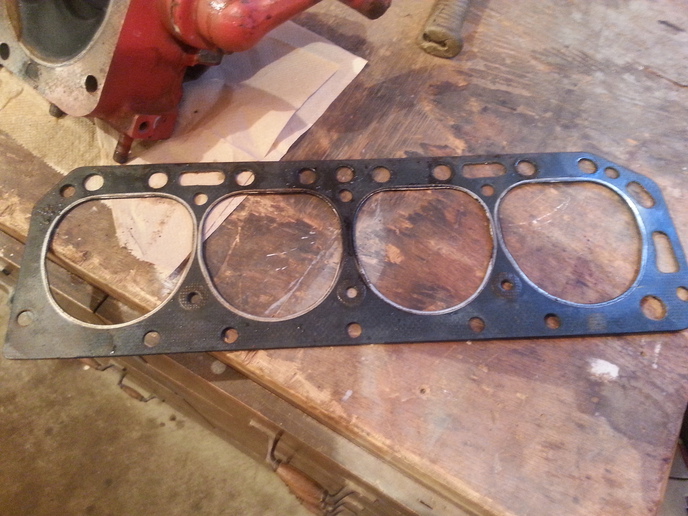
Pulled head off and took to a machine shop and they checked it and all was good. Can anyone tell from gasket what could have gone wrong? Posted before getting coolant in oil.
a141788.jpg

a141789.jpg

a141790.jpg
 
Looks like uneven torque on the bolts in the center. When re-installing clean all threads out and torque to spec. Start from center and criss-cross to edges. Of course use a new gasket.
 
When a head gasket goes like that it is a who know for sure why. To many years of running hard or vibration loosening up the head bolts over time or or at some point in time it got over heated one time to many etc etc etc.
 
Will overheating damage the gasket? The head was flat as can be. I did notice some of the bolts were a lot harder to break free than the others.
 
You have the clue in your answer.
Install torque in 2 lifts, and re-torque after it has run. Follow Mark Slater's advice.
Be sure your torque wrench is accurate.

Clean the bolt holes (tap), clean the deck and head mounting surface.

Double check your work, particularly if you get interrupted.
 
Are there pilot dowels in the deck for those 3 center head bolts? Are they concentric? Does the head settle down on them properly? Does the gasket? The only thing I see is that the chambers are slightly wet in that area... but I'd really have expected them to be cleaner if there was sustained coolant going into the chamber...
I'd check that carefully.... then bottom all of the head bolt holes with a bottom tap and clean them. Beyond that I'd seriously question if your problem isn't deeper... like a perforated cylinder wall or something if you have coolant in the oil...

Rod
 
Austin,
The gasket shows the two cylinders in the middle were burping and swapping a little spit for a while, but not too long, it didn't eat the gasket totally away yet. Something moved, as Old said, "Who knows for sure why" to allow that.
The gasket also has a fair amount of restriction on those lower holes in the bottom pic. Not sure if this is normal for that particular gasket but generally flow restriction by gasket alone is not a good thing. If I was re-assembling with a gasket like that one, and I saw an area of the gasket unsupported on either side, I would be cutting out the unsupported part. Always afraid of it breaking free and ending up someplace bad.

Good point! Dean
Never hurts to run a straight edge across the block to see if it is flat. Good time to check for any cracks or dingles there too. Run each piston up and down to check the walls/sleeves. Hopefully you won't be seeing this view of your engine again any time soon. Document and double check everything.

Re-torquing after the first run is a great reminder from ErnieD. They can change after the engine heats up, everything seats for the first time and it cools back down.
 
"The gasket also has a fair amount of restriction on those lower holes in the bottom pic. Not sure if this is normal for that particular gasket but generally flow restriction by gasket alone is not a good thing. If I was re-assembling with a gasket like that one, and I saw an area of the gasket unsupported on either side, I would be cutting out the unsupported part. Always afraid of it breaking free and ending up someplace bad."

Would you believe that the Ford engineers designed the engine and gaskets so that the gasket actually controls the volume of water flow throughout the head for cooling purposes? Cutting the water holes larger defeats the engineered cooling process.
 
How did they check the head? Visual, dye penetrant, pressure test, flat within .001 inch?
Did they hot tank the head so it looks almost new?

What does the top of the block look like? Look for any evidence of leak, clean block deck very well with a wire brush in your drill look for cracks, scratches or pitting.

Once you put it back together fill the radiator and leave the oil pan empty and drain plug out then pressure check the coolant system over night, if you have a leak it will leak out the oil drain plug.

BigWill
 
(quoted from post at 03:27:55 01/16/14)
Would you believe that the Ford engineers designed the engine and gaskets so that the gasket actually controls the volume of water flow throughout the head for cooling purposes? Cutting the water holes larger defeats the engineered cooling process.

I never knew. . . Why in the world would they do it that way? That's a new one on me. But I have seen crazier things. I suppose it is less likely to break free on a reinforced head gasket. Still, I don't like the engineering behind it. If they wanted the restriction they should have gone with a metal ring.
 
(quoted from post at 23:04:20 01/15/14) Pulled head off and took to a machine shop and they checked it and all was good. Can anyone tell from gasket what could have gone wrong? Posted before getting coolant in oil.
a141788.jpg

a141789.jpg

a141790.jpg
Austin, went thru the same thing. Mine looked worse than yours but I checked everything I could that I received input on from everyone here. Rolled the crank by hand to check cylinders, straight edged everything, scraped and wire wheeled everything, even inspected head and block deck with magnifying glass. FOUND NOTHING! Have to remember these old girls are 50+ years old. Things give in after awhile. All I could come up with was the gasket finally just had enough. I had the same marks on deck between 2 and 3 just like yours. Who knows, could of just vibrated enough to let something give. I just figured I'd gamble on the $25 gasket and go for it. Sprayed it with some copper coat, torqued it down according to pattern in manual and started it up. Let it get to temp, re-torqued and never looked back. Not one issue since. Not saying 100% sure something else couldn't be wrong but I'd take the $25 gamble and get a good nights sleep. Believe me, I know.......
 
On the picture of the block,I see a crack. Looking at the picture look at the 2nd hole from the left side, I see the crack going down to the cylinder sleeve where some of the surface is pitted. Or is it just me seeing things?
 
The head may not be the issue. I believe it was good to have it thoroughly checked out by a respected machine shop. Your block deck and liner seem to have issues to me. Did you clean it all up and lay a straightedge along it? Some people advocate a carpenter's square, but that is not a straightedge. It appears you have a lot of pitting on the block and liner. For a more permanent repair that needs to be addressed in my opinion. Coolant does not have to move on only one side of the gasket.
 
Google Kopper Koat and read for yourself. I buy it at the auto parts store. Made for head gaskets. Have used it on every HG I have ever replaced, never had to retorque and never had a problem. It should fill in the pits we see in the pictures nicely.

On oil in the water and finding the leak, Google Alexander's Tractor Parts located in Winnsboro, TX. Have been in the business of restoring Ford engines and trannies, among other things, for many years. They have a ton of experience with early Fords and have an up to date machine shop.

When I restored one of my Fords, I went over there and bought some things along with a refurbished head. The head had been cracked and they plugged the crack by installing lead dowels all the way down the crack. Have been doing the operation for 10's of years so it must be successful. Was for me.

The machinist said that cracked heads are somewhat common on the 144 and 172 engines. Said he does a lot of them. Said you need to MAGNIFLUX the head to see some of them.

They also have an SOS tranny replacement, drop in standard shifter that they sell; did have anyway; maybe still do. Have it mounted on a skid for shipment anywhere. Back then it was $1750 for the whole thing including new clutch plate and throwout bearing and all necessary parts.


Might give them a try.

Mark
 
Yesterday's Tractor Forums

We sell tractor parts! We have the parts you need to repair your tractor - the right parts. Our low prices and years of research make us your best choice when you need parts. Shop Online Today.

Back
Top