

You should upgrade or use an alternative browser.


Hobo,NC
Well-known Member
- Location
- Sanford, NC
(quoted from post at 16:47:52 03/01/17) Has anybody try to add power steering to there N tractor with a 12 volt system?
Kirk
http://forums.yesterdaystractors.co...&postdays=0&postorder=asc&start=0

TheOldHokie
Well-known Member
- Location
- Myersville, MD 21773
(quoted from post at 09:01:32 03/01/17)(quoted from post at 16:47:52 03/01/17) Has anybody try to add power steering to there N tractor with a 12 volt system?
Kirk
http://forums.yesterdaystractors.co...&postdays=0&postorder=asc&start=0
I see the nay-sayers are not confined to this forum ;-) If it were me I think I would investigate scrapping the OEM wheel and shaft altogether and replace them with something a bit easier to adapt....
TOH
TheOldHokie
Well-known Member
- Location
- Myersville, MD 21773
(quoted from post at 09:25:24 03/01/17) Thanks Dan
Keep us updated -IMO it's a very good idea and almost certainly easier and less expensive than the hydraulic foo-foo others have gone through. When I looked on eBay I was surprised at how inexpensive the salvage EPS units are....
TOH
TheOldHokie
Well-known Member
- Location
- Myersville, MD 21773
(quoted from post at 11:46:44 03/01/17) i stopped to look at a roadside tractor that used hyd power steering cyls, but used one of those electric ready-power units to power it. It was a hair klunky.. but DID work.powerfull too. he sheared a key at one of his spindles.
how much do those eps systems go for?
You can get one of the Saturn boxes for $90 - $100. Lots of other makes and models for a few bucks more.
TOH

John Deere D
John Deere D
Quite interesting:
Bob
TheOldHokie
Well-known Member
- Location
- Myersville, MD 21773
(quoted from post at 11:46:44 03/01/17) i stopped to look at a roadside tractor that used hyd power steering cyls, but used one of those electric ready-power units to power it. It was a hair klunky.. but DID work.
how much do those eps systems go for?
Just FYI Chris - here is a picture of the Saturn box - $100 and free shipping. You also need a "controller" for another $50. My guess is you could figure out how to roll your own from stuff you have on your bench ;-)
I believe it goes like this. Splice the shafts on the electric assist gearbox into your steering column along with some sort of torque arm/plate for the body Then hook up the juice and dial up the amount of boost you want on the controller's pot. You are good to go and you can be your own little ECM if you want and decrease or increase the assist on the fly using the pot on the controller.
TOH

John Deere D
John Deere D
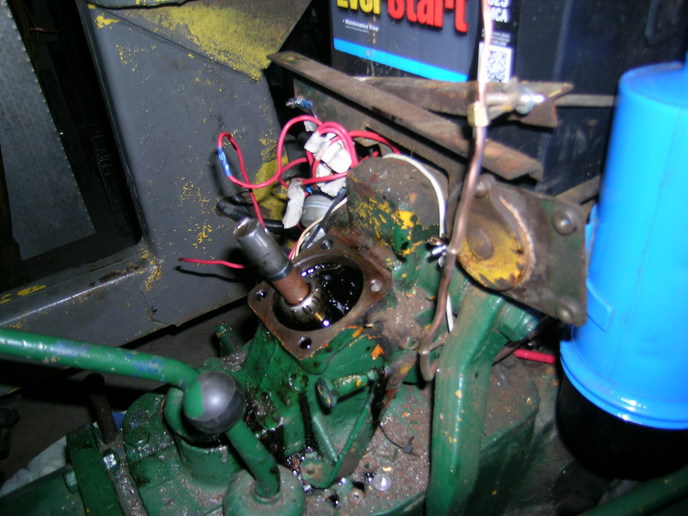
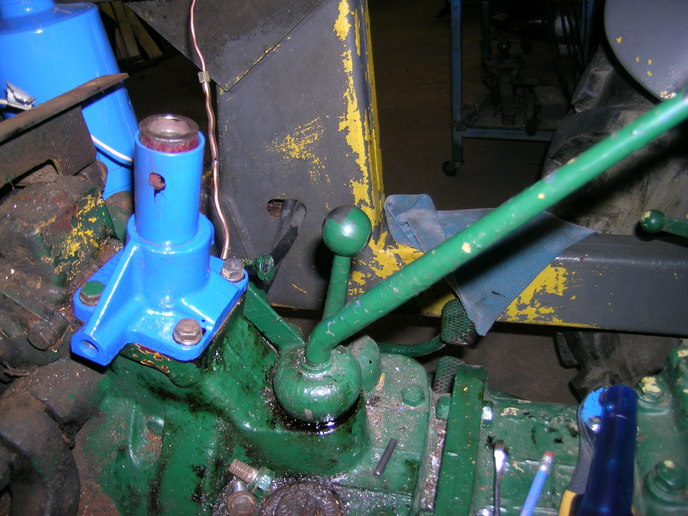
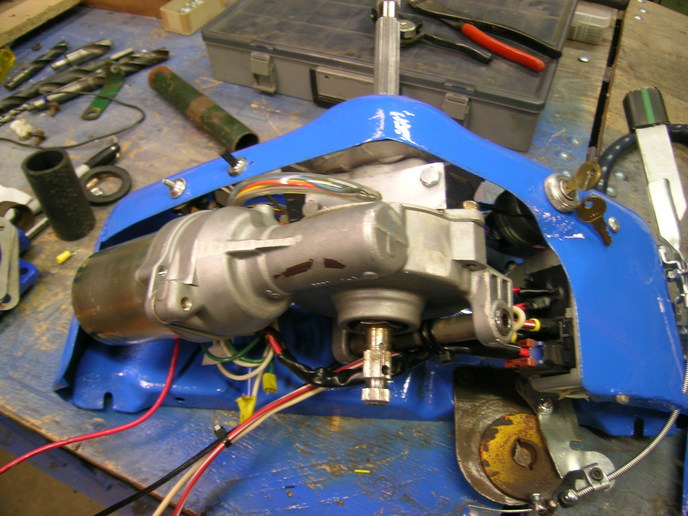
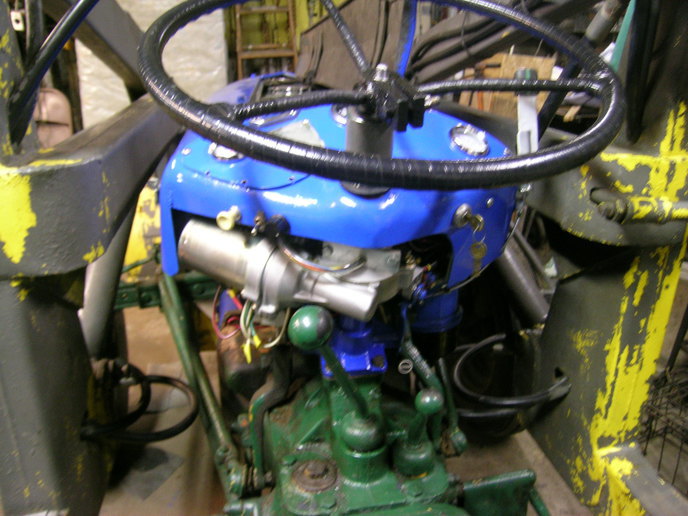
Total installation procedure:
Quite interesting:
Here are some pictures:
Bob

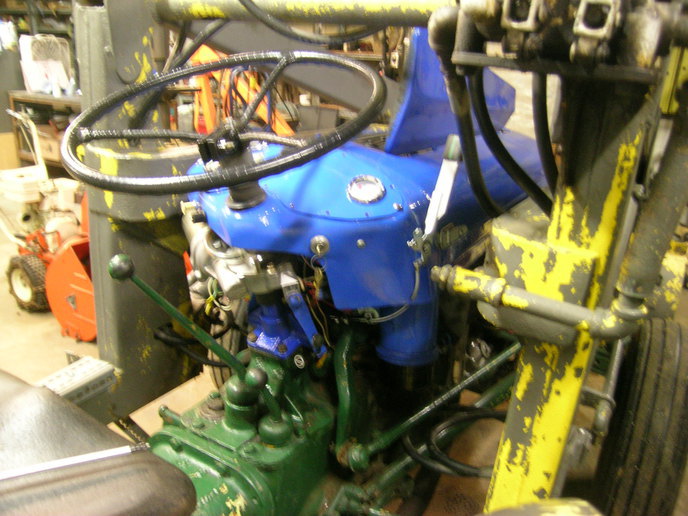
They can also be had reasonably on fleabay.
TheOldHokie
Well-known Member
- Location
- Myersville, MD 21773
(quoted from post at 12:33:07 03/01/17) nice.
i assume the shafts are separate? or no? IE.. is one an input shaft, and the other output, or is it a straight thru ordeal with
either a plunger or optical sensor to sense direction?
I would think the simplest design would be one shaft straight through with with some sort of angle drive for the motor and a transducer on the motor/shaft to sense load and direction. But that's a WAG.....
TOH
Hobo,NC
Well-known Member
- Location
- Sanford, NC
TheOldHokie
Well-known Member
- Location
- Myersville, MD 21773
(quoted from post at 16:18:17 03/01/17) http://www.autoserviceprofessional.com/article/92544/electronic-power-steering
Interesting. My little G2460 Kubota lawn tractor is equipped with electronic steering assist and every now and then the steering turning one direction gets a lot harder than when turning the other. The manual has a description (the details of which I can't recall at the moment) of how to reset the assist level. I guess that is the torque sensor zero point calibration the article talks about....
TOH

Kirk-NJ
Well-known Member
(quoted from post at 11:45:58 03/01/17) Yes, I've seen the ones that go into a fail safe mode and I control box is needed..
Kirk
Sorry that should have said once in fail safe mode NO control box is needed.
Hobo,NC
Well-known Member
- Location
- Sanford, NC
(quoted from post at 03:32:02 03/02/17)(quoted from post at 16:18:17 03/01/17) http://www.autoserviceprofessional.com/article/92544/electronic-power-steering
Interesting. My little G2460 Kubota lawn tractor is equipped with electronic steering assist and every now and then the steering turning one direction gets a lot harder than when turning the other. The manual has a description (the details of which I can't recall at the moment) of how to reset the assist level. I guess that is the torque sensor zero point calibration the article talks about....
TOH
Probably so I have not had to calibrate one YET but have replaced a few on a hydraulic set up that's called a steering wheel position sensor are something in that order. Just what we need some sort of computerized junk on a damm mower

TheOldHokie
Well-known Member
- Location
- Myersville, MD 21773
(quoted from post at 09:04:47 03/02/17)(quoted from post at 03:32:02 03/02/17)(quoted from post at 16:18:17 03/01/17) http://www.autoserviceprofessional.com/article/92544/electronic-power-steering
Interesting. My little G2460 Kubota lawn tractor is equipped with electronic steering assist and every now and then the steering turning one direction gets a lot harder than when turning the other. The manual has a description (the details of which I can't recall at the moment) of how to reset the assist level. I guess that is the torque sensor zero point calibration the article talks about....
TOH
Probably so I have not had to calibrate one YET but have replaced a few on a hydraulic set up that's called a steering wheel position sensor are something in that order. Just what we need some sort of computerized junk on a damm mower
The first time I had hard steering issues I was surprised to discover the PS was electric not hydrostatic and I don't think there is a "computer" involved.
Kubota appears to have reverted to hydrostatic steering on their current G Series lineup so perhaps it wasn't a real success story :roll:
TOH

Ultradog MN
Well-known Member
- Location
- Twin Cities
I have said this before here that if I had to choose between PS and Live PTO I would take the PS.
One thing that has not been brought up in this discussion (or at least I didn't see it) is that a unit like that does all it's work BEHIND the sector gears and steering box.
Most power assist systems do their work in FRONT of the sector gears/steering box.
So though the unit that is shown would make your steering much easier it's effect on your steerimg box would be like having a 300 lb man turning the steering wheel. If you put that unit on a loader tractor you would wear out your steering box rather quickly. Maybe even break it.
Notice the cylinder on the side of this 3000. The front end is pushing on the drag link. The back end is anchored to the radius rod.
There is NO extra pressure on the steering box. In fact the box does significantly less work than a manual box.
Ford used this identical power assist system from the mid 1950s till well into the 1980s.
I say it's all well and good to play around with stuff like this but if you want modern features, buy a newer tractor.
Ultradog MN
Well-known Member
- Location
- Twin Cities
YT's photo hosting is kinda lame.
Let's try photobucket.

TheOldHokie
Well-known Member
- Location
- Myersville, MD 21773
(quoted from post at 18:53:42 03/02/17) Once you've had power steering you will never go back to manual.
I have said this before here that if I had to choose between PS and Live PTO I would take the PS.
One thing that has not been brought up in this discussion (or at least I didn't see it) is that a unit like that does all it's work BEHIND the sector gears and steering box.
Most power assist systems do their work in FRONT of the sector gears/steering box.
So though the unit that is shown would make your steering much easier it's effect on your steerimg box would be like having a 300 lb man turning the steering wheel. If you put that unit on a loader tractor you would wear out your steering box rather quickly. Maybe even break it.
It won't "break it" or "wear it out" any faster than it would with manual steering. The only difference is who is supplying the input power needed to turn the wheels. If this is going to be a problem perhaps the tractor simply isn't suited for a loader ;-)
TOH
Royse
Well-known Member
- Location
- Ionia County, Michigan
I'm looking at your pairs of mounting bolts on the side.
One set above the other at the front of the bell housing,
then another set further aft. My 335 has them just like that.
My 3000 lacks the aft set. I haven't looked at the other 3000
yet to see if it has them, but I will when I think about it.
If it matters, my 335 is a 6 speed and the 3000 an 8 speed.
Ultradog MN
Well-known Member
- Location
- Twin Cities
Anyone care to guess how much mechanical advantage that electric unit gives you? Torque amplification or whatever you want to call it?
25% increase? 40%? More? Anyone got specs?
Ultradog MN
Well-known Member
- Location
- Twin Cities
My 3000 is actually a stealth 3600. I think a 76 model.
Standard 8 sp w/lpto.
Same tranny case as your 335.
Notice my hydraulic pump. Gear type with filter - also like your 335.
3000 has piston pump.
3000/3600 are almost identical tractors. About 98% of the parts will interchange.
I just like the early style Thousand series tin with louvered hood and wrap around front grill.
Since she's sporting 3000 tin that's what I call it.
TheOldHokie
Well-known Member
- Location
- Myersville, MD 21773
(quoted from post at 23:21:14 03/02/17)
Anyone care to guess how much mechanical advantage that electric unit gives you? Torque amplification or whatever you want to call it?
25% increase? 40%? More? Anyone got specs?
Precise output specifications for the motors are hard to find - especially for the now old-school column assist designs. And the EPS systems are state of the art designs that provide variable assist based on operating conditions and the input from the steering wheel. In an OEM environment the Power Steering Control Module dynamically varies the motor output based on road speed, column input, and a torque map.
But in the case of retrofitting one of the Saturn units we have been discussing the boost level is set with a knob on the bread-boarded control unit and once set remains linear with column input. Given that you can easily do a seat of the pants measurement/calibration.
Park the tractor on a smooth hard surface. With the EPS switched off measure the torque needed at the rim of the steering wheel in order to turn the front wheels. Now set the EPS control to reduce that torque by 50%. The EPS is matching your input. If you dial up 25% less effort at the wheel the EPS is outputting 3X your input. Obviously there is an ultimate stall point on the EPS motor which I suspect you can determine with a slightly more "sophisticated" variation on this test ;-)
TOH
Ultradog MN
Well-known Member
- Location
- Twin Cities
(quoted from post at 05:13:08 03/03/17)(quoted from post at 23:21:14 03/02/17)
Anyone care to guess how much mechanical advantage that electric unit gives you? Torque amplification or whatever you want to call it?
25% increase? 40%? More? Anyone got specs?
Precise output specifications for the motors are hard to find - especially for the now old-school column assist designs. And the EPS systems are state of the art designs that provide variable assist based on operating conditions and the input from the steering wheel. In an OEM environment the Power Steering Control Module dynamically varies the motor output based on road speed, column input, and a torque map.
But in the case of retrofitting one of the Saturn units we have been discussing the boost level is set with a knob on the bread-boarded control unit and once set remains linear with column input. Given that you can easily do a seat of the pants measurement/calibration.
Park the tractor on a smooth hard surface. With the EPS switched off measure the torque needed at the rim of the steering wheel in order to turn the front wheels. Now set the EPS control to reduce that torque by 50%. The EPS is matching your input. If you dial up 25% less effort at the wheel the EPS is outputting 3X your input. Obviously there is an ultimate stall point on the EPS motor which I suspect you can determine with a slightly more "sophisticated" variation on this test ;-)
TOH
Scenario One:
Fellow wants an easier steering on his unballasted tractor for mowing.
The electric ps unit would make steering easier.
Scenario Two:
8N with a loader bucket full of dirt in soft soil.
Gorilla in the seat is still going to manhandle the wheel - even though your elec ps is multiplying his input to the sectors? I understand there is likely a stall point on the gizmo. But it would be much higher torque than a guy would normally/generally/prudently apply to the wheel.
You need your power assist in front of the sectors. Not behind them. Otherwise you get a worn out and/or broken box.
Notice my hydraulic pump. Gear type with filter - also like your 335.
3000 has piston pump.
3000/3600 are almost identical tractors. About 98% of the parts will interchange.
I would assume you would need the pump and steel lines to swap out a piston pump ? Any thing else ? That's a great set up with the filter .
Ultradog MN
Well-known Member
- Location
- Twin Cities
(quoted from post at 07:37:18 03/03/17)Notice my hydraulic pump. Gear type with filter - also like your 335.
3000 has piston pump.
3000/3600 are almost identical tractors. About 98% of the parts will interchange.
I would assume you would need the pump and steel lines to swap out a piston pump ? Any thing else ? That's a great set up with the filter .
I asked about that on the Ford board once. Both Rod and Bern recommended against it since the entire hyd system was designed for the higher flow.
3600 has about double the flow of the 3000 - 8.4gpm vs 4.2
Maybe TOH could weigh in on that?
The hyds and factory alternator were the 2 most signigicant upgrades the X600s had over the X000s.
TheOldHokie
Well-known Member
- Location
- Myersville, MD 21773
(quoted from post at 09:15:23 03/03/17)(quoted from post at 05:13:08 03/03/17)(quoted from post at 23:21:14 03/02/17)
Anyone care to guess how much mechanical advantage that electric unit gives you? Torque amplification or whatever you want to call it?
25% increase? 40%? More? Anyone got specs?
Precise output specifications for the motors are hard to find - especially for the now old-school column assist designs. And the EPS systems are state of the art designs that provide variable assist based on operating conditions and the input from the steering wheel. In an OEM environment the Power Steering Control Module dynamically varies the motor output based on road speed, column input, and a torque map.
But in the case of retrofitting one of the Saturn units we have been discussing the boost level is set with a knob on the bread-boarded control unit and once set remains linear with column input. Given that you can easily do a seat of the pants measurement/calibration.
Park the tractor on a smooth hard surface. With the EPS switched off measure the torque needed at the rim of the steering wheel in order to turn the front wheels. Now set the EPS control to reduce that torque by 50%. The EPS is matching your input. If you dial up 25% less effort at the wheel the EPS is outputting 3X your input. Obviously there is an ultimate stall point on the EPS motor which I suspect you can determine with a slightly more "sophisticated" variation on this test ;-)
TOH
Scenario One:
Fellow wants an easier steering on his unballasted tractor for mowing.
The electric ps unit would make steering easier.
Scenario Two:
8N with a loader bucket full of dirt in soft soil.
Gorilla in the seat is still going to manhandle the wheel - even though your elec ps is multiplying his input to the sectors? I understand there is likely a stall point on the gizmo. But it would be much higher torque than a guy would normally/generally/prudently apply to the wheel.
You need your power assist in front of the sectors. Not behind them. Otherwise you get a worn out and/or broken box.
I have EPS on my car and I am smart enough to know I shouldn't crank with all my might on the steering when the wheels are captive against a curb. It's going to put an excessive load on the rack and that would be a "bad" thing to do and might damage something. Likewise with your hydraulic assisted steering - it would put an excessive load on the steering linkage and might bend or break something.
Unless you are a numb-nutz operator who makes a habit of repeatedly doing "bad" things, over thousands of hours of work I seriously doubt there is any meaningful difference in gearbox life expectancy between a tractor+loader with manual steering and that same machine with EPS. In both cases I would expect a somewhat shortened gearbox life because in both cases it is the loader that is the culprit.
TOH
Ultradog MN
Well-known Member
- Location
- Twin Cities
You are compounding the torque that is
applied to those sectors not only under
loader conditions. You are doing it
anytime the tractor is not on flat hard
dirt where the steering is one hand easy.
Double the work the sectors are doing
halves the life. It's that simple.
But suit yourself.
TheOldHokie
Well-known Member
- Location
- Myersville, MD 21773
(quoted from post at 11:12:35 03/03/17) Sorry TOH.
You are compounding the torque that is
applied to those sectors not only under
loader conditions. You are doing it
anytime the tractor is not on flat hard
dirt where the steering is one hand easy.
Double the work the sectors are doing
halves the life. It's that simple.
But suit yourself.
I guess I got that torque and work thing all wrong in physics class.
You are not compounding the torque applied to the sectors. You are simply changing the source(s) of that torque. The maximum load/torque on the sectors is governed by the turning resistance applied by the front wheels. [u:82451040fa]For any given steering surface condition[/u:82451040fa] the load on the sectors is exactly what is needed to overcome the resistance from the wheels - no more and no less. Adding column EPS assistance does not increase or decrease the turning resistance from the wheels or the load/torque passing through the sectors. What column EPS changes is the amount of work the operator has to input into that equation in order to overcome that resistance.
On a physics/engineering exam that would be quantified as:
- [*:82451040fa]Reduced work input from the operator[*:82451040fa]Added work input from the EPS exactly equal in amount to the decrease in work input by the operator[*:82451040fa]The same amount of work through the sectors and delivered to the front wheels[/list
 :82451040fa]Now it's been almost a half century since my last physics exam but I am pretty sure you can take that to the bank.
TOH
Ultradog MN
Well-known Member
- Location
- Twin Cities
impress me TOH. Nor do they advance your
argument.
There isn't any Ford tractor that has ps
where the power is applied behind the
steering sectors - save for later models
like the late 4000, 5000 and derivitives
that had integral ps - wbich were a very
different design. All of the others used a
system where the power was applied between
the rear steering arms and the front
steering arms. Row crops, utilities,
industrials, all of them.
You yourself state that you are smart enough
to not crank the wheels of your car against
the curb.
Bubba may not have your superior education
and may not understand that your electric
gizmo is a torque amplifier and his 20 ft
lbs at the wheel may actually be applying 40
ft lbs to the sectors. And if a 50% setting
on the gizmo is nice, 100% is nicer. So he
goes and puts a loader on and busts things.
Ultimately though, I don't really care. I
will just repeat my earlier suggestion that
if you want ps, get a newer tractor - or do
as Royse has on one of his tractors and put
a hydrostatic motor in the column and a
cylinder/s in front of the sectors and do it
that way.
The link is for an aftermarket ps system for
a 3000. Note the hyd control valve is part
of the drag link - in Front of the sectors.
Look at all those parts!
If a pre sector electric unit like we're
discussing was viable it would be on the
market. But it is not viable.
Click here
Hobo,NC
Well-known Member
- Location
- Sanford, NC
http://www.fourwheeler.com/how-to/transmission-drivetrain/129-0801-saginaw-steering-box-rebuild/
TheOldHokie
Well-known Member
- Location
- Myersville, MD 21773
(quoted from post at 19:51:29 03/03/17)
If a pre sector electric unit like we're
discussing was viable it would be on the
market. But it is not viable.
Click here
I wasn't trying to impress anyone with my education - merely pointing out that I fully understand the concepts of work and torque particularly as it applies to this application and teh loads applied to the steering box. So I guess the light has come on and you now see that the force transmitted through the gearbox with column mounted EPS is no greater than it is with ordinary mechanical steering. All that remains is to teach Bubba not to do really dumb-a$$ stuff with his new found strength. :twisted:
Column assist power steering is not only viable it has been around in one form or another for the better part of a century. Perhaps you have heard of CharLynn. In the fifties and sixties they made very popular aftermarket steering column mounted hydraulic torque amplifiers for a number of tractors (not Ford of course).The picture below is a nicely restored Farmall M with a similarly restored vintage CharLynn column assist power steering unit. New and improved designs are still rolling off the Eaton/CharLynn manufacturing line and are being used by OEM's on equipment of all sorts. Call Roland Jackson up and ask him about the aftermarket ones he sells and installs on old tractors:
[u:f8d4491129]Jackson Power Steering[/u:f8d4491129]
To quote the Borg ....
TOH

TheOldHokie
Well-known Member
- Location
- Myersville, MD 21773
(quoted from post at 23:21:14 03/02/17)
Anyone care to guess how much mechanical advantage that electric unit gives you? Torque amplification or whatever you want to call it?
25% increase? 40%? More? Anyone got specs?
Since you asked I looked. It took a while but I found some product numbers on the Nexsteer website which I assume to be generally representative. The maximum assist available from their three automobile column assist models ranges from 40-95 newton-meter (30-70 lb-ft). Not exactly gear crunching/shaft bending torque. In fact you might find 70 lb-ft somewhat wimpy when installed on even a medium size loader tractor....
TOH
Ultradog MN
Well-known Member
- Location
- Twin Cities
where the steering is a very simple and much
sturdier worm and worm wheel to the more
delicate ford steering box is a bit
disingenuous toh.
Yes column assist steering has been around
for a long time. The charlinn type or the
setups where a steering motor operates
remote steering cylinders somewhere.
Lot of forklifts, etc used that system. Some
tractors still use that system.
Some of the column assists were like the
ford setups with a hyd control block in the
column. But those systems are very different
than what you are recommending.
[i:654c4848f0]"So I guess the light has come on and you
now see that the force transmitted through
the gearbox with column mounted EPS is no
greater than it is with ordinary mechanical
steering."
I think you'll agree it's not ok to ham hand
these steering boxes all the time. It doesnt
matter how you over torque the input on them
- armstrong or your gizmo, over torque them
regularly will cause premature wear and
early failure.
It's just that your gizmo makes it easier
for bubba to do it more often and not even
realize he's doing it.
"All that remains is to teach Bubba not
to do really dumb-a$$ stuff with his new
found strength."[/i:654c4848f0]
Well, That may be one way to design stuff.
Another way is to do it like Ford or
Caterpillar or Toyota do it which is to
input power into the proper places so bubba
doesn't break it due to a poor design.
HFJ
Guest
speaking of Cat, i saw they were raided by the IRS yesterday. wonder what they've been up to.
TheOldHokie
Well-known Member
- Location
- Myersville, MD 21773
(quoted from post at 23:12:11 03/03/17)
Well, That may be one way to design stuff.
Another way is to do it like Ford or
Caterpillar or Toyota do it which is to
input power into the proper places so bubba
doesn't break it due to a poor design.
ALL machines have design limits and it is incumbent on the operator to know and stay within those limits. Good designs attempt to make it harder for the operator to exceed those limits but that is never 100% effective. You just can't fix chronic stupidity with engineering no matter how hard you try.
Column and pinion PS assist has been and is still very much in use - hundreds of thousands of OTR vehicles are equipped with it and it performs exceptionally well in those applications. That is not being disingenuous - it is being factual.
That form of assist is not the [b:fbf8acf8c0]best[/b:fbf8acf8c0] choice for all applications - loader equipped tractors are certainly one example. But I don't consider it to be a "bad design" even there and it clearly doesn't subject the steering box to the sort of instantaneous, unavoidable, full time over loading you initially described. It was that gross miss-characterization of how the design functions that started this debate.
I have made no recommendations one way or the other as regards this type of assist but you seem to think I have so let me set that record straight. Before retrofitting this type of assist to old tractors you need to evaluate all of the pros and cons of it's use in your specific application. If you decide to go this route you need to know and understand how it actually works and what you can and can't ask of it. The PS system on your tractor has a load limit that you need to understand just like you need to know and understand there is a load limit on the three point hitch and your front loader. Exceed the design limits of any of those power amplifying systems and you will surely shorten their life, possibly break something in or attached to the system, or even worse injure someone. Exercise nothing more than good common sense, stay within those limits, and you will enjoy the benefits those systems provide, avoid unnecessary and premature repair costs, and stay healthy.
TOH
Ultradog MN
Well-known Member
- Location
- Twin Cities
equipment.
The hydraulic power assist system Ford used
on the small utilities starting in 1956 or
so on the Hundreds, Priors and Thousands was
basically unchanged till they came out with
the 10 Series tractors in the early/mid 80s.
The lower portion of the ps box was
identical to the manual box - same lower
casting, same ball nut (different shaft)
exact same sector gears, bushings, steering
arms, etc.
I have been into many of these boxes and
have found that the lower parts in the ps
models are significantly less worn than
their manual counterparts.
Because those lower parts were doing very
little work. The hydraulics were doing it
all.
The design was a good one. Not perfect, but
good enough that with zero maintenance, the
ps on a few hundred K of those tractors are
still working flawlessly on these 40, 50, 60
year old machines - despite Bubba and his
ilk.
Ford engineers knew WHERE to input the power
assist - for good results, excellent
reliability and greater longevity.
TheOldHokie
Well-known Member
- Location
- Myersville, MD 21773
(quoted from post at 09:29:36 03/04/17) You could write safety warnings for new
equipment.
The hydraulic power assist system Ford used
on the small utilities starting in 1956 or
so on the Hundreds, Priors and Thousands was
basically unchanged till they came out with
the 10 Series tractors in the early/mid 80s.
The lower portion of the ps box was
identical to the manual box - same lower
casting, same ball nut (different shaft)
exact same sector gears, bushings, steering
arms, etc.
I have been into many of these boxes and
have found that the lower parts in the ps
models are significantly less worn than
their manual counterparts.
Because those lower parts were doing very
little work. The hydraulics were doing it
all.
The design was a good one. Not perfect, but
good enough that with zero maintenance, the
ps on a few hundred K of those tractors are
still working flawlessly on these 40, 50, 60
year old machines - despite Bubba and his
ilk.
Ford engineers knew WHERE to input the power
assist - for good results, excellent
reliability and greater longevity.
I've got what I consider to be an antique Kubota (1982/3 compact utility tractor) with a small loader and manual steering. The loader has a published load rating of 500# but I know for a fact :roll: it will get a 800-900 pound rock a couple feet off the ground before it stalls. I also know for a fact that turning the steering lock to lock with even the rated load in the bucket and the tractor sitting still is a death sentence for the steering ball nut and screw. It's been 20+ years since the first Bubba induced steering failure moving those rocks and there hasn't been a second. Bubba is a 90# weakling but he now knows that even without PS he is strong enough to damage the manual steering on his little tractor if he doesn't exercise some common sense. Bubba now puts the tractor in motion before trying to steer with heavy loads in the bucket and he gets the full benefit of the tractor's capabilities and doesn't inflict unnecessary damage to the machine.
If Bubba ever stumbled upon one of the never seen outside the parts book OEM power steering kits for his tractor he would probably put it on. Not because an aging Bubba now needs help steering the machine but because it would take some of the strain off the steering gear and he wouldn't have to worry about having a "senior moment". Bubba has no interest in adding an inexpensive and readily available Saturn EPS unit to the tractor because it already steers acceptably, EPS wouldn't do anything to protect the already over-taxed manual steering box, and even at his advanced age Bubba doesn't need any help breaking the steering unit if he wants to.
TOH
h Oh.........sounds like that little Kubby and Ford steering boxes just aren't as "Ford Tough" as IH Farmall! :wink:(quoted from post at 10:41:33 03/04/17)(quoted from post at 09:29:36 03/04/17) You could write safety warnings for new
equipment.
The hydraulic power assist system Ford used
on the small utilities starting in 1956 or
so on the Hundreds, Priors and Thousands was
basically unchanged till they came out with
the 10 Series tractors in the early/mid 80s.
The lower portion of the ps box was
identical to the manual box - same lower
casting, same ball nut (different shaft)
exact same sector gears, bushings, steering
arms, etc.
I have been into many of these boxes and
have found that the lower parts in the ps
models are significantly less worn than
their manual counterparts.
Because those lower parts were doing very
little work. The hydraulics were doing it
all.
The design was a good one. Not perfect, but
good enough that with zero maintenance, the
ps on a few hundred K of those tractors are
still working flawlessly on these 40, 50, 60
year old machines - despite Bubba and his
ilk.
Ford engineers knew WHERE to input the power
assist - for good results, excellent
reliability and greater longevity.
I've got what I consider to be an antique Kubota (1982/3 compact utility tractor) with a small loader and manual steering. The loader has a published load rating of 500# but I know for a fact :roll: it will get a 800-900 pound rock a couple feet off the ground before it stalls. I also know for a fact that turning the steering lock to lock with even the rated load in the bucket and the tractor sitting still is a death sentence for the steering ball nut and screw. It's been 20+ years since the first Bubba induced steering failure moving those rocks and there hasn't been a second. Bubba is a 90# weakling but he now knows that even without PS he is strong enough to damage the manual steering on his little tractor if he doesn't exercise some common sense. Bubba now puts the tractor in motion before trying to steer with heavy loads in the bucket and he gets the full benefit of the tractor's capabilities and doesn't inflict unnecessary damage to the machine.
If Bubba ever stumbled upon one of the never seen outside the parts book OEM power steering kits for his tractor he would probably put it on. Not because an aging Bubba now needs help steering the machine but because it would take some of the strain off the steering gear and he wouldn't have to worry about having a "senior moment". Bubba has no interest in adding an inexpensive and readily available Saturn EPS unit to the tractor because it already steers acceptably, EPS wouldn't do anything to protect the already over-taxed manual steering box, and even at his advanced age Bubba doesn't need any help breaking the steering unit if he wants to.
TOH
Ultradog MN
Well-known Member
- Location
- Twin Cities
have an M?
Ultradog MN
Well-known Member
- Location
- Twin Cities
There are many of us here who could use that
eps system for years with good results.
Give our non-loader tractors one handed
steering for a lot of tasks like mowing. (I
have a spinner knob on mine, on one of the
spokes at about a 12" diameter and can spin
that thing around quick as a wink.)
Because we either have an inherent
understanding of the forces involved or
because we were umm, Bubba or Igor like and
busted something in tbe past.
On the other hand, when you read a lot of
these posts where you just know the fellow
hasn't a clue. So for us to prescribe this
gizmo as a panacea for those guys is to do
them a disservice.
Anyway, no harm, no foul. At least on this
end. I do respect your expertise on many
things but don't think any
of us have all the answers.
Lastly, if you want for another agurment - I
do like to argue - keep calling your Kubota
an antique. I'll allow that it's vintage but
am a stickler for the 50 year old rule to
qualify as an antique.
Hobo,NC
Well-known Member
- Location
- Sanford, NC
(quoted from post at 20:55:48 03/04/17)h Oh.........sounds like that little Kubby and Ford steering boxes just aren't as "Ford Tough" as IH Farmall! :wink:(quoted from post at 10:41:33 03/04/17)(quoted from post at 09:29:36 03/04/17) You could write safety warnings for new
equipment.
The hydraulic power assist system Ford used
on the small utilities starting in 1956 or
so on the Hundreds, Priors and Thousands was
basically unchanged till they came out with
the 10 Series tractors in the early/mid 80s.
The lower portion of the ps box was
identical to the manual box - same lower
casting, same ball nut (different shaft)
exact same sector gears, bushings, steering
arms, etc.
I have been into many of these boxes and
have found that the lower parts in the ps
models are significantly less worn than
their manual counterparts.
Because those lower parts were doing very
little work. The hydraulics were doing it
all.
The design was a good one. Not perfect, but
good enough that with zero maintenance, the
ps on a few hundred K of those tractors are
still working flawlessly on these 40, 50, 60
year old machines - despite Bubba and his
ilk.
Ford engineers knew WHERE to input the power
assist - for good results, excellent
reliability and greater longevity.
I've got what I consider to be an antique Kubota (1982/3 compact utility tractor) with a small loader and manual steering. The loader has a published load rating of 500# but I know for a fact :roll: it will get a 800-900 pound rock a couple feet off the ground before it stalls. I also know for a fact that turning the steering lock to lock with even the rated load in the bucket and the tractor sitting still is a death sentence for the steering ball nut and screw. It's been 20+ years since the first Bubba induced steering failure moving those rocks and there hasn't been a second. Bubba is a 90# weakling but he now knows that even without PS he is strong enough to damage the manual steering on his little tractor if he doesn't exercise some common sense. Bubba now puts the tractor in motion before trying to steer with heavy loads in the bucket and he gets the full benefit of the tractor's capabilities and doesn't inflict unnecessary damage to the machine.
If Bubba ever stumbled upon one of the never seen outside the parts book OEM power steering kits for his tractor he would probably put it on. Not because an aging Bubba now needs help steering the machine but because it would take some of the strain off the steering gear and he wouldn't have to worry about having a "senior moment". Bubba has no interest in adding an inexpensive and readily available Saturn EPS unit to the tractor because it already steers acceptably, EPS wouldn't do anything to protect the already over-taxed manual steering box, and even at his advanced age Bubba doesn't need any help breaking the steering unit if he wants to.
TOH
This has me skeered to drive a N... As for the Farmall the steering box on my 100 and 140 is a P.O.S. all I have worked on are P.O.S... All I have ever drove are a P.O.S. If you repair them they are still a P.O.S.
The weak ling in a Ford box are the bearings and were the Pittman arms fit onto the sectors other that that they are well capable to stand EPS are any other means to assist it.
HFJ
Guest
[b:c415a32932]"I'll allow that it's vintage but am a stickler for the 50 year old rule to qualify as an antique."[/b:c415a32932]
in michigan, u can get an antique plate for a car or truck that's 25 years old. i'm not sure which is worse - calling a 25 year old car an antique, or the clowns who participate in vintage car events with a PT Cruiser or the chevy equivalent - HHR?
Kiss4afrog
Member
A PS motor from a Saturn Vue 02-07 from a salvage yard, ... or Ebay and the harness with the control for about $60 on Ebay.

We sell tractor parts! We have the parts you need to repair your tractor - the right parts. Our low prices and years of research make us your best choice when you need parts. Shop Online Today.
Copyright © 1997-2025 Yesterday's Tractor Co.
All Rights Reserved. Reproduction of any part of this website, including design and content, without written permission is strictly prohibited. Trade Marks and Trade Names contained and used in this Website are those of others, and are used in this Website in a descriptive sense to refer to the products of others. Use of this Web site constitutes acceptance of our User Agreement and Privacy Policy TRADEMARK DISCLAIMER: Tradenames and Trademarks referred to within Yesterday's Tractor Co. products and within the Yesterday's Tractor Co. websites are the property of their respective trademark holders. None of these trademark holders are affiliated with Yesterday's Tractor Co., our products, or our website nor are we sponsored by them. John Deere and its logos are the registered trademarks of the John Deere Corporation. Agco, Agco Allis, White, Massey Ferguson and their logos are the registered trademarks of AGCO Corporation. Case, Case-IH, Farmall, International Harvester, New Holland and their logos are registered trademarks of CNH Global N.V.
Yesterday's Tractors - Antique Tractor Headquarters
Website Accessibility Policy