



Fawteen
Well-known Member
- Location
- Downeast Maine
Customer has a Honda-powered Husqvarna self-propelled push mower.
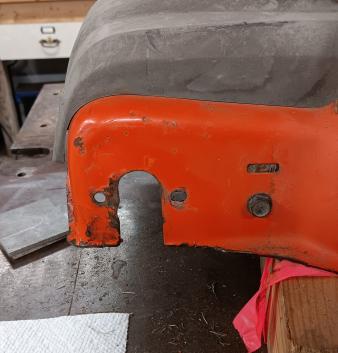
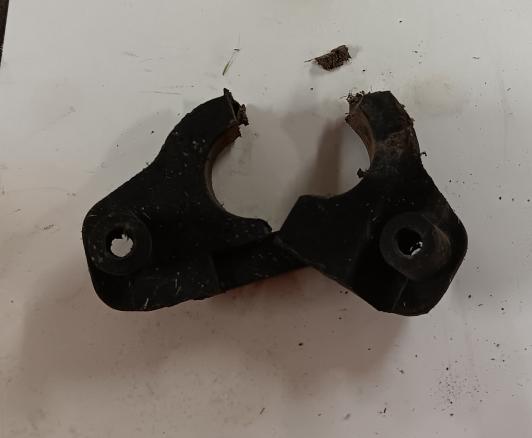
The front axle design is too light (and the owner has a tendency to bull and thrash) so the plastic bushings held in by self-threading screws strip out, the height adjuster tucks under, the front of the mower drags the ground and the wheel jams against the housing. I replaced the plastic bushings once but they didn't last long.
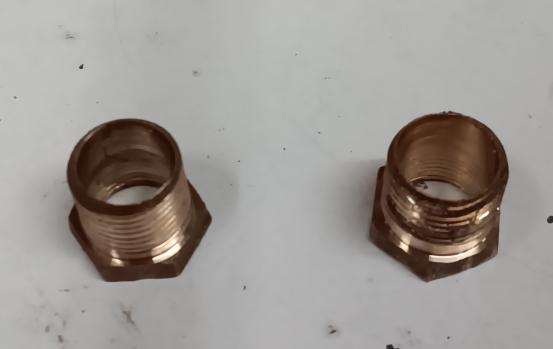
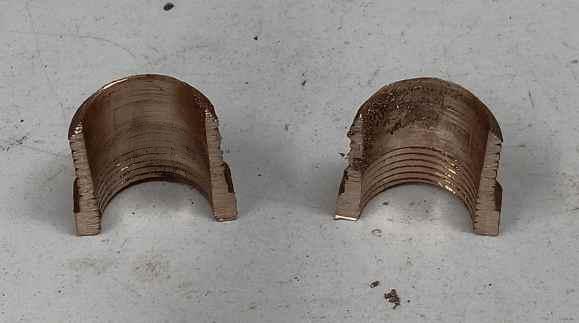
First job was to manufacture some brass bushings. Didn't have any "real" bushings on hand so bored out some brass reducing nipples and sliced them in half to fit over the axle. Due to the adjuster flange, no way to slip them over the end.
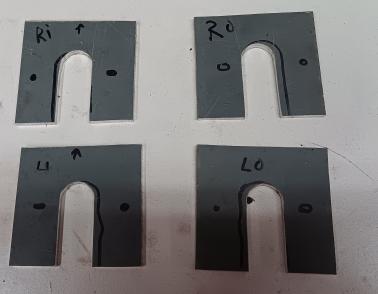
Next job was to make some combination reinforcing plates for the thin mower deck and bushing retainers. Plan A was to have an inside and an outside plate, but there wasn't room once I started to assemble the axle.
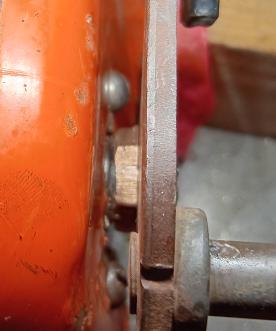
The top half of the bushing is captured by the deck stamping, the bottom half by the reinforcing plate on the inside of the deck.
Axle pivots smoothly, axle housing on the deck is MUCH stiffer and it's all held in place with 1/4-20 bolts and Nylock nuts.
Hopefully that'll farmer-proof it for a while...
The front axle design is too light (and the owner has a tendency to bull and thrash) so the plastic bushings held in by self-threading screws strip out, the height adjuster tucks under, the front of the mower drags the ground and the wheel jams against the housing. I replaced the plastic bushings once but they didn't last long.
First job was to manufacture some brass bushings. Didn't have any "real" bushings on hand so bored out some brass reducing nipples and sliced them in half to fit over the axle. Due to the adjuster flange, no way to slip them over the end.
Next job was to make some combination reinforcing plates for the thin mower deck and bushing retainers. Plan A was to have an inside and an outside plate, but there wasn't room once I started to assemble the axle.
The top half of the bushing is captured by the deck stamping, the bottom half by the reinforcing plate on the inside of the deck.
Axle pivots smoothly, axle housing on the deck is MUCH stiffer and it's all held in place with 1/4-20 bolts and Nylock nuts.
Hopefully that'll farmer-proof it for a while...

