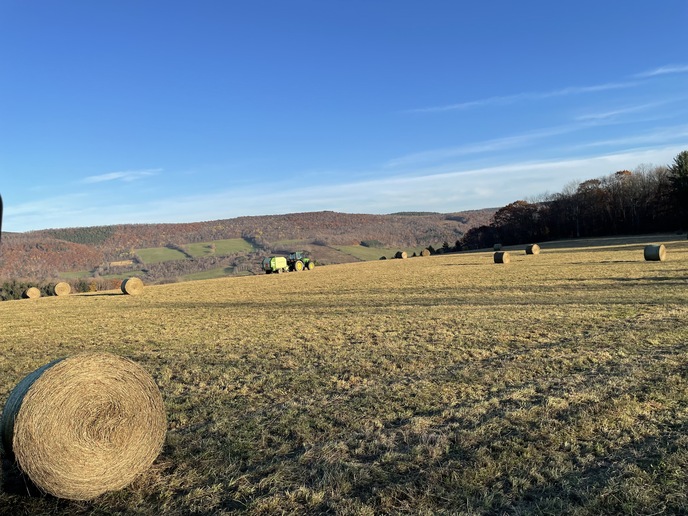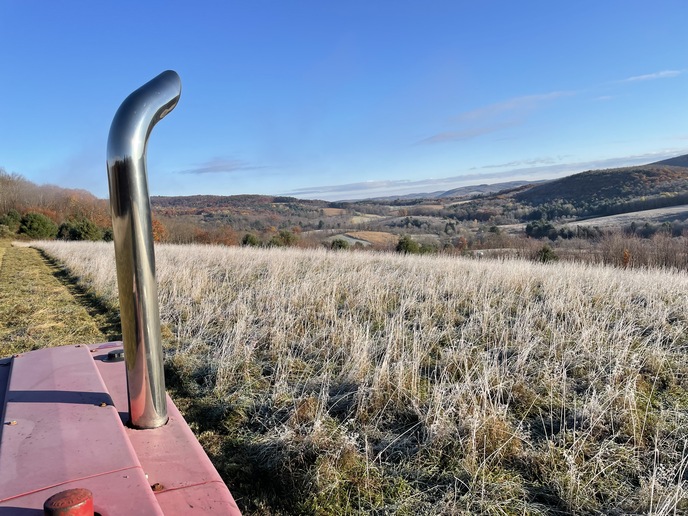


This year haying was a challenge in our neck of the woods to say the least. Early on - rain, not a lot but enough frequency to keep us out
of the fields. We took our first cutting very late and the hay was very mature - not great hay. Then a drought set-in and growth pretty
much stopped. Going into September, the rain returned and warm temperatures continued until late October. The problem with the warm
temperatures were - they were not warm enough, coupled with the lack of strong breezes and low humidity to dry down hay. The dews were so
heavy with lows in the 40s that the grass simply would not dry IMHO - so we didn't cut. During these temperatures, I saw a lot of hay
going down and one haymaker told me they waited over 5 days to bale and even then the humidity was high. This was round bales and I think
they wound-up wrapping the hay to get it off the field. In the mean time, the grass continued to grow - creating a lush second cut
potential - if we could get it off dry.
Enter frost...
In the days leading up to Tuesday November 9th, the temperatures plunged in the mid 20s, generally highs in the low 50s and on this day the
upper 60s - close to 70 degrees. Humidity was very low and strong breezes prevailed.
It was time to make freeze dried hay.
The goal was to cut the hay, let the frost freeze any moisture in the hay to ice (not heavy dew) and between the low humidity, early
morning sun and breezes - have the hay moisture go directly from ice to vapor into the air - vs melting into a heavy dew and soaking the
hay like a rain.
I think it worked. We made some of the driest, most prettiest second cut hay for such cold weather. I made a video series of this entire
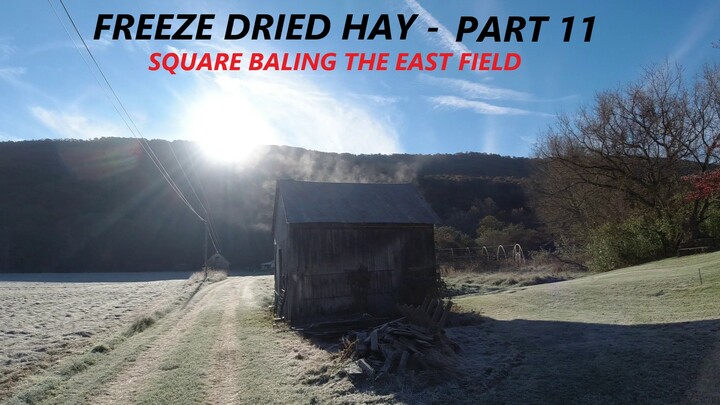
hay cutting called Freeze Dried Hay - 11 videos in all. The video link is of the last day baling on Tuesday November 9th.
Is the idea of freeze dried hay hocus pocus or does it work? Maybe... In the end, we baled dry hay. Our hay season is now over for 2021.
Enjoy!
Freeze Dried Hay
of the fields. We took our first cutting very late and the hay was very mature - not great hay. Then a drought set-in and growth pretty
much stopped. Going into September, the rain returned and warm temperatures continued until late October. The problem with the warm
temperatures were - they were not warm enough, coupled with the lack of strong breezes and low humidity to dry down hay. The dews were so
heavy with lows in the 40s that the grass simply would not dry IMHO - so we didn't cut. During these temperatures, I saw a lot of hay
going down and one haymaker told me they waited over 5 days to bale and even then the humidity was high. This was round bales and I think
they wound-up wrapping the hay to get it off the field. In the mean time, the grass continued to grow - creating a lush second cut
potential - if we could get it off dry.
Enter frost...
In the days leading up to Tuesday November 9th, the temperatures plunged in the mid 20s, generally highs in the low 50s and on this day the
upper 60s - close to 70 degrees. Humidity was very low and strong breezes prevailed.
It was time to make freeze dried hay.
The goal was to cut the hay, let the frost freeze any moisture in the hay to ice (not heavy dew) and between the low humidity, early
morning sun and breezes - have the hay moisture go directly from ice to vapor into the air - vs melting into a heavy dew and soaking the
hay like a rain.
I think it worked. We made some of the driest, most prettiest second cut hay for such cold weather. I made a video series of this entire
hay cutting called Freeze Dried Hay - 11 videos in all. The video link is of the last day baling on Tuesday November 9th.
Is the idea of freeze dried hay hocus pocus or does it work? Maybe... In the end, we baled dry hay. Our hay season is now over for 2021.
Enjoy!
Freeze Dried Hay