

You should upgrade or use an alternative browser.

Billy Shafer
Well-known Member
Sounds odd for me. I am use to the big standby units. Once a week half hour under load. Can't get use to the small stuff.

Ellis Kinney
Well-known Member
GEO-TH, In
Member

My other generator came with built in meter
Mutt and Jeff
Member

showcrop
Well-known Member
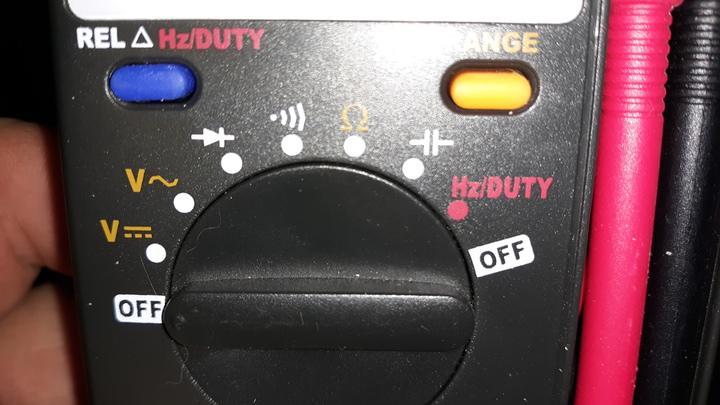
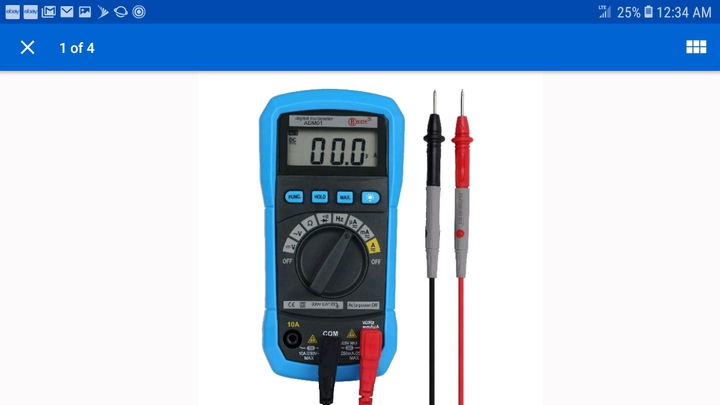
(quoted from post at 22:51:34 03/03/19) My two cents. First off does it work now? Next thing is only run a generator with hi-test gas. I am serious!!! It will keep the engine from surging or hunting. You do not want that with any power source. If you haven't changed the oil yet, do it. Follow manual or download the PDF from the internet. Find a friend who has a good digital meter that measures frequency. Shows on a meter as Hz. It means Hertz or frequency. This is critical for electronics. Never set a generator by voltage. You must set them for frequency. Keep the gas tank right to the top and store your unit in a cool dry temperature stable area. All of the stuff I have listed are the ideals. Run it for maybe 20 minutes every two or three months running a flood lite bar or something. Let us see what the other guys will add. The picture shows one of my meters. See the setting in red? Little $20.oo meter on Ebay. Look at the one in the photo. It is another type and the frequency function is right in the middle of the settings.
<img src="https://www.yesterdaystractors.com/cvphotos/cvphoto15254.jpg">
<img src="https://www.yesterdaystractors.com/cvphotos/cvphoto15255.jpg">
jeffcat, what is this about high-test preventing hunting and surging? what is surging anyway? I thought that we YTers came to agreement to years ago that use of hi-test for anything other than knock prevention was a fairy tale.

MarkB_MI
Well-known Member
- Location
- Motown USA
First, always run the carburetor dry by shutting off the fuel and letting the engine run. When it dies, pull gently on the starter cord until you feel compression; that ensures the intake and exhaust valves are both closed. (Obviously this only works on single-cylinder motors.) That keeps moisture out of the combustion chamber and prevents the valve from sticking open.
I don't know that fuel stabilizers like Stabil actually work, but it makes me feel better when I add some to the tank.
For extra protection of the cylinder and rings, you can remove the spark plug and squirt in a little oil, then pull the engine through a few revolutions. Remember to bring the engine into its compression stroke as described earlier when you replace the spark plug.
1946 BN IHC
Member
Texasmark1
Well-known Member
I don't exercise my portable genset but I do use premium fuel and always run both tank and carburetor absolutely dry upon shutdown. I also use only full synthetic oil.
The suggestion to pull the engine through to the compression stroke is a good idea and I will do it from now on.
Dean
Gene Davis (Ga.)
Well-known Member
- Location
- Miiddle Georgia
Gene Davis (Ga.)
Dave BN
Member
- Location
- Ravenna, Mi.
This is one engine that you want to be able to depend on when you need it. If it takes an hour or even a day to get the lawn mower or chain saw started thats a pain but not as bad as trying to get a generator to start in a storm and you need to flush the toilet or run the furnace.
I put Seafoam in the gas tank also.
Dave
Billy Shafer
Well-known Member
At least that was the rules when I retired. I am sure they still apply
(quoted from post at 09:57:57 03/04/19) Would the same parameters apply to a 900 wt., 2 stroke generator newly bougth? Make is a King Tools.
I tried helping my Pastor with one of those. My advice would be use non-ethanol fuel with a name brand 2 cycle mix oil and run at least the carb dry. I'd empty the tank myself. Don't expect a lot out of those little gens- a couple lights, maybe a power drill, a radio or charging a phone, stuff like that is about the limit of their design.

Bob M
Well-known Member
I have two cheap Coleman Powermate generators (2,500 and 4,000 watt) I loan to desperate neighbors during extended outages. Both had been sitting unstarted for nearly 4 years before a widespread outage here last weekend. I dragged them out, checked the oil and filled them with ethanol-free gas. Both started on the first pull, then ran/made electricity perfectly for the next 18 hours or so.
My "primary" generator (a Champion 3,500) gets run several times every winter. It is stored with the tank full of enthanol-free gas and treated with Stabil, the fuel line shut off and the carb run dry. It too starts on 1 or 2 pulls whenever needed, even after sitting for 9 - 10 months.
showcrop
Well-known Member
(quoted from post at 09:11:47 03/04/19) Presuming you have a dry place to store your generator my advice is to empty the fuel tank, run it until it quits, then simply leave alone it until needed. No regular "exercise" is required.
I have two cheap Coleman Powermate generators (2,500 and 4,000 watt) I loan to desperate neighbors during extended outages. Both had been sitting unstarted for nearly 4 years before a widespread outage here last weekend. I dragged them out, checked the oil and filled them with ethanol-free gas. Both started on the first pull, then ran/made electricity perfectly for the next 18 hours or so.
My "primary" generator (a Champion 3,500) gets run several times every winter. It is stored with the tank full of enthanol-free gas and treated with Stabil, the fuel line shut off and the carb run dry. It too starts on 1 or 2 pulls whenever needed, even after sitting for 9 - 10 months.
Bob M why do you recommend that Vern keep the tank of his primary generator dry and not run it, while you keep your tank full and run it several times each winter?
showcrop
Well-known Member
(quoted from post at 14:17:27 03/04/19) I would say the "dry" ones are really long term and as he said are loaners and
5hey can get the gas etc. His he wants to get it going NOW. Always run that
carb dry. Saves soooooo much trouble and headaches.
I have been using Stabil, shutting gas off, and running carb dry on most of my small engines for many years. I still wonder why Bob doesn't think that Vern doesn't want his to start NOW too.
Have never "exercised" it other than to use it when required.
It get used probably on average 10 hrs per year.
To shut it down, I turn the fuel off and run it dry. I then check oil and refuel it. I place a piece of electrical tape over the tank vent, cover the unit and roll it under my bench.
I do clean the unit and check all fasteners periodically.
The 11 hp CI cylinder Briggs states not to use ethanol containing fuel on the tank so I try not to - but It isn't always available.
I did convert it to electric start a couple of years ago as it was difficult to pull start in winter.
Bob M
Well-known Member
I leave the tank filled for a couple reasons: 1 - It gives me an extra 5 gallons of gas on hand for emergencies (there's been times where we could not even purchase gas nearby for several days during wide-spread outages), and 2 - It speeds up getting the generator fired up quickly when needed (no fumbling in the dark trying to fill the tank from a gas can).
But my preference would be to store the generator dry. I've run into situations where fuel gradually leaked out thru bad shutoff valves and leaky carburetors, which horribly gums up the carburetor. And I had a situation just last weekend with an elderly neighbor's generator where the shut off valve could not be turned by hand - it was stuck on account it being gummed up from weeping-type leak. When I tried to open it with pliers the valve literally disintegrated leaving the generator inoperative. I wound up using one of my dry-stored "loaner" generators to run her furnace and a couple lights.

We sell tractor parts! We have the parts you need to repair your tractor - the right parts. Our low prices and years of research make us your best choice when you need parts. Shop Online Today.
Copyright © 1997-2025 Yesterday's Tractor Co.
All Rights Reserved. Reproduction of any part of this website, including design and content, without written permission is strictly prohibited. Trade Marks and Trade Names contained and used in this Website are those of others, and are used in this Website in a descriptive sense to refer to the products of others. Use of this Web site constitutes acceptance of our User Agreement and Privacy Policy TRADEMARK DISCLAIMER: Tradenames and Trademarks referred to within Yesterday's Tractor Co. products and within the Yesterday's Tractor Co. websites are the property of their respective trademark holders. None of these trademark holders are affiliated with Yesterday's Tractor Co., our products, or our website nor are we sponsored by them. John Deere and its logos are the registered trademarks of the John Deere Corporation. Agco, Agco Allis, White, Massey Ferguson and their logos are the registered trademarks of AGCO Corporation. Case, Case-IH, Farmall, International Harvester, New Holland and their logos are registered trademarks of CNH Global N.V.
Yesterday's Tractors - Antique Tractor Headquarters
Website Accessibility Policy