Possible causes of disrupted fuel flow and/or fuel leaks are listed below. A leaking Sediment Bulb is usually caused by the only working part of the assembly - the APN-9194 Valve Stem. It is a available for under $10. Buying new Sediment Bulb Assemblies is NOT needed every time. Replacing the Valve Stem will usually fix a leaking issue. Always avoid goop, pipe calk, stud puckey, Teflon Tape, foil, and any other quick-fix Band-Aid methods to fix a leaking fuel issue. The 2nd most notable cause of leaks is the wrong size on the Bulb, carb, and fuel line fittings. The parts all use a special thread size made specifically for brake and fuel lines. It is 7/16-24 UNS. Cross-threading, over-tightening, and/or attempts to chase threads with the wrong size thread will ruin those parts, resulting in leaks. The Sediment Bulb and the brass fuel inlet elbow on the carb all have female 7/16-24 UNS threads, the Fuel Line uses mating male fittings. Leaking fuel is a major recipe for catastrophe. Would you be comfortable knowing your fuel could leak at any time with a band-aid fix? Do the job right the first time.
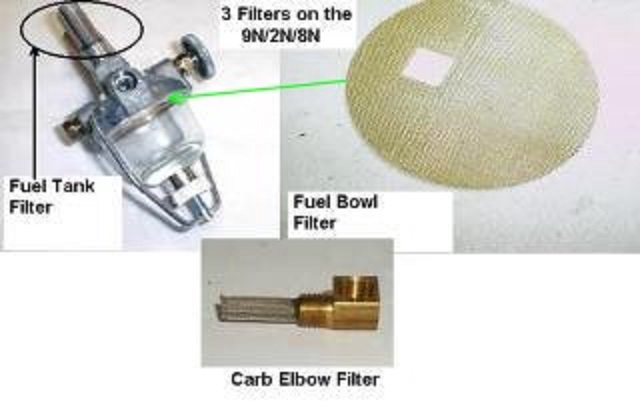
Probable NO-GO fuel issue causes are: plugged vent, plugged screens, plugged sediment bulb, dirty gas tank, dirty carb, and more. There are three OEM screens in the fuel system. Two are on the Sediment Bulb Assembly; the 3rd is on the brass elbow inside the carb where the fuel line connects to. SEE PICTURES. Do not be shove anything, wires especially, up into the sediment bulb assembly attempting to clean. You have a vertical fine mesh screen on the inlet port inside the tank that you can damage. Best solution is to remove the tank and thoroughly clean. The APN-9194 Valve stem does all the functional work. It has a 'seal' on the center of the stem. Quality units use a good oil & gas resistant rubber but many cheaper aftermarket makers use vinyl which wears out even quicker and thus causes the leaking. The FORD Fuel system used three screens in the system. The first two are in the Sediment Bulb and the third is the Fuel Inlet brass elbow on the carb. The later screen is often neglected as part of normal PM to clean at regular intervals per manual. Some owners don't even know it is there. The two upstream screens on the Sediment Bulb can also cause a clogged system and may cause leaking. The large 2 fine mesh brass screen that sets horizontally under the glass bowl is easy to clean or replace. I avoid pulling the entire Sediment Bulb from the tank if at all possible because the NPT thread on the tank can get mucked up every time it is off and on. Finally, one thing I've developed dealing with the Valve Stem is to use a dab of thread sealant on the small 8-32 screw that fastens the knurled knob on with. This way it won't come unscrewed in the field as many will nowadays and you won't know it until you get back to the barn and go to shut down the tractor for the night. With a new APN-9194 Assembly you get a new knob, screw, and star washer. Permanently securing the screw to the knob ensures it won't fall off and get lost. It has no other function and never any need to remove it. When it's time to replace the valve, toss the old one away and tack on a new knob and screw.
MAIN CAUSES OF SEDIMENT BULB FUEL LEAKS - APN-9194 SEDIMENT BULB FUEL VALVE STEM:
FORD N-SERIES TRACTOR FUEL SYSTEM & POSSIBLE CAUSES OF NO FUEL:
The best solution is to always use OEM style parts. Do not use plastic, nylon, aluminum, rubber or other material for the fuel line. Avoid any extra, external fuel filters; they're not needed. Always use the correct OEM 1/4 steel Fuel Line. They can be bought pre-bent exact-as-original. Always use the correct 7/16 Flare Nut wrench or a standard 7/16 open end wrench to loosen and tighten fuel lines with. Do not use pliers, channel locks, or vise grips to do the work - they will round off and chew up the fittings. Always start fittings by hand. Use two hands to 'get the feel' you are in the right hole. Tighten by hand as far as possible before final sequence with your wrench. Avoid over tightening. Perform the Fuel Flow Test when the problem first appears. Follow Bruce(VA)'s 75 Tips for this any other PM methods.
Tim Daley(MI)