


That should be plenty. I run my outdoor stove heat through a small modine and almost never turn the modine fan on. It just circulates. Building is insulated well. Keeps it plenty warm to do work even at 0 degrees outside.I have a very well insulated shop that is 32x40 with 16 ft high walls. Has spray foam in walls and ceiling. I have floor heat as well. I find
the floor heat makes my feet sweat and prefer to just keep the floor warm. I had a fuel oil furnace for some extra heat but it needs work and
I am tired of dealing with stove pipe. How big of a LP unit would you recommend? I found a good deal on a 60,000 btu 97% efficient.Is this
enough or should I have bigger? Thanks Tom
You are using an out of date browser. It may not display this or other websites correctly.
You should upgrade or use an alternative browser.
You should upgrade or use an alternative browser.
In cold ND, 32X48 shop, 12 ft walls, 6 inch fiberglass insulation. Have an 80k BTU propane hanging heater. Usually keep it around 35-40°F, turn it up when I'm in there working. Works well and only takes a few minutes to get it to 55-60° which is where I like it wearing non-insulated coveralls.

I have a 32x30 with 13' walls. Well insulated and sealed. Ontario Canada by lake Simcoe. Heated with just a 60k btu tube heater. Heat loss calc said 40k was enough but I wanted to be sure. I'm now sure 40k would have been enough. No infloor heat, no cold spots, no dust blowing around, and I can work on the floor without being cold. I chose the tube heater over everything else. The problem with tube heaters is, if you don't maintain a temperature, when it runs for the extended warm up time it can get uncomfortably warm on your head. I do keep it fairly warm out there 24/7, like 60°F, so this isn't a problem for me.

Hemmjo
Member
Radiant heat floor should never be much above 70˚f. That should not make your feet sweat.I have a very well insulated shop that is 32x40 with 16 ft high walls. Has spray foam in walls and ceiling. I have floor heat as well. I find
the floor heat makes my feet sweat and prefer to just keep the floor warm. I had a fuel oil furnace for some extra heat but it needs work and
I am tired of dealing with stove pipe. How big of a LP unit would you recommend? I found a good deal on a 60,000 btu 97% efficient.Is this
enough or should I have bigger? Thanks Tom

stevieb49829
Well-known Member
- Location
- Spirit Lake, Idaho
I don't even look, or care about my indoor temp. I run everything based on the temperature of the slab, at the coolest point in the system. I have a digital thermometer in a tube imbedded there. I keep the manual wood boiler going to keep the slab temp at 55-65 degrees. Cooler and the shop cat complains, warmer and my feet sweat. I'll occasionally check the input and output temps, just to satisfy me the system is working well, and I check the system pressure (about 40 psi) every time I put wood in the boiler. 120-130 degrees max. into the slab usually results in return water around 80. Heating 720 square ft of 4" concrete, with 2" EPS under, and around the slab, 16" into the ground around the slab. 3 cords of wood for the winter, and it was -15F last night here in N. Idaho. I've used about 1-1/4 cords so far. The floor was at 62 degrees when I stuck some more wood on the coals this morning. steveI have my thoughts on floor heating systems, but hesitate to post much because I usually get shouted down and told I'm crazy.
I would never have a floor heat system where the thermostat senses air temperature for exactly the same reason as posted above. You open a door and let cold air in and immediately the stat tells the boiler to kick in, which will run until the call for heat is satisfied. Now your floor is above target temperature. I would rather find a comfortable, constant floor temperature and regulate the floor heat with a floor sensor. Then have some kind of air heating unit which senses the air temp for the times you need to supplement the room air temp.
Flame suit on,,,,,,,,,,,,
No. I'm sorry but that is not how it works at all. I've been doing commercial/industrial HVAC for over 40 years, so as the commercial says, I know a thing or two because I've seen a thing or two.Usually the temp sensor is outside and fires the boiler based on outside temp
First off, the thermostat should always be sensing the heated medium, in this case, the concrete floor. You set the temperature of the concrete to maintain the air temp as the air temp is the secondary medium. A slab setting of 70 degrees should keep the air temp between 60 to 65 degrees. This eliminates the hot feet issue. If you want it warmer, then that is part of the reason why you have a backup unit heater, to temper the air temperature plus to provide back up if your boiler is wired for off peak. The outside air temperature sensor is for what is called a reheat schedule. What this means is that the colder the outside air temperature, the hotter the temperature the boiler operates at. In other words, when it is 40 degrees outside, you do not need to run your boiler water temperature at a higher temperature, but as the outside air temperature decreases, the reset schedule automatically increases the boiler water temperature set point to deal with the higher load.
Last edited:

Dave G9N
Member
I might have questioned that wisdom before I found out the hard way that you are right. I recently had a heat exchanger replaced under an extended warranty on a Carrier furnace. The inside of the combustion side was all corroded and the metal was flaking, which clogged the heat exchanger. The tech told me that the high efficiency units condense water out of the combustion gasses and the water is acidic. The chemistry makes sense. In a nutshell, the combustion byproducts are acidic, so the condensation that you get in the high efficiency iunits is corrosive. Dry surfaces don't corrode as easily as wet, so condensing furnaces are more susceptible to corrosion. To get over 95% you have to condense the water out of the exhaust.FWIW, my own experience, as well as that of a younger brother who has a plumbing heating company, has been that the 95% and up units are grief. Look for one in the 90%-95% category and you will be much better off in the long run. That extra little bit if theoretic efficiency isn't worth the aggravation.
Jim
The replacement heat exchanger was exactly the same as the old one, which is less than brilliant on Carrier's part. It lasted 15 years, all I had to pay was labor, and a new furnace would cost far more. I opted for a good shot at 15 more years for a fraction of the cost of a new furnace, which might last 20-25 years.
Look into radiant tube heaters. I've had them in both my barns since 02. Much better and more efficient for high ceilings than forced air. All the heat is reflected down.
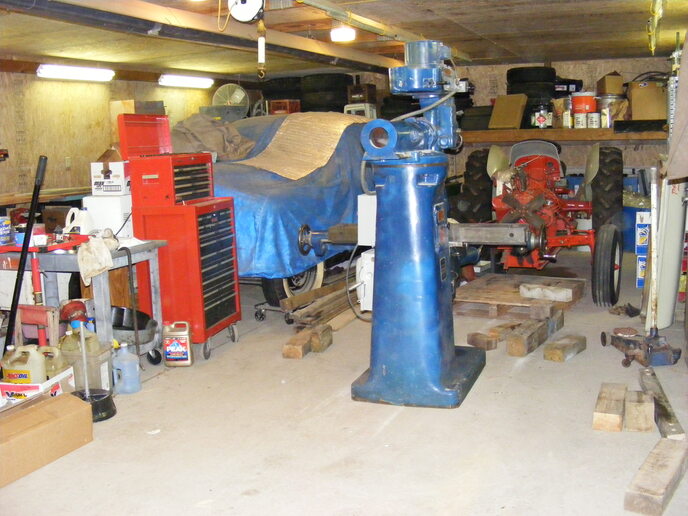
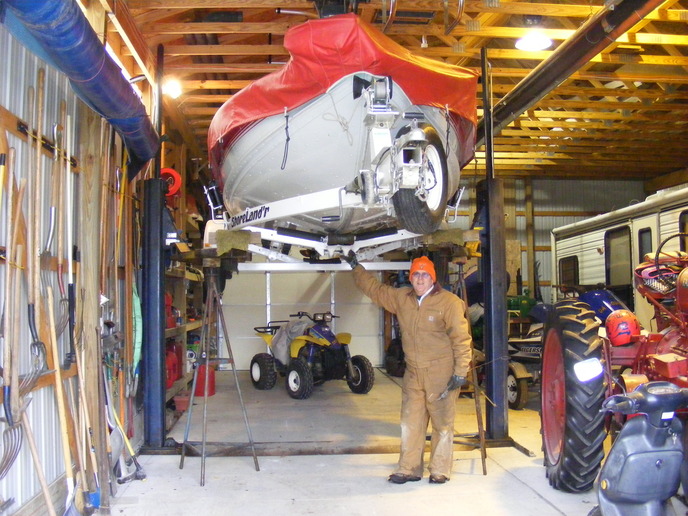
I agree with the overhead radiant tube heater. I've had it in my shop for about 15 years. Excellent heat with fast recovery. no wind like forced air heaters, just heat. My shop is 42x32x14 and I have 1 125000BTU heater which does a nice job of heating. I wouldn't do it ant other way. It also seems to be very economical.
Yes, that is what I meant.No. I'm sorry but that is not how it works at all. I've been doing commercial/industrial HVAC for over 40 years, so as the commercial says, I know a thing or two because I've seen a thing or two.
First off, the thermostat should always be sensing the heated medium, in this case, the concrete floor. You set the temperature of the concrete to maintain the air temp as the air temp is the secondary medium. A slab setting of 70 degrees should keep the air temp between 60 to 65 degrees. This eliminates the hot feet issue. If you want it warmer, then that is part of the reason why you have a backup unit heater, to temper the air temperature plus to provide back up if your boiler is wired for off peak. The outside air temperature sensor is for what is called a reheat schedule. What this means is that the colder the outside air temperature, the hotter the temperature the boiler operates at. In other words, when it is 40 degrees outside, you do not need to run your boiler water temperature at a higher temperature, but as the outside air temperature decreases, the reset schedule automatically increases the boiler water temperature set point to deal with the higher load.
I love people who make a statement such as yours. It means they are usually closed minded
Thanks for that site. I will go there myself, lots of heating questions for upcoming projects.Tom, go to heatinghelp.com and post your question on the "wall". True professionals will guide you to an acceptable solution...
Can the floor heat be zoned? Meaning on in one part of the shop and off in the other? More than one system floor heat plus air heat gives more flexibility but adds more initial cost. Direct LP versus a furnace that has venting will create more carbon dioxide issues in your shop. A mechanic I knew years ago refused to consider this and I believe it affected his health over time.

Huh?????Usually the temp sensor is outside and fires the boiler based on outside temp

We sell tractor parts! We have the parts you need to repair your tractor - the right parts. Our low prices and years of research make us your best choice when you need parts. Shop Online Today.
Copyright © 1997-2025 Yesterday's Tractor Co.
All Rights Reserved. Reproduction of any part of this website, including design and content, without written permission is strictly prohibited. Trade Marks and Trade Names contained and used in this Website are those of others, and are used in this Website in a descriptive sense to refer to the products of others. Use of this Web site constitutes acceptance of our User Agreement and Privacy Policy TRADEMARK DISCLAIMER: Tradenames and Trademarks referred to within Yesterday's Tractor Co. products and within the Yesterday's Tractor Co. websites are the property of their respective trademark holders. None of these trademark holders are affiliated with Yesterday's Tractor Co., our products, or our website nor are we sponsored by them. John Deere and its logos are the registered trademarks of the John Deere Corporation. Agco, Agco Allis, White, Massey Ferguson and their logos are the registered trademarks of AGCO Corporation. Case, Case-IH, Farmall, International Harvester, New Holland and their logos are registered trademarks of CNH Global N.V.
Yesterday's Tractors - Antique Tractor Headquarters
Website Accessibility Policy