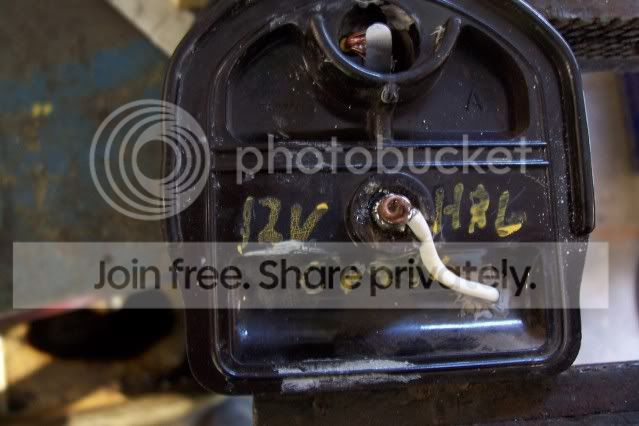
weak coil ?

My 8n will not start after it gets warmed up good, then if I let it sit for a hour or so it will start fine. I suspect a weak coil. I used her pretty hard yesterday and got her pretty hot and now she wont start at all, checked points and replaced, still no spark, getting fuel I think the coil just shot craps on me, any other suggestions.
 
Besides the coil, the ignition switch is a weak spot when it is warmed up. I recently experienced myself. Next time it happens use a jumper wire to jump around the ignition switch. If still no start, I would suspect the coil. I always try the easiest and least expensive fix first. Jumper wire - not much, Coil $30 or so.
 
I have the same problem on my '49 8N (front dist, 12V) - parked it 3 weeks ago after bushhogging, now won't hit a lick. Shoul I replace the coil? - if so, will a 6V coil work?
 
When you ask a question here, it’s usually a good idea to tell us:

1. The model of your tractor (2N, 9N, 8N, NAA, etc).

2. If it is 6v or 12v.

3. If it’s an N, if the distributor is on the front or side of the engine.

4. If it has any major parts that are not OEM, such as electronic ignition, a side coil on a front distributor, etc.

Troubleshooting is different depending on the model of the tractor, voltage, ignition system & distributor placement.

Coil problems are difficult to diagnose. For starters, round coils are pretty robust & square coils aren’t (because of the difference in insulation used), but neither one will hold up to a poorly done 12v conversion that allows too much current to the coil or leaving the key on (see tip # 38). Too much current creates heat which melts the insulation. Insufficient resistance in a 12v conversion will do the same thing. Rarely do coils just “go bad.”


There are a few ways to see if a coil is bad, but it’s not possible to determine if a coil is good w/o some expensive testing equipment. If you detect a dead short or high resistance in the coil w/ an ohm meter, it’s bad. If it’s cracked, it’s bad. If a sidemount coil w/ battery voltage to the primary will not jump a ¼” gap from the secondary wire to the block, it’s bad. But, here is the hard part: even if you do not detect a short, even if it will produce a spark, even if it’s not cracked, that doesn’t mean the coil will work when it’s hot & under a load. So, it’s a process of elimination. If the tractor starts & runs fine for 30 minutes or an hour then cuts off & refuses to re-start, and you checked for spark at the plugs & it had no spark at all, AND you have the correct voltage at the coil that’s a good sign that you have a bad coil. Let it cool off, restart it & if you have a good spark, odds are it’s a bad coil. But, even then, you might end up w/ a spare coil on the shelf!


Bottom line.......coils do go bad, but I'll venture a guess that 75% of new N coils sold today are sold to folks who do not understand how to diagnose a poor spark problem or how a coil works. So, for those who don’t know any better, in a no spark situation the first suspect is usually the coil……and, more often than not, it isn’t the problem.

Before we start telling you how to fix something you don't have, post back w/ more info about your tractor.
50 Tips
 
First, read my reply above.

Yes, you can replace it w/ a 6v coil if you use the correct resistors. What resistors does it have now?

You'd probably do better troubleshooting the problem before you just start replacing parts that are probably not broke.

It takes three things for an engine to run: spark at the right time, compression, & fuel in the right mixture. For the moment, forget about compression & concentrate on narrowing the problem down to spark or fuel.


There are three very important tools you always need to have in your N tool box: a 3 inch piece of wire w/ alligator clips on each end, an old spark plug w/ the gap opened to at least 3/16” ( ¼” is better) and a 7/16 box end wrench. (see tip # 50 at the link below) And, you really do need a working ammeter on the tractor; it is a very important diagnostic tool. With these tools, you can quickly narrow down most N problems to spark or fuel.


First, check for fuel. Get a can & put it under the carb. Remove the bolt in the bottom of the carb; as long as the fuel is turned on, you should see gas flowing out of the carb. Let it run for at least 30 seconds. If it’s a dribble, or runs for 5 seconds & stops, or none at all, you have solved half the problem: it’s fuel related. If gas flows well out of the carb & only stops when you turn it off at the sediment bowl, chances are very good it’s not a fuel problem. So, next, turn the key on, crank the engine & look at the ammeter. What is the needle doing? Does it show a constant discharge, no movement at all, or does it move back & forth slightly? Next, get the old plug, ground it to a rust & paint free spot on the engine, turn the key on & crank the engine. If the spark jumps the 3/16” gap, you probably don’t have a spark problem. If it won’t jump the 3/16” gap, you have a spark problem. If the ammeter needle shows a constant discharge, or doesn’t move at all, that also tells you that you have a spark problem. Jump the ignition switch w/ your jumper wire & see what happens. If it runs, you found the problem. If it doesn’t have spark after you jump the ignition switch, post back for more info on further troubleshooting. (and do not forget to turn the ignition switch off; see tip # 38)


If it does not have gas coming out of the carb at a steady stream w/ the bolt out for at least 30 seconds, you have a fuel problem. First, remove the gas cap. Your vent could be clogged & it vacuum locked. If that doesn’t work, tap the carb bowl w/ a hammer handle in case the float is sticking closed. (don’t whack it w/ the head of the hammer; you can crack the bowl). If you still don’t see gas flowing, the N has three fuel screens; one in the brass elbow, one in the top of the sediment bowl & one on the stem of the sediment bowl in the gas tank. Check the screen in the elbow & the screen in the top of the sediment bowl. (don’t worry about the one in the tank) Both probably need to be cleaned. If you have the fuel knob turned on all the way, & 1 gallon or less in the tank, it may be trying to feed off of the reserve inlet which is probably clogged. Only open it 2 full turns. Put at least 2 gallons in the tank. (and do not forget to turn the gas off; see tip # 9)


There are ways to check for spark & fuel that work & ways that don't. For example, having gas to the carb is nice, but having it past the float is what counts! That’s why removing the bolt in the bottom of the carb is the way to do it. And, same thing w/ spark at the plugs. Some folks think that checking for spark means pulling a plug wire off & looking for one. Well, it's the distance the spark jumps at the plug that gives you the info you want. It takes about 17kv to jump a 3/16" gap & 22kv to jump ¼” in the open air, so that's why you need to use a spark plug. Or, a store bought plug checker. Remember, it’s 14psi outside of the engine & about 90psi at a 6:1 compression ratio in the cylinders & compressed air creates electrical resistance, so you really need the 17-22kv to fire the plugs when the engine is running.
50 Tips
 
its a 48 8n with a front mount distrubutor. As far as I know all parts are OEM. Tractor has ran great for a number of years with no problems.
 
Assuming that the bushings & advance weights are ok, & that you have correct voltage to the coil, the most common electrical failure (no spark, weak spark) points on the frontmount are:

1. The insulator under the brass concave head screw.

2. The insulator at the end of the points where the copper strip attaches.

3. The copper strip is broken or grounded to the plate.

4. The condenser wire grounding.

5. The pigtail/tab not making contact.

6. Incorrect positioning of the spring clip on the plate causing the pigtail to ground.

7. Incorrect seating of the coil on the distributor due to a loose bail or no gasket; the coil must not move at all.

8. Water/moisture inside the cap due to gasket failure or the absence of a gasket.

9. Dirty/corroded/incorrectly gapped points

10. Burned rotor, cracked/carbon tracked cap.

Unless the coil is cracked or shows a dead short, chances are it's fine; square coils rarely fail cold.

First, make sure you have battery voltage to the top of the coil. (points open) If not, stop right there & find out why.

If you do have battery voltage to the top of the coil, pull the distributor & do a continuity check.

First, make sure your meter/light works (don't ask....)

Next, dress the points by running a piece of card stock or brown paper bag through them. New points sometimes have an anti-corrosive dielectric coating on them & old points can corrode or pick up grease from a dirty feeler gauge or excessive cam lubricant. Then, check the gap at .015 on all 4 lobes.

Now, follow these steps:

1. Coil off, cap off, points open. One probe on the brass screw & the other on both sides of the open points. On the side closest to the cam, you should have continuity. Not on the other side! If you do, you will also have continuity everywhere because the points are grounded.

2. Coil off, cap off, points open. One probe on the brass screw & the other anywhere on the body of the distributor. You should have no continuity! Now, rotate the tang on the distributor....as the points open & close, you have continuity (closed) and lose it when they open.

3. Coil on, cap off, points open. One probe on the lead on the top of the coil, the other on the cam side of the open points. You should have continuity!

4. Coil on, cap off, points open. One probe on the lead on the top of the coil, the other anywhere on the body of the distributor. You should have no continuity!


At this point, I just put the distributor, coil & cap all back on the tractor as a unit (it’s easier to do this from the left side). The reason I do this is because it is real easy to get the cap or coil mis-aligned trying to put it back together one piece at a time & the result is something gets broken or you get a ‘no spark’ problem.

Post back w/ results & any other questions.
50 Tips


 
OK, Bruce - and thanks for letting me jump in and piggyback ...

I checked the things that you mentioned:
* ampmeter shows 'slight' discharge and does not move when cranking (is that bad?)
* jumper across ignition switch has no effect
* pulled #1 plug and has NO spark when cranking

Btw, you asked about a resistored circuit - I see some kind of 'block' in line bewteen the switch and coil, but no indication of resistance. Should I assume that's it?

So, do you think it's a bad coil after all? I found one locally and guy says 6V is OK (on 12V sys).
Thanks again,
Steve
 

The amp meter diagnostic step is a pizzzzzzzzzzzzzzz poor way to determine a no spark problem,,,, a big waist of time,,,, gut are convert yer P.O.S. front mount coil to a external round can modern no problem coil real 12V coil,,,, leave the junk for others to tinker with....


frontmountcoil2001.jpg
[/img]
 
To close the post on my no spark/no-running problem, after removing the distributor, we discovered that the points were not opening. This was due to bad or worn out dist shaft. So replace the whole distributor and it started on first try. Thanks, All, for your advice and support.
Steve G. in TN
 
Yesterday's Tractor Forums

We sell tractor parts! We have the parts you need to repair your tractor - the right parts. Our low prices and years of research make us your best choice when you need parts. Shop Online Today.

Back
Top