



formerly ny bill
Well-known Member
I thought I knew, but now I'm not so sure. What say you?
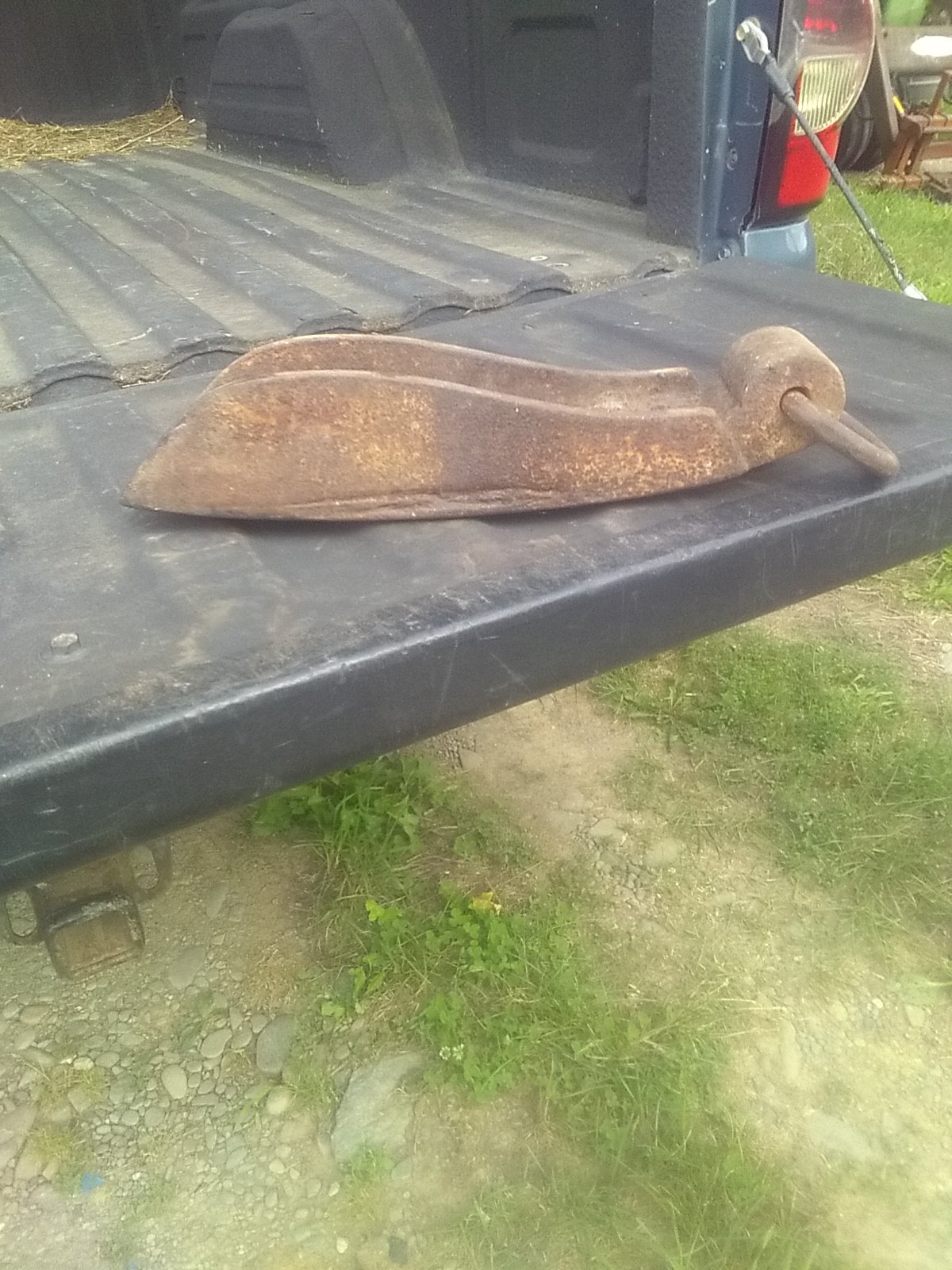

CloseSWAG....S is for Scientific: My wild ..... guess is that it is a cogged/toothed wheel brake/lock. When using the wheel, attached to a shaft or something that rotates, it's flipped back out of the way. Once the wheel is stopped and the operator doesn't want it to move it is flipped down in a groove and prevents the wheel from turning. The sides are there to ensure that it doesn't shift to the side and fall out of the grove when in the locked position. Whatever it is used on, it's big. A shaft in an old mill comes to mind, or a roller that accumulates rope as it turns to lift something. When the whatever gets where the operator wants it, the brake is applied so that the thing doesn't unravel and drop whatever was twisted or lifted.......Heck I don't know, just killing 15 minutes till bed time!
that is what i thought, but sometimes I over think..... Thanks.Close
Wagon drag
Goes under the wheel when going downhill
Tied off to wagon
And to clarify for those here that are to young to conceive this, and me at 64 having no experience in this area, can also only assume this would be for a draft animal situation. This would cause the “hitch” to remain in a state of pull instead of it pushing on the animals. The previous being less controllable or even irritating to them causing an uncontrollable “spook” reaction. Do you agree with these statements or explanation?Close
Wagon drag
Goes under the wheel when going downhill
Tied off to wagon
Ohhh the only reason I knew is cause grandpa had one hanging on the barn wall an I asked one timeAnd to clarify for those here that are to young to conceive this, and me at 64 having no experience in this area, can also only assume this would be for a draft animal situation. This would cause the “hitch” to remain in a state of pull instead of it pushing on the animals. The previous being less controllable or even irritating to them causing an uncontrollable “spook” reaction. Do you agree with these statements or explanation?

Good shot! If it isn't that, it sure should have been! gmClose
Wagon drag
Goes under the wheel when going downhill
Tied off to wagon
Come on.. all things back in the day were easy-peezy. Much like our the 1st world problems of today!That looks difficult to apply when needed type of thing.
Paul


I can't imagine trying to keep a chain on a steel wheel.We had one lying on the floor in the “junk room” of the old barn. I remember the horses and the wagon being used, but never the drag. Dad had a tractor by that time, and the wagon wasn’t regularly used.
The alternative was to chain the wheel. My dad recalled trying that without fully understanding how. Just put the chain through the spokes and started down hill. Chain slid to the center of the wheel and broke several spokes. The proper way is to wrap the chain around the rim of the wheel, then anchor it to the wagon body.
I have lots of farm equipment with chains on steel wheels. Works just fine if it is serviced and up to the task required.....I just finished my last hay baling for the year and my equipment is getting the lube and hygiene it needs to be there for me next year....while it's under shelter from the weather.........I can't imagine trying to keep a chain on a steel wheel.

I have two of these laying around the place somewhere.I thought I knew, but now I'm not so sure. What say you?
View attachment 159948
View attachment 159949

We sell tractor parts! We have the parts you need to repair your tractor - the right parts. Our low prices and years of research make us your best choice when you need parts. Shop Online Today.
Copyright © 1997-2025 Yesterday's Tractor Co.
All Rights Reserved. Reproduction of any part of this website, including design and content, without written permission is strictly prohibited. Trade Marks and Trade Names contained and used in this Website are those of others, and are used in this Website in a descriptive sense to refer to the products of others. Use of this Web site constitutes acceptance of our User Agreement and Privacy Policy TRADEMARK DISCLAIMER: Tradenames and Trademarks referred to within Yesterday's Tractor Co. products and within the Yesterday's Tractor Co. websites are the property of their respective trademark holders. None of these trademark holders are affiliated with Yesterday's Tractor Co., our products, or our website nor are we sponsored by them. John Deere and its logos are the registered trademarks of the John Deere Corporation. Agco, Agco Allis, White, Massey Ferguson and their logos are the registered trademarks of AGCO Corporation. Case, Case-IH, Farmall, International Harvester, New Holland and their logos are registered trademarks of CNH Global N.V.
Yesterday's Tractors - Antique Tractor Headquarters
Website Accessibility Policy