


Working on the Lombard Tractor-Trucks

Tharper

Member
Sunrise Saturday morning found me southbound on I-95 heading for the museum. 2-1/2 hours later I had the big doors to the Lombard bay open to welcome the early morning sun and was ready to start the days work. The museum is located on 400 acres in the heart of the Penobscot Experimental Forest and is off-grid. We have small solar arrays on a couple of the buildings to provide power. The day turned out to be very pleasant and quiet with only a few hunters passing through on the logging road that provides access to the museum.

First task was draining down the coolant on the 1919 Lombard Tractor-Truck to make room for new antifreeze. While that was happening, I got the battery charger going on the 1928 Dump truck since it was decidedly low. After a few hours on the charger, it rumbled to life in its usual no fuss fashion. Love that big Hercules! After adding two gallons of antifreeze, the 1919 is now good for 30 below.
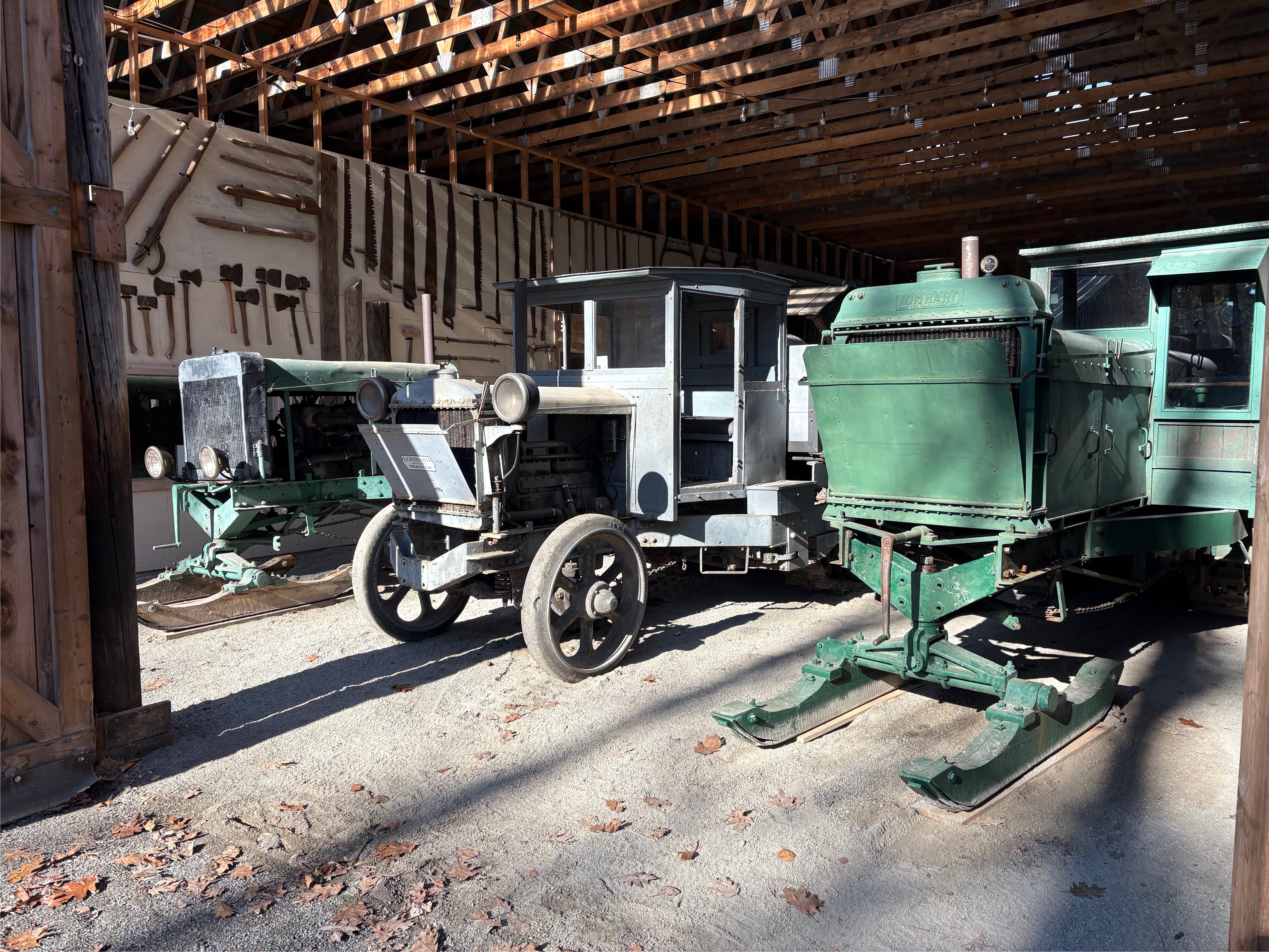
IMG_0779.jpeg


Next task on the 1919 was an oil change. As usual the big Sterling T-head snorted to life effortlessly. Bringing it up to temp takes longer than you would think. With the beast’s ability to consume prodigious amounts of gasoline (approximately 1.6 gallons every 10 minutes) the wallet gets thin pretty fast. Once warmed up and with a bit of work I soon had the drain plugs out of all three oil pans… Yup …three! A small oil pan at each end of the lower crankcase with a big one in the middle. I call them oil pans but they are more like trays about 1/2” deep. While I waited for all 5-1/2 gallons of oil to drain out I spent some time carrying in firewood for the 1907 steam-powered Lombard Log Hauler. Since we will be running it in February, I figure the more prep work we can accomplish before the snow flys all the better.
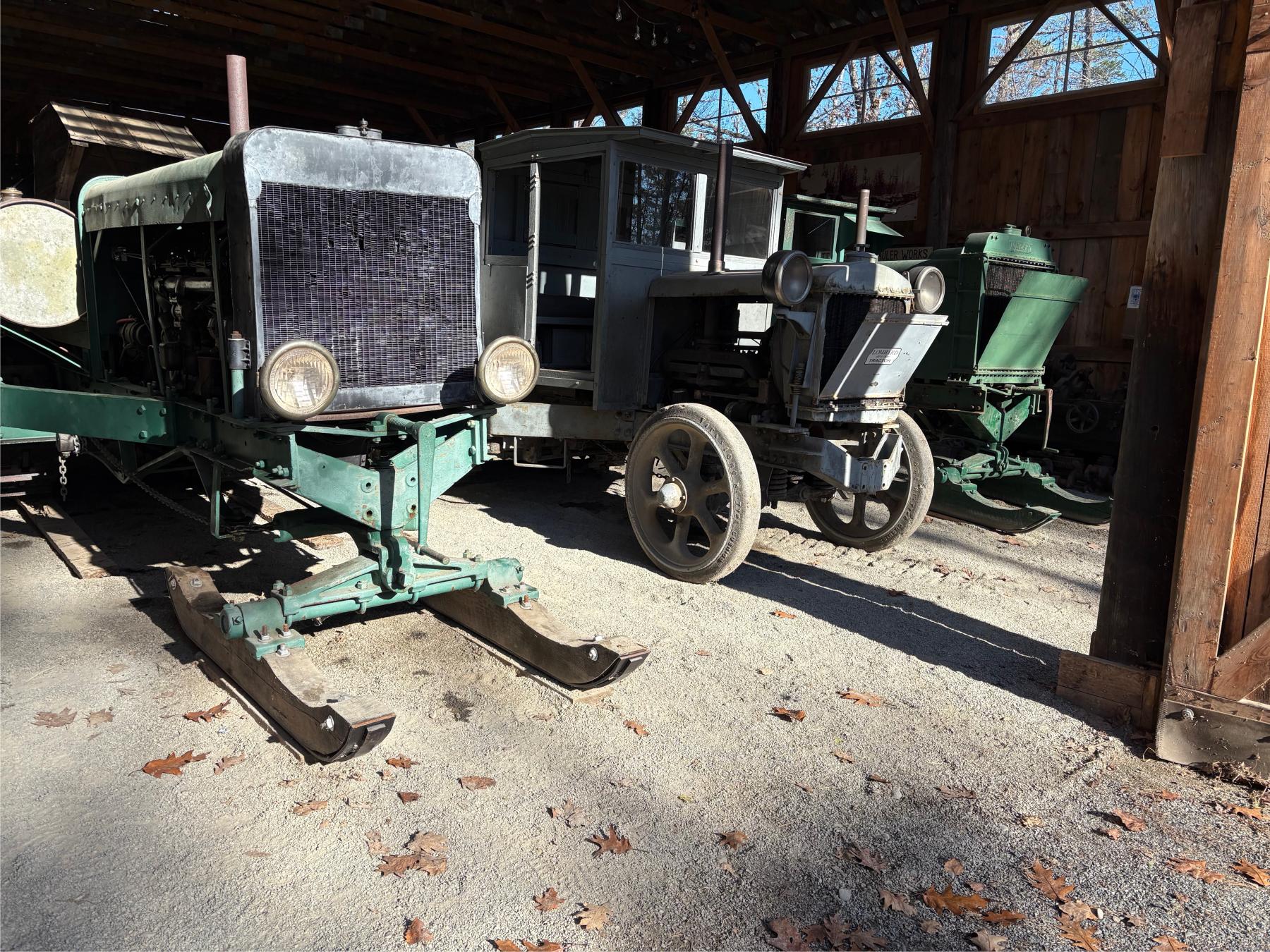
IMG_0785.jpeg


With the oil drained things begin to go sideways a bit. Inspecting the center oil pan, I could feel a bit of sludge meaning the oil pans would need to be dropped and cleaned. Since this engine is essentially one of one we don’t want to take any chances with it and with the oil drained now is the time to take care of it. However, with no gasket material on hand, dozens of nuts to undo and the day growing late I did some creative lockout/tag out and called it a day. Grabbed a burger and fries for the road and took the day as a win.
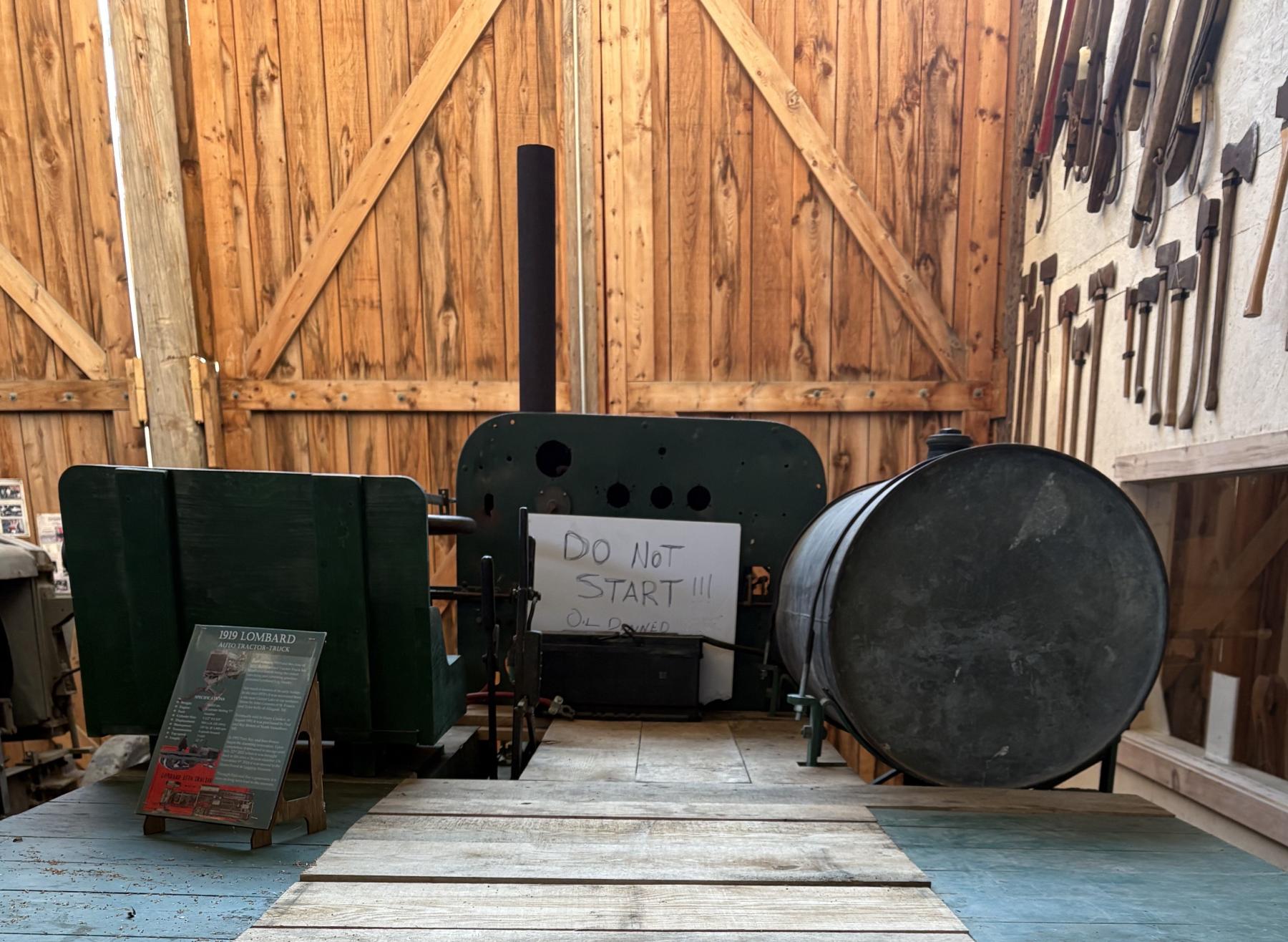
IMG_0784.jpeg
 
Sunrise Saturday morning found me southbound on I-95 heading for the museum. 2-1/2 hours later I had the big doors to the Lombard bay open to welcome the early morning sun and was ready to start the days work. The museum is located on 400 acres in the heart of the Penobscot Experimental Forest and is off-grid. We have small solar arrays on a couple of the buildings to provide power. The day turned out to be very pleasant and quiet with only a few hunters passing through on the logging road that provides access to the museum.

First task was draining down the coolant on the 1919 Lombard Tractor-Truck to make room for new antifreeze. While that was happening, I got the battery charger going on the 1928 Dump truck since it was decidedly low. After a few hours on the charger, it rumbled to life in its usual no fuss fashion. Love that big Hercules! After adding two gallons of antifreeze, the 1919 is now good for 30 below.

View attachment 134835

Next task on the 1919 was an oil change. As usual the big Sterling T-head snorted to life effortlessly. Bringing it up to temp takes longer than you would think. With the beast’s ability to consume prodigious amounts of gasoline (approximately 1.6 gallons every 10 minutes) the wallet gets thin pretty fast. Once warmed up and with a bit of work I soon had the drain plugs out of all three oil pans… Yup …three! A small oil pan at each end of the lower crankcase with a big one in the middle. I call them oil pans but they are more like trays about 1/2” deep. While I waited for all 5-1/2 gallons of oil to drain out I spent some time carrying in firewood for the 1907 steam-powered Lombard Log Hauler. Since we will be running it in February, I figure the more prep work we can accomplish before the snow flys all the better.

View attachment 134838

With the oil drained things begin to go sideways a bit. Inspecting the center oil pan, I could feel a bit of sludge meaning the oil pans would need to be dropped and cleaned. Since this engine is essentially one of one we don’t want to take any chances with it and with the oil drained now is the time to take care of it. However, with no gasket material on hand, dozens of nuts to undo and the day growing late I did some creative lockout/tag out and called it a day. Grabbed a burger and fries for the road and took the day as a win.
View attachment 134837
Really wonderful. Thank you.
 
That’s a spectacular photo. We’re looking at a beaver dam in front of that wooden walkway?
No, they kept plugging up the gated spillway to the canal that feeds the mill pond. Clean it out one day and the next morning they would have it all rebuilt.

In this photo you can see the millpond. The canal that feeds it comes in from the left under the little bridge, which was another place they love to dam-up. To the right is the covered bridge across Blackman Stream.

IMG_0787.jpeg
 
No, they kept plugging up the gated spillway to the canal that feeds the mill pond. Clean it out one day and the next morning they would have it all rebuilt.

In this photo you can see the millpond. The canal that feeds it comes in from the left under the little bridge, which was another place they love to dam-up. To the right is the covered bridge across Blackman Stream.

View attachment 134902
Does the water for the water wheel get recirculated or is it actually from a stream?
 
Does the water for the water wheel get recirculated or is it actually from a stream?
It’s actually from the stream. About 100 yards up-stream we have a masonry and rubble dam that is built on the crest of ledge outcropping that forms a natural water fall. A slide gate allows water to access the millpond via the canal. At the opposite end of the dam is the fish ladder.

Here is a view looking upstream at one of the dams un-gated spillways. A couple of years ago we had to replace the timber spillway structure with a cast-in-place concrete structure. To the right (out of the frame) is the fish ladder. In the early spring we have hundreds of thousands of Alewife using it to access the upper ponds during their annual Migration.
IMG_0788.jpeg


Here is the inlet structure for the fish ladder. We had to demo and replace some of the walkway across the top of the dam. It was a good opportunity for the Lombard dump truck to earn it’s keep.
IMG_0386.jpeg
 
That's about a hour from where my son goes to school at Maine Maritime. Are there regular touring hours?

Vito
 
That's about a hour from where my son goes to school at Maine Maritime. Are there regular touring hours?

Vito
We are an event based living history museum. Meaning we have a number of events through the year when the mills and machinery are running. In between events the grounds are open to the public and if we have volunteers on-site, the buildings will be open. You can also schedule a tour as well.

Our next event will be “Winter in the Woods” on February 7th. 2026. We will have the Lombard Tractor-Trucks playing in the snow with the logging sleds. However, the big news is for the first time in over a decade, we will have the 1907 steam-powered Lombard Log Hauler set up with the skis and running in the snow as it was designed to do.

As I mentioned before, we are off-grid with no heat in the Lombard bay. To prevent freezing and damage we have to do a comprehensive winterization of the steamer. We have already winterized it last month and after the event we will have to do it all again plus prep it for the annual boiler inspection. It’s a lot of work for a few hours of fun out in the snow but it will be well worth the effort!

Here is a rare photo of it sporting the skis. This was at the Northeast Logging Expo back in May. It was the first time in over forty years it had left the museum grounds.
IMG_1839.jpeg


att.r10jrKct4s6hJ0u5tuwh7U5bhOrLDFmXGRFkwI6NR1s.jpeg


IMG_0547.jpeg


4326141994207520800.jpeg


The sleds - patented by Alvin Lombard, are interconnected with crossed reach poles. This acts as a crude form of articulated steering. Whether just a couple of sleds or over a dozen sleds they track one behind the other very nicely. All the pin connections are slotted. The slack this creates allows the train of sleds to be started one sled at a time as opposed to trying to break loose all the sleds at once. This is very similar to how a locomotive engineer uses the slack in the couplers to start a heavy train.

A steam-powered Lombard Log Hauler has no brakes while the Tractor-Trucks have a single drum brake on the drive shaft. As they did with horse drawn sleds, they would spread straw on the hills. The idea was create enough drag so the Lombard pulled the sleds down the hill rather than being pushed by the weight of the heavily loaded sleds.

7919237914096524228.jpeg
 
Last edited:
Happy Thanksgiving everyone!

Per our yearly tradition, and to get out of mashing mountains of potatoes and squash, we deserted the pre-feast activities and headed over to the museum. It was just too tempting to make a bit of noise with the Lombards.

As usual, the 1928, fired up almost instantly and settled into it raucous rumble. That big Hercules always amazes me. The 1934. Can be cold blooded but it too fired up without hassle and was soon murmuring away. The original engine - which it was separated from the chassis decades ago, was a big overhead valve Wisconsin D4. The void was filled (somewhat) with a IHC Red Diamond running through an auxiliary transmission to the original Cotta 3 speed. The 1919 won’t be able to join the choir for a few more weeks.


After bringing them up to temp and letting them warm through, it was time to shut things down, swing the big doors closed, and head back and partake of the feast.

IMG_2228.jpeg


IMG_2222.jpeg


IMG_2227.jpeg
 
Monday morning, having finished the work we needed to do on the 1919 Lombard Tractor-Truck, we decided to take advantage of the fresh snow by taking the 1934 out for some exercise.
att.pmERP9uJE2idStFiXgT-u9h0RdYEhkKVFoXUB97pYr4.jpeg


Through the pine grove…
att.DbgDv2t7Hd3-4TaXSKrHGJqmL_8uRc8VPhjn7QdfJoI.jpeg


Down the hill and off the museum campus. It’s not really noticeable in the photo but the hill is rather steep. On the way back I kept it in 3rd (high gear) by the time we crested the hill we had some good stack talk going.
att.hi4yIAVuAMvjdi_Q928JHxQx-RhpiREj0CMmZL1CsDA.jpeg


Heading west down Government Road on our way to route 178.
att.4uKwcOkRBSjF2JMZidxHmsmaRdoaxEVaZbXSwaN1dfs.jpeg


A nine-point turn at the Forestry office and back to the museum! All in we covered about two miles.
att.eG-S2byJ0mHjl4QiTad1epMWNhyJMgoQHZrC7qv2nVA.jpeg


Meanwhile Tim and Brian were working on one of the newest additions to the museum’s collection. With the new transmission bands installed it’s just a matter of shaking out any remaining bugs.
669126509216018022.jpeg
 
Those are really nice photos. I'm impressed you have those machines working well enough to take them out like that. By chance is there any heat in the cab?
 
Those are really nice photos. I'm impressed you have those machines working well enough to take them out like that. By chance is there any heat in the cab?
Thanks! We are fortunate to have a dedicated, skilled and experienced crew of volunteers to keep everything in tip top shape. We also run and operate them as often as possible. As a living history museum, not much is static display.

No heater. Just what radiates through the holes in the dash panel (LOL) It’s actually surprisingly comfy.
IMG_0370.jpeg
 
Yesterday's Tractor Forums

We sell tractor parts! We have the parts you need to repair your tractor - the right parts. Our low prices and years of research make us your best choice when you need parts. Shop Online Today.

Back
Top
