

You should upgrade or use an alternative browser.

When it rains any chemicals on the ground wash along the well cribbing into the water. What % nobody knowsI wonder how the dirt around the top of a well has any bearing on the water that is 100 feet down in ledge.
Non-farmer
Well-known Member
Yep. My well is ~ 250 feet deep, and is artesian. Before I put a 3/4" relief hole in the casing, it would force water up on the outside of the casing and flood my lawn, so that's certainly a path for chemicals going downward in a non-artesian well that isn't constantly forcing the flow upwards instead.When it rains any chemicals on the ground wash along the well cribbing into the water. What % nobody knows

showcrop
Well-known Member
I have been involved in a lot of wells but this is the first that I have heard of well cribbing. I do know that they put in a seal where they pass from dirt to ledge to seal the casing to the ledge to keep ground water out.When it rains any chemicals on the ground wash along the well cribbing into the water. What % nobody knows
showcrop
Well-known Member
So you are posting that you had pressure inside your well casing, and it was forcing water up from 250 feet down and somehow the water was convinced to stay right next to the casing. I have heard plenty of times about true artesian wells, that flow over the top, but this is a new one on me.Yep. My well is ~ 250 feet deep, and is artesian. Before I put a 3/4" relief hole in the casing, it would force water up on the outside of the casing and flood my lawn, so that's certainly a path for chemicals going downward in a non-artesian well that isn't constantly forcing the flow upwards instead.

Hemmjo
Member
I make a lot of my own stuff. But time costs money also.
Non-farmer
Well-known Member
Well, you learn something new every day (or at least a person ought to). The well itself is 250 feet - I don't know how deep the casing goes, but the relief hole I drilled has a constant stream under pressure at all times except when the pump is running. I had to bury a line for that water down to my pond, and then I had to install a 3 inch ABS pipe as a level control device thru the embankment because the flow from the well literally caused the pond to overflow.So you are posting that you had pressure inside your well casing, and it was forcing water up from 250 feet down and somehow the water was convinced to stay right next to the casing. I have heard plenty of times about true artesian wells, that flow over the top, but this is a new one on me.
Water is pouring out of that drain pipe as I type this, into my field where I don't care about it. My lawn no longer has a swamp downhill from the well. It did before I did these modifications.
Edit: and yes, the outside of the casing is the path of least resistance. My well people weren't a bit surprised when I told them about this. They knew it sometimes happens.
showcrop
Well-known Member
OK, as I posted I early I have heard of plenty of true artesian wells, where the water runs out over the top, and I knew that when this happens a drain off is plumbed so that the water goes where you want it to. I think that it usually takes more than 3/4 inch. It still seems like a one in a million chance that the water will follow a casing unless it is for a relatively short distance.Well, you learn something new every day (or at least a person ought to). The well itself is 250 feet - I don't know how deep the casing goes, but the relief hole I drilled has a constant stream under pressure at all times except when the pump is running. I had to bury a line for that water down to my pond, and then I had to install a 3 inch ABS pipe as a level control device thru the embankment because the flow from the well literally caused the pond to overflow.
Water is pouring out of that drain pipe as I type this, into my field where I don't care about it. My lawn no longer has a swamp downhill from the well. It did before I did these modifications.
Edit: and yes, the outside of the casing is the path of least resistance. My well people weren't a bit surprised when I told them about this. They knew it sometimes happens.

Geo-TH,In
Well-known Member
For houses with a well or foundation drain (or both), an important alternative to a liquid soil treatment would be a termite baiting system.I wonder how the dirt around the top of a well has any bearing on the water that is 100 feet down in ledge.
I'm going to do what my retired pest control man recommended.
So far no one has shown their DIY termite bate station.
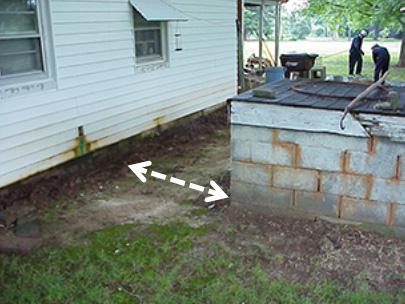
Termites - Treating Houses with Wells, Cisterns or Foundation Drains | NC State Extension Publications
Non-farmer
Well-known Member
When I called the well people and told them it was doing this, they said "Ya, ok, that happens. You'll need to put a relief hole in the casing. We've got a part that will help you control where the water goes." I went in that afternoon and bought this:I think that it usually takes more than 3/4 inch. It still seems like a one in a million chance that the water will follow a casing unless it is for a relatively short distance.
They had that brass piece in stock, I bought it that afternoon. Seems odd for a one in a million situation

I originally put a 1/2" hole in the casing, but it still oozed some onto the lawn. I enlarged the hole to 3/4" and it's been fine ever since. I will assume the size of the hole needed varies with how much force the water pushes up with.
And I had to improve on the 4 inch drain tile, as a nearby flowering plum tree found it with its roots and plugged it. I took a piece of inch and a half ABS pipe with a barb in the end with a galvanized cap on it (to keep it from catching on the corduroy inside of the drain tile) and pushed 125 feet of it through. That pushed the plug of roots out, at which point i removed the barb and cap and routed the water into that inner pipe. Been working for 15 years since the roots found it, and if I should need to replace the inner pipe ever, it will easily pull back out.
PS: as I said, I don't know how deep the casing goes. Bottom line - if water can come up that distance, it can come down too, at which point it merges with your well water. I prefer not to drink insecticide.
Non-farmer
Well-known Member
There used to be a lot of those around my area. But all where the result of failed oil wells from the very early 1900s. almost all were high sulphur and iron. All now plugged by the state and/or industry plugging programs. the water always took the path of least resistance, either the open top or disturbed soil, sand, rock or gravel around the bore. Most were drilled (actually pounded in) with old cable rigs so the original hole was a lot bigger than the casing.So you are posting that you had pressure inside your well casing, and it was forcing water up from 250 feet down and somehow the water was convinced to stay right next to the casing. I have heard plenty of times about true artesian wells, that flow over the top, but this is a new one on me.
There were so many that we had a big tourist thing where folks would pay to soak in warm 'radium water' as that stinky stuff was called. Lots of bath houses for a lot years.

Liquid_wrench
Member
- Location
- Ohio
I was told by a pest control guy, that the treatment we put around our house (6" wide by 6" deep trench) would not leach into soil more than a couple feet.For houses with a well or foundation drain (or both), an important alternative to a liquid soil treatment would be a termite baiting system.
I'm going to do what my retired pest control man recommended.
So far no one has shown their DIY termite bate station.
Termites - Treating Houses with Wells, Cisterns or Foundation Drains | NC State Extension Publications
This publication discusses the potential dfficulties and options for treating termite-infested buildings that have wells, cisterns and/foundation drains.content.ces.ncsu.edu
john in la
Well-known Member
No way could you get any kind of lasting protection if the chemical was readily carried away from the application point and deposited 100 feet down into the ground.
we often dig our wells with a backhoe. dig 10-20 ft deep, lay down 2 ft of gravel, stand up a cribbing(2-3 ft in diameter) ad more gravel around the cribbing and dirt further out till it's full. If we need more reserve we lay down a 10-20 ft horizontal and the upright on top. Usually if made of plastic there is a T or an Elbow welded together before installation. Lay it at the bottom and just ad the sections on top to 2 ft above the ground. My well is less than 10 ft deep. I have a 10ft horizontal with 10 ft vertical in an elbow shape. I dug it with a hoe and put down 2 ft gravel, 100 ft of weeping tile set the cribbing on top and then added more gravel to burry it all. The vertical pipe is 3 ft out of the ground. I did dig it right into a spring so the water is ground level in the well and If I would drill a 1/4 inch hole the water would trickle out all year if I wasn't watering 50 animals with it. we also drill some wells up to 36 inch wide and 30-40 deep. some have 4-5 inch wide cribbing and 300 ft deep. then there is an area where the pound a pipe in the ground and pump water. They call that a sand point well.I have been involved in a lot of wells but this is the first that I have heard of well cribbing. I do know that they put in a seal where they pass from dirt to ledge to seal the casing to the ledge to keep ground water out.
when I was younger we would dig post holes for fence by hand. the corner poles were always dug deeper and bigger. sometimes we would not put the pole in and come back the next morning and there would be 6 inches of water in them.
showcrop
Well-known Member
I have been involved with putting in a few dug wells but around here everyone used four foot concrete culvert pipes. We would go down about 15 feet with the hoe, set five lengths, then go down and dig by hand. We would run a mudsucker pump while digging.we often dig our wells with a backhoe. dig 10-20 ft deep, lay down 2 ft of gravel, stand up a cribbing(2-3 ft in diameter) ad more gravel around the cribbing and dirt further out till it's full. If we need more reserve we lay down a 10-20 ft horizontal and the upright on top. Usually if made of plastic there is a T or an Elbow welded together before installation. Lay it at the bottom and just ad the sections on top to 2 ft above the ground. My well is less than 10 ft deep. I have a 10ft horizontal with 10 ft vertical in an elbow shape. I dug it with a hoe and put down 2 ft gravel, 100 ft of weeping tile set the cribbing on top and then added more gravel to burry it all. The vertical pipe is 3 ft out of the ground. I did dig it right into a spring so the water is ground level in the well and If I would drill a 1/4 inch hole the water would trickle out all year if I wasn't watering 50 animals with it. we also drill some wells up to 36 inch wide and 30-40 deep. some have 4-5 inch wide cribbing and 300 ft deep. then there is an area where the pound a pipe in the ground and pump water. They call that a sand point well.
when I was younger we would dig post holes for fence by hand. the corner poles were always dug deeper and bigger. sometimes we would not put the pole in and come back the next morning and there would be 6 inches of water in them.
showcrop
Well-known Member
I didn't post one in a million in response to your water overflowing. "OK, as I posted I early I have heard of plenty of true artesian wells, where the water runs out over the top, and I knew that when this happens a drain off is plumbed so that the water goes where you want it to. I think that it usually takes more than 3/4 inch"When I called the well people and told them it was doing this, they said "Ya, ok, that happens. You'll need to put a relief hole in the casing. We've got a part that will help you control where the water goes." I went in that afternoon and bought this:
View attachment 132110
They had that brass piece in stock, I bought it that afternoon. Seems odd for a one in a million situation
I originally put a 1/2" hole in the casing, but it still oozed some onto the lawn. I enlarged the hole to 3/4" and it's been fine ever since. I will assume the size of the hole needed varies with how much force the water pushes up with.
And I had to improve on the 4 inch drain tile, as a nearby flowering plum tree found it with its roots and plugged it. I took a piece of inch and a half ABS pipe with a barb in the end with a galvanized cap on it (to keep it from catching on the corduroy inside of the drain tile) and pushed 125 feet of it through. That pushed the plug of roots out, at which point i removed the barb and cap and routed the water into that inner pipe. Been working for 15 years since the roots found it, and if I should need to replace the inner pipe ever, it will easily pull back out.
PS: as I said, I don't know how deep the casing goes. Bottom line - if water can come up that distance, it can come down too, at which point it merges with your well water. I prefer not to drink insecticide.
Just thought of something, we call it cribbing, it is a pipe. lots were concrete culverts, till metal and plastic became the norm. The first one we dug for my brother was square and wooden and that is probably where the cribbing came from. That is the only one I helped dig by hand from scratch. I did help dig a concrete one deeper with a pail and rope to carry up the dirt.I have been involved with putting in a few dug wells but around here everyone used four foot concrete culvert pipes. We would go down about 15 feet with the hoe, set five lengths, then go down and dig by hand. We would run a mudsucker pump while digging.
Hemmjo
Member
They precast square "casing" sections about 3 feet on each side and 2 feet long. When the hold gets about 4 feet deep, the lower in a section, then the digger goes deeper, then undercuts the casing so it will fall down into the hole as another section is added on top. Then repeat. I have see wells there over 30 feet deep.
They are some tough hombres!!!
Wells are typically dug during the dry season when the water table is low.

We sell tractor parts! We have the parts you need to repair your tractor - the right parts. Our low prices and years of research make us your best choice when you need parts. Shop Online Today.
Copyright © 1997-2025 Yesterday's Tractor Co.
All Rights Reserved. Reproduction of any part of this website, including design and content, without written permission is strictly prohibited. Trade Marks and Trade Names contained and used in this Website are those of others, and are used in this Website in a descriptive sense to refer to the products of others. Use of this Web site constitutes acceptance of our User Agreement and Privacy Policy TRADEMARK DISCLAIMER: Tradenames and Trademarks referred to within Yesterday's Tractor Co. products and within the Yesterday's Tractor Co. websites are the property of their respective trademark holders. None of these trademark holders are affiliated with Yesterday's Tractor Co., our products, or our website nor are we sponsored by them. John Deere and its logos are the registered trademarks of the John Deere Corporation. Agco, Agco Allis, White, Massey Ferguson and their logos are the registered trademarks of AGCO Corporation. Case, Case-IH, Farmall, International Harvester, New Holland and their logos are registered trademarks of CNH Global N.V.
Yesterday's Tractors - Antique Tractor Headquarters
Website Accessibility Policy