Anonymous-0

Well-known Member
Can a Super HTA be built to run legal in a div 3 type class? A SHTA is a 300-350 rear end, with a TA, with H frame rails and H sheet metal. What do you think? ChadS
 
what would be the avantage? creeper gears would have the same effect for low 1st gear? I have been looking for an h with them with no luck.
 
For the set of bolt holes up high, for the turnbuckles to run down to a drawbar and have adjusters above the rear axle centerline. H dont have that luxury without drilling n tapping. Now, that phrase there makes it illegal in national competition, but its OK here. I think there is more to be had as in terms of hitch design, Seen a M with a 400 rear end once,,,, its where I got the idea. TA, well, the TA would be a nice addition. For what, I have no idea, LOL! But it would be different, I got an extra 300 chassis, and a spare SH stroker engine to play with. ChadS
 
I like the creeper gears it makes a 2nd gear at 3.4 miles pre hour and the sled speed being 3.5 before the horn blows let's you get max rpm and speed.
 
(quoted from post at 07:18:13 06/19/09) Can a Super HTA be built to run legal in a div 3 type class? A SHTA is a 300-350 rear end, with a TA, with H frame rails and H sheet metal. What do you think? ChadS
NEVER REALLY UNDERSTOOD WHY A PERSON WOULD CHOOSE A H OVER A 300 OR 350 TO BEGAN WITH.
 
If you put a dress on a pig, it's still a pig. Likewise if you put "H" sheetmetal on a 300, it's still a 300. You don't run NATPA anyway (and I rarely do either) so what's it matter? You can legally run a 300 with them anyway. Mike
 
Knock yourself out on that one, but it wont help you any. As long as the hitch is stationary, and not one of the moving, cheating hitches you talked about a few days ago, where it mounts to DOES NOT MATTER!!!!! The reason NATPA and some other places frown upon the adjuster being above the center of the rear axle is SAFETY! If part of the hitch assembly breaks and your turnbuckle is mounted above the rear axle, it will pull the tractor over backwards. I was about 14 or 15 and saw a IH-M with the turnbuckle mounted right under the platform....drawbar broke and suddenly he was pulling from right under the platform and the tractor was ontop of the guy before he knew what was going on. THAT IS WHY YOU ARENT ALLOWED TO HAVE THE ADJUSTER ABOVE THE REAR AXLE.

Only in the Chads physics book does the turnbuckle mounting point effect how the tractor pulls(as long as the hitch is stationary, and not a cheater moving drawbar). If the hitch does not move when pulling, IT DOES NOT MATTER HOW IT ATTACHES TO THE TRACTOR, it will pull the same.
 
Good Morning! Listen, Im not saying anything bad bout the national rules. I agree with em, but that design does not work on a constant pressure sled pan. The intention of this is to make a heavy front end lighter without moving a single weight. When that happens, you can add a little extra weight to help hold it down a bit more, and create more of a lifting action from the hitch to the front of the sled pan.

Drew, you mentioned the accident, I fully understand that theory. But if that location did not affect anything, why did the tractor go straight in the air instead of just a couple of inches? If it wasnt up high, the front would have dropped to the ground, the high location pulled down from up high and shot that chassis straight in the air by pulling of a higher center of gravity, or however you wanna say it. I call it draft. Its like overloading a 3 pt hitch, when its raised all the way up, the front will get light, same thoery, but how to harness it and use it to an advantage is what Im trying to do.
ChadS
 
Its a wheelbase length alteration. H frame rails are shorter than a 300-350. Some places have rules where the wheelbase must be stock,,, but this is a tractor that was never in production with those specs to be read. ChadS
 
Read what I said again. I said as long as the hitch doesnt move, the mounting points do not matter. Once something breaks, like in the case of the tractor that flipped, the hitch was no longer stationary and it moved (because it broke), THEN IT MATTERS A WHOLE LOT IN A HURRY.

Take 2 drawbars, both 20" high and 18" back of the axle. One has real high mounting points on the rear end, the other is real long and attaches to the front pedistal and runs all the way to the back. As long as they are both rigid and dont move or flex (not likly on the one attached to the front, but for the sake of arguement just go with it), they will both pull the same because the hookpoint on both is in the same location in relation to the tractor. If the drawbar flexes or moves, then all bets are off.
 
Yes, now if the adjuster is in a 90 degree angle to the hook point, the leverage will not be there. What they do, is move the hook point back to bout 19 or 20 from the axle centerline, then they move the link back closer to the hook point, then the top link adjuster is what your actually putting the most stress on. You want the top of the link to hug the top and as close to the axle centerline as possible, then angle the adjster out and away from the rear end, the more angle you get in the top link, the more it will pull down off that point to increase the leverage. Allow me to be more specific on the hitch design,,,,

a hook plate, that is mounted on a hinge like a door pin, to a certain spec, (18-20 inches back from centerline) with nothing holding it up, it will flop down, now attach the angled top link right ot the top of that plate, mounted as far back as you can get to the hook point. When the force is applied,, it pulls BACK on the plate hinge, but it pulls DOWN on the top link, forcing the chassis to lift the nose and make the weight transfer of the chassis happen quicker, or front lighter,, add weight to compensate, you go further if you can dial it in to keep the nose off the ground less than 6-10 inches and keep on going if the weights are right, track conditons are right, it can help.
the hook plate will only be short,, no drawbar,, but a plate,, A drawbar system has to do a few different things,, make draft, and keep equal force on the drive tires from right to left,, add traction bars off the drawbar to the underneath sides of the axles, and it will pull down more equally and harder and make it more even, Im also talking about tractors that use a posi or limited slip so your already advancing in the traction, were trying to help the chassis keep it hooked to the track under high HP situations where HP is your against you on a loose track.
Ever see a fast hitch, and how it actually hangs of the back? its at an angle upwards,,, and attaches high,, it if set level, it wouldnt lift anything, just pull it in a straight line and sure you might see weight transfer, but not as much as the setup if it was angled up. JD can take advantage of this,,, Imagine the hitch Im trying to explain,, take a spud bar, pull down on it, and imagine what actually takes the downforce,,is it the drawbar, the adjuster links, or where the drawbar attaches to the tractor? fine tune those settings, and it just might help. ChadS
 
Basic Statics lesson from a former engineering student:

If the hitch is stationary and flex free it does not matter where you bolt it to the tractor, the rear pull and down force on the hook point will not change. The only way the forces change is if the hook point moves IE: the hitch breaks... If the hook point sees 5000lbs of down force when bolted solid below the axle centerline it will see the same exact forces when bolted on above the centerline. The only way the forces change is if you introduce a lever to the equation. The only "lever" on a pulling tractor is at the contact point of the rear tires on the ground. They are the center of the seesaw. all the pulling forces on the tractor react around that axis of movement.

IF THE HOOK POINT DOES NOT MOVE THE BALANCE POINT DOES NOT CHANGE REGARDLESS OF SETUP!

Thank you for listening, didn't mean to yell, but have heard this argument too many damn times to count...

Derrick Otis
Mech Eng student @ Univ of Rochester 1995-96
 
THANK YOU!!! I'm glad someone else understands it as well. Chad sometimes likes to write his own rules of physics to suit himself.
 
Yup. When I read posts like ChadS just posted I wonder why I even bother reading this forum. There is more disinformation here at any given time than information anyways thanks to guys like him that think they understand stuff they do not. It DOES NOT matter where a hitch is attached to the tractor if it is stationary. All that matters is hitch height and distance behind the rear axle.
 
So you both are saying, the hook point needs to move. Well, it does move, front end goes up, hook point moves down, all your angles change, unless your front end stays on the ground the whole time. Tire pressure can change the mesurements from the axle to the ground, The whole idea of the chassis and pulling is based on a balanced lever of the chassis, being able to lift the sled while its in motion, problem here is, weight transfer sleds use the basis of ground speed based from power, etc etc, A running start.

Dead weight pulling, you get no running start, your not at 20 mph when the load is applied and relying on your powerhouse with ground speed to keep it in motion.

Dead weight pulling, you best move that sled within the first tire revolution or your not going anywhere!

Dead weight pulling is what you go faster pullers are trying to at the end of the runs,, but what you have never seen before is how its done, ONE WHEEL REVOLUTION AT A TIME!

Id like to see your hand built model you built in school that proves your therory, it should look like a giant see saw, but one thing, one scale, one design, and not all tractors have the same design, not all hitches bolt on the same way, some tires flex more than others, some chassis pull more with ease than others, with less thought put into it.

20+ years in tractor pulling I have been an active participant, I am 34. My Dad was pulling since 1970. I started pulling when I was 13, Transfer sled pulling. At that time, deadweight pulling was dead, then one was held, and and dragged me off to it. Like watching paint dry!!!!! Till I had been there for about 12 hours, sitting in a lawn chair, Dad backed his old JD in, where 20 tractors could not move the load. Walked it right out he did. With grace, and ease, with pride.

He came back over between rounds, sat down, said now,, wanna know how I did it? I said, yes sir!

He took me around to the rear of the tractor when it was pulling, then to the side, then to the front, and he showed me 3 key points of creating leverage. He said watch this, this and this was this exact words. Now mind you boys,,,, I had been transfer pulling for 15 years by then, I knew it all right!!! I knew nothing about REAL PULLING TILL I SAW IT BROKE DOWN TO ITS SIMPLEST FORM, ONE WHEEL REVOLUTION AT A TIME, ONE ENGINE REOLUTION AT A TIME and NO RUNNING START.

In 5 minutes, he showed me what I have been searching for my whole time of pulling, Knowledge, experience, and patience.

You bet your behind, I make my own laws of what you boys call education. The education I learned came from 50 years of TRACTOR PULLING.

HOW LONG HAVE YOU BEEN PULLING? you know nothing. If my dad, rest his soul, is looking over my shoulder as I type this out,,,, I can tell you this, he agrees with me. Not a darn thing in my life, I can ever say I got my dad to agree on, but he had to teach it to me first and me, be his student, and learn. You show me this kind of history in the sport, and I will shut up, cut bait and you will never see me again on here or anywhere.

You boys, you upset me today. I dont take kindly to anybody, who has less than 20 years in tractor pulling, as a driver, as a coach, as a pit crew chief, tell me I dont know what Im talking about.

Just wait boys, I have yet to begin my lesson plans, school is just beginning. Sign up today.

ChadS
20+ years in the sport of tractor pulling. 20+ years of hands on experience with the best damn teacher that ever was. We have seen the best 10 years ago. We lost the best in 2008 as in Dad.

Drew, go hang out at Murphys, K will ya? I like Merfeld better! Kiss my behind rook.

DeadWeight pulling is the most exiting thing in the world to me right now these days, since Dad educated me, the transfer sleds are like watching paint dry. The rigs on them go faster circuits will DO NOTHING ATA A DEAD WEIGHT PULL AS THEY ARE TODAY!!!! If they can, then Id love to see it. till then, quit smoking up the boys room, get your thinking cap on and get your butt in class.

Hey Drew, your welcome. Betcha you will be changing your hitch in less than a month. ChadS

 
HAVE TO AGREE W/ CHAD TRANSFER SLEDS TAKE VERY LITTLE SKILL ,JUST HOOK AND GO. DEADWT ON THE OTHER HAND WELL THATS ANOTHER WHOLE BALL OF WAXTHERE IS ALOT OF SKILL AND TECHNIQUE INVOLVED THERE . WE DO MOSTLY DEADWT HERE IN EASTERN NY WEST NEW ENGLAND. HAPPEN TO BE GOING TO A TRANSFER SLED TOMORROW HAD THE WIFE IN TRAINING TO MAKE HER DEBUT. FIGURE ITS ALOT EASIER FOR HER FIRST TASTE OF COMPETITION ON A TRANSFER SLED BEFORE HOOKING TO THE STONEBOAT
 
Ok, I can't resist. Look at a Case IH Steiger and a JD 4wd. Their hitch points are in different locations. Meaning the drawbar hooks to the tractor in a different location. The Steiger hooks as close to the pivot point of the tractor as possible. This allows for down pressure when pulling to be applied to BOTH pulling axles. JD's 4wd does not. This is noted as a competitive advantage to Case IH Steigers.
 
The rules say the adjuster must be below the center of the axle.Now what if I build the adjuster on the drawbar and leave the original top links and the bottom rips out? Seems to me anybody that thinks they can tell a good weld from a bad one should be able to do the same with a good hitch or a bad one. If not what are they doing inspecting?
 
MH55&Drew,I'am not standing up for ChadS on this but what he is or trying to do was done back in the 1950s and out lawed when guys were turning the Farmall drawbar over and were pulling from the top of the axle with it angled down to get 18 or 20 inch hook point.He is doing the same thing with his turn buckles and angle of them to hitch point.Your pull is always on a incline never horizonal,it works better or safer on tug pull then on a transfer because you are only going 15-20Ft.and stopping so you can control the front height easier or better.
 
No Fuzzy, I'm done. Class dismissed for the day! Will see how it works out in the playing field in the morning. Thank you for comming, Ill be here Sunday Night to tell you how well pullers were paying attention. Should be a good day of pulling. ChadS
 
Chad, instead or you teaching a class, why don't you sign up for a physics class at your local community college. Maybe you could learn something if you'd shut your cakehole and open your ears (and your mind). You seem to ignore the basic laws of physics and principles of engineering. Most people that graduate from high school can understand these things. I realize now I'll have to retract my first statement, as you can't get into college without first graduating from high school.
 
What? and waste all that money? If your school has a tractor pulling section of learning, has to be vocational of course, you cant buy this, you have to build it, trial and error, if Doc at the school dont own a puller, then well sir, pull up a chair! I got a couple of em! Need a demonstration? Rookie? Chad
 
Chad,

My post was not meant as an attack on you personally. Just trying to clarify a subject that is both confusing and frustrating for many pullers.

If your hitch is solid and stationary it does not matter where it is bolted to your rear end. The tractor will pivot on the rear axle centerline and the hitch will drop. This does not change the forces experienced by the rear of the tractor. Look at the tractor from the side, draw a straight line from the axle center line to the hook point, that line will not change regardless of hitch attachment, bolted solid below the axle sees the same forces as bolted solid above the axle. Solid and stationary being the key. That magical line from the hitch to the axle is the force the tractor "sees" Changing the location of your attaching points from a ridgid hitch to a ridgid casting will not change that line.

Lets keep this civil, shall we.
 
Just a thought, but has anyone given any thought to just pulling with the factory drawbar/hitch in the factory location? The factory had teams of engineers who spent countless man-hours thinking the issue through, then countless more man-hours testing their theories, not to mention LOTS of $$$$. What they produced was the best design for that model tractor, unless you're talking about some of the less-than-steller engineered models like the Empire, but I don't know of anybody who pulls one of them, too rare.

I get hassled lots about pulling off my stock horse-shoe, (H Farmall), but I have never had a problem keeping the front end down. It rides up only about 6 inches, though one time it did jump a bit when I got into loose stuff and was alternately spinning then biting hard. Still nothing dangerous though, less then 2 feet below the front tire. I pull farm stock with a transfer sled, first gear only.
 
I have to agree with drew and mh55.As an ag engineering student at purdue univ,I have to agree its all a matter of static equilibrium. All things being perfectly rigid and stationary, hitch mounting will not change the force applied to the wheels. I even asked my professor, who has two phd"s in mechanical engineering, about this topic earlier this year, and he drew it all out to me and and explained each step and reason. I am fully aware that experience has a lot to do with pulling. There are alot of little tricks to pick up along the way, but different angles on a stationary drawbar is not one of them.
 
sounds like we better all leave are toys in the shed because with doctor chads mind full of ancient knowledge and pulling lore, we have no chance of winning. Transfer sledders and deadweighters alike, hide your women and children tonight, because chads on the loose with his super hta with the pulling gods along for the ride. And chads, don't try to trick us with this hitch nonsense, we all know the reason your tractor hooks so good is your super governor spring. lmao. its pulling great
 
Ill do what ever I will do. Had a student tell me that a design would not work,, this was on a project I was working on for a fellow puller, that student told me up and down that no way it would work, Showed him yesterday, made a beliver out of him! Had nothing to do with a hitch though!

Its always amazing how when the guys that do well, get sooo upset when somebody does what they do and beat em. Must be hitting the right nerves.

Nothing wrong with conversations, discussions, but when it goes bad, you can see the guys patience level go out the door real quick!

So does their first place, gone down to second!

Hope that does not happen, but its nice to know how you got beat when you cant figure it out on your own, and maybe, thats what you all need to do,,, is do it all yourself, when you win its sweet, when you lose its upsetting, but when you get beat by a different technology that the average joe comes up with, and has had success, you all jump his throat to cut it. I did not come up with it, I just wanna follow suit with a hitch design, that seems to be effective on several tractors, with the simular design.

I will walk this path alone, its something I will learn for myself. But, I won on Sunday! Sell it on Monday. Chad
 
Dam Drew.. I got suckered in.... haha..
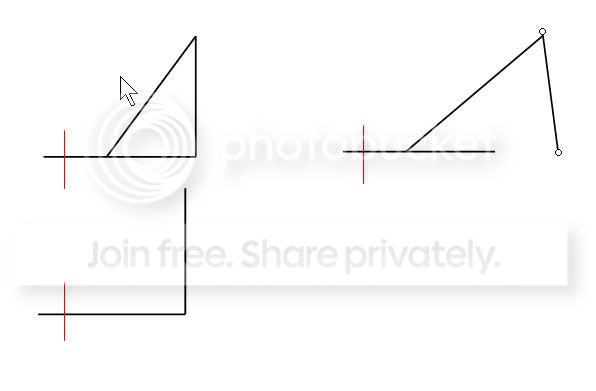
Upward line is the back of the tractor.. as long as the hitch does not bend, the hook point is the same...
If the straight bar starts to bend.. then everything goes out the window, because the hook point changes..
With the adjusters running down, if the straight part of the hitch breaks.. everything pulls from the higher point.. then the tractor goes over.. (as Drew said.) Then it turns into a 36-40in high hitch.. Its going to have leverage.. Up goes the front..
On a stock there's lots of points that can use improvement.. specially on a JD hitch.. the drawbar can flex, the lower bar on the hitch frame can flex.. there little things than can be done to fix most..

On the HTA.. go for it.. I would think that having the TA would give you better gear selection..
JDGnut


BasicHitch.jpg
 
I have seen f20s pull, there hitch is on a level plane from the top of the stearing bolster through the drawbar to the hith point. Ican tell you they seem to pull and not to pull the front end. I will look at this on my sm.Thanks Chad. Ive pulled 25 years I need a new edge, ha.
 
Yesterday's Tractor Forums

We sell tractor parts! We have the parts you need to repair your tractor - the right parts. Our low prices and years of research make us your best choice when you need parts. Shop Online Today.

Back
Top