


i have several feet of what appears to be cast steel 3" channel. I "think" its like red iron they call it for buildings. i dont think its cast iron. anyone know what kind of welding rod would be best to use on this stuff? Im thinking of using it for a frame to make a little garden tractor,or something to drive around tractor shows. maybe use a old walking tractor for the power and add some steering,or build a cart behind the walker. looking to do something with all these parts and pieces left over from projects, that may be usefull.
You are using an out of date browser. It may not display this or other websites correctly.
You should upgrade or use an alternative browser.
You should upgrade or use an alternative browser.
old
Well-known Member
- Location
- Camdenton Missouri
If you have enough of it to do a little playing with try a few different rods and see which one seems to hold the best. I would probably use 7018 my self
Do a spark test to make sure you do in deed have cast steel. If it is cast steel I've had good luck with 7018, 312-Stainless steel, and a rod called Super Missile Weld. But you won't like the price of the Super Missile Weld, or the 312-Stainless Steel!
I'd preheat to 300 to 400-degrees, make your welds then wrap with insulating for a very slow cool down!


I'd preheat to 300 to 400-degrees, make your welds then wrap with insulating for a very slow cool down!


its definitly cast something,i was sawing a piece with my sawzaw once and had to change blades.knocked the piece i was woking on over and it snapped like glass. weird stuff,it sort of looks like mild steel until you see the inside then it looks like cast iron. i dont know that its cast steel, but ive never heard of any structural cast iron. it may be some of that stuff they used to rivet together. I'll try the spark test and see if i can figure it out ,thanks.It might be better to sell this for scrap and buy something i know what is, and i know how to work with.
Here is an arm off a Brillion double roller cultipacker, darned nut came off a bolt, and I had just checked it over tightened things up too !
Well, I am no pro, and we could not find another packer to rent or get a part immediately, so I did the grind test, appeared like cast steel or whatever the correct metallurgical term is for this material is, I tried and it held up.
Houston, we have a problem:
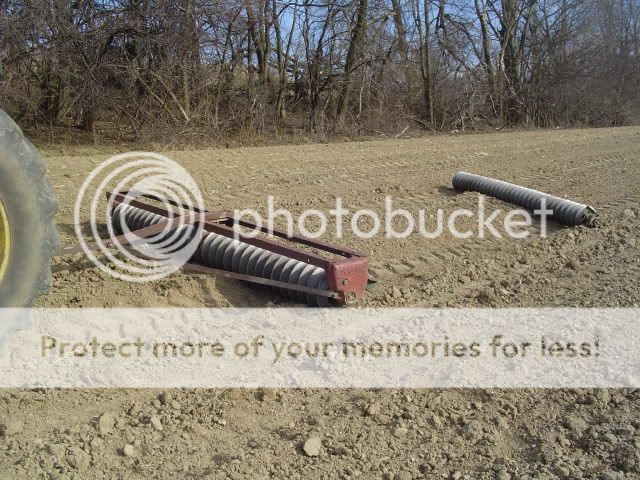
Well at least I think I can prep something to be welded!
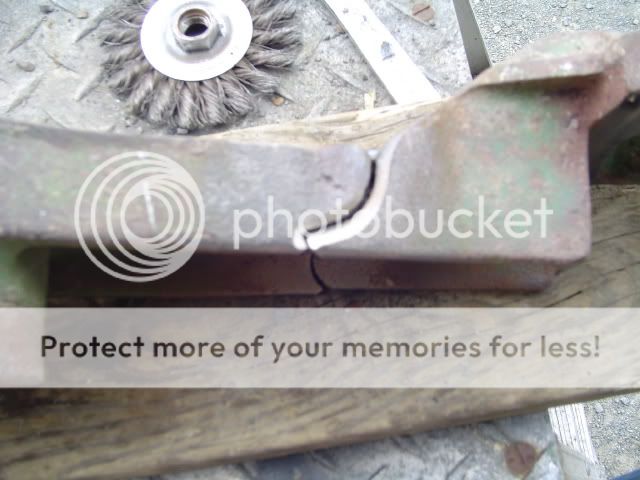
Rank amateur attempt, but we needed to cultipack, rain coming, had to try, and it worked, held up til now, I did pre heat and post heat, wrapped as suggested, slow cool. Problem I have or is that I can't see, is the edge of the weld profile, there sometimes is a gap, something I am doing wrong, good example for criticism and to learn correctly by you guys here, who are pro's, but the one thing it did do is work, had I not tried, we had a lot of seed down, not good, farmer friend sure was happy.
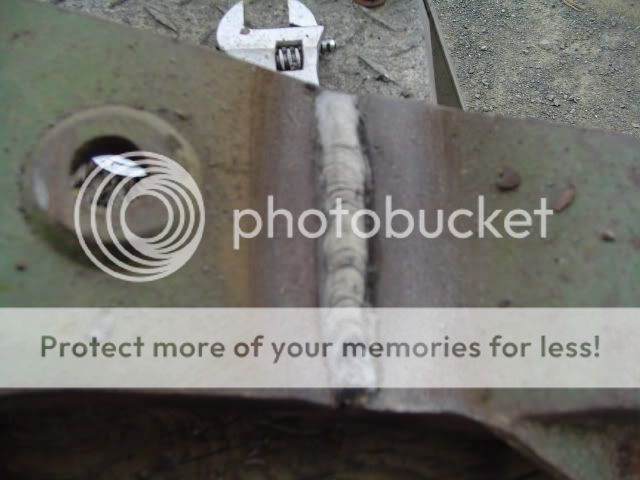
So I decided, given the part could be junk or now made junk, another weld along side in case the one side of it did not penetrate, I used 1/8" 7018 DC electrode, been too long I forget the heat, typical setting for that electrode, 120-130 on my Miller NT 251
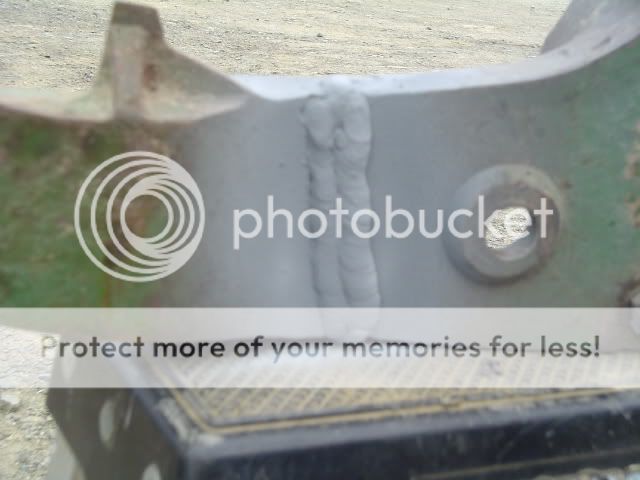
Ok fire away you guys, I am sure this is not the best way to do this LOL !!!!!
Well, I am no pro, and we could not find another packer to rent or get a part immediately, so I did the grind test, appeared like cast steel or whatever the correct metallurgical term is for this material is, I tried and it held up.
Houston, we have a problem:
Well at least I think I can prep something to be welded!
Rank amateur attempt, but we needed to cultipack, rain coming, had to try, and it worked, held up til now, I did pre heat and post heat, wrapped as suggested, slow cool. Problem I have or is that I can't see, is the edge of the weld profile, there sometimes is a gap, something I am doing wrong, good example for criticism and to learn correctly by you guys here, who are pro's, but the one thing it did do is work, had I not tried, we had a lot of seed down, not good, farmer friend sure was happy.
So I decided, given the part could be junk or now made junk, another weld along side in case the one side of it did not penetrate, I used 1/8" 7018 DC electrode, been too long I forget the heat, typical setting for that electrode, 120-130 on my Miller NT 251
Ok fire away you guys, I am sure this is not the best way to do this LOL !!!!!
Billy, I'm no pro! But I've burned a rod or two. :wink:
Looks good to me. Only stone I could throw, is when doing something like that, try to make your stops in the center of the material, not on an edge like you did. Reason being, the crater is a real weak spot in a weld. That is why you see guys who are doing really critical welds use start and stop tabs. Then grind them off once the weld is complete. But other than that you did real good! :wink:
Looks good to me. Only stone I could throw, is when doing something like that, try to make your stops in the center of the material, not on an edge like you did. Reason being, the crater is a real weak spot in a weld. That is why you see guys who are doing really critical welds use start and stop tabs. Then grind them off once the weld is complete. But other than that you did real good! :wink:
Gary from Muleshoe
Well-known Member
I built a fence for my neighbor with it and I used 6011 and it worked great once i got my temp right. I hadn't welded much in years when I did that. I was using my Miller Roughneck to do the job. By the time I was done I was running some nice beads.
Anonymous-0
Well-known Member
You could do a spark test or see if it will cut with a cutting torch. Cast iron won't cut. If it is cast steel, just use 7018.
Gary from Muleshoe
Well-known Member
Thanks for the tip on making stops in the middle I had not ever been told that. I will try it on my next job. I am going to be building some fence for myself this fall.
Anonymous-0
Well-known Member
Another thing you can do on a repair like that is to make a small root pass to get full penetration and after cleaning it up really good, put a cap pass over top. Depending on the thickness, it can be hard to get maximum strength in one pass. More passes gives a finer grain structure as well.
I'll bet you've melted a few 50lb kegs of electrode and then some.
I distinctly remember you instructing Lanse on that exact detail, and I've read and listened in on as much as I can here, I'd really like to get and would really enjoy some formal instruction to kind of tie in what I do know, get rid of any bad habits, and so on. At the basic level, its a skill that can really save your @ss sometimes. I know exactly what you mean and can do exactly that, always wondered how to make the weld profile consistent to the ends, it sure does not work by lingering with the electrode on the end LOL !
But not to hijack the thread, we were really in a bind, or thought we were, I am not sure if there was a real worry, that after the oats were drilled in, what would have happened if the cultipacker did not make its rounds, but I remembered the spark test, pre-heat, post heat, slow cool, all from YTMAG here and the people that contribute like yourself, with all the photos, posts etc., really something to appreciate sometimes, I don't think I'd have tried it, had I not built up a little confidence over the years about welding.
I distinctly remember you instructing Lanse on that exact detail, and I've read and listened in on as much as I can here, I'd really like to get and would really enjoy some formal instruction to kind of tie in what I do know, get rid of any bad habits, and so on. At the basic level, its a skill that can really save your @ss sometimes. I know exactly what you mean and can do exactly that, always wondered how to make the weld profile consistent to the ends, it sure does not work by lingering with the electrode on the end LOL !
But not to hijack the thread, we were really in a bind, or thought we were, I am not sure if there was a real worry, that after the oats were drilled in, what would have happened if the cultipacker did not make its rounds, but I remembered the spark test, pre-heat, post heat, slow cool, all from YTMAG here and the people that contribute like yourself, with all the photos, posts etc., really something to appreciate sometimes, I don't think I'd have tried it, had I not built up a little confidence over the years about welding.
Richard G.
Well-known Member
Cast steel. 6010 or 6011. Been welding for 53 years.
But still learning.
Richard
But still learning.
Richard
Russ from MN
Well-known Member
- Location
- Bemidji MN
Tried welding some good cast steel once with 6010, kept cracking on me. A very experienced welder told me to use 7018, worked very well. 6010 does not have enough carbon in it and it pulls carbon out of the cast leaving a weak spot, that's what I was told.
Anonymous-0
Well-known Member
Don't think it has anything to do with carbon content in the rods. 7018 is the recommended rod for cast and low alloy steel because it's a low hydrogen rod and produces the strongest weld for that application.
Spent a big part of my life repairing cast steel equipment. In my line of work it wasn't a matter of if it would break, but when! See the unit under this hammer where the red arrow is pointing? How much abuse do you think that thing takes in a day? I remember one time driving sheet pile for a 135-feet x 135-feet cofferdam in a Navy ship yard. Right at the end of shift one of these broke in half. The top plate was 4-inches thick. I stayed all night welding it back together so we could continue driving the next day. I didn't use 6011! :wink:


Thats a liebherr set up for piles, I cannot imagine how many cycles of shock and impact loads that takes before the "when it breaks" happens,I have worked on pile jobs both for containment and structural loading, there is a lot of forces at work until they reach refusal or read enough refusal.
Most building projects need soldier piles and lagging to contain the cut for foundation work, besides column, pier cap and superstructure support, had one excavation outfit pound in the H piles with an excavator bucket, no wonder the building we underpinned adjacent to the site settled, I was across the 6 lane avenue + 100 feet (Manhattan) and he practically rattled me out of my desk in the office, could have used vibratory or that Liebherr. 2 Outfits I recall are Falco and Linde-Griffith.
When nnalert built the west side up by 54th, they had rigs in there for years driving piles for all those reinforced concrete residential high rises, sure can keep a welder busy !
Linde Griffith
Falco
Most building projects need soldier piles and lagging to contain the cut for foundation work, besides column, pier cap and superstructure support, had one excavation outfit pound in the H piles with an excavator bucket, no wonder the building we underpinned adjacent to the site settled, I was across the 6 lane avenue + 100 feet (Manhattan) and he practically rattled me out of my desk in the office, could have used vibratory or that Liebherr. 2 Outfits I recall are Falco and Linde-Griffith.
When nnalert built the west side up by 54th, they had rigs in there for years driving piles for all those reinforced concrete residential high rises, sure can keep a welder busy !
Linde Griffith
Falco
Richard G.
Well-known Member
Well, I said I was still learning.
Richard
Richard
Richard, we are all still learning. That is what I love about these forums, everyone can pass a long their knowledge! 8)
Billy I ran this weld this morning so you and other members here can see exactly what I'm talking about by ending the weld in the center. When I get ready to stop, I always try to remember to back up about 3/8 to 1/2-inch and let the puddle fill. As you can see in these side view pictures.


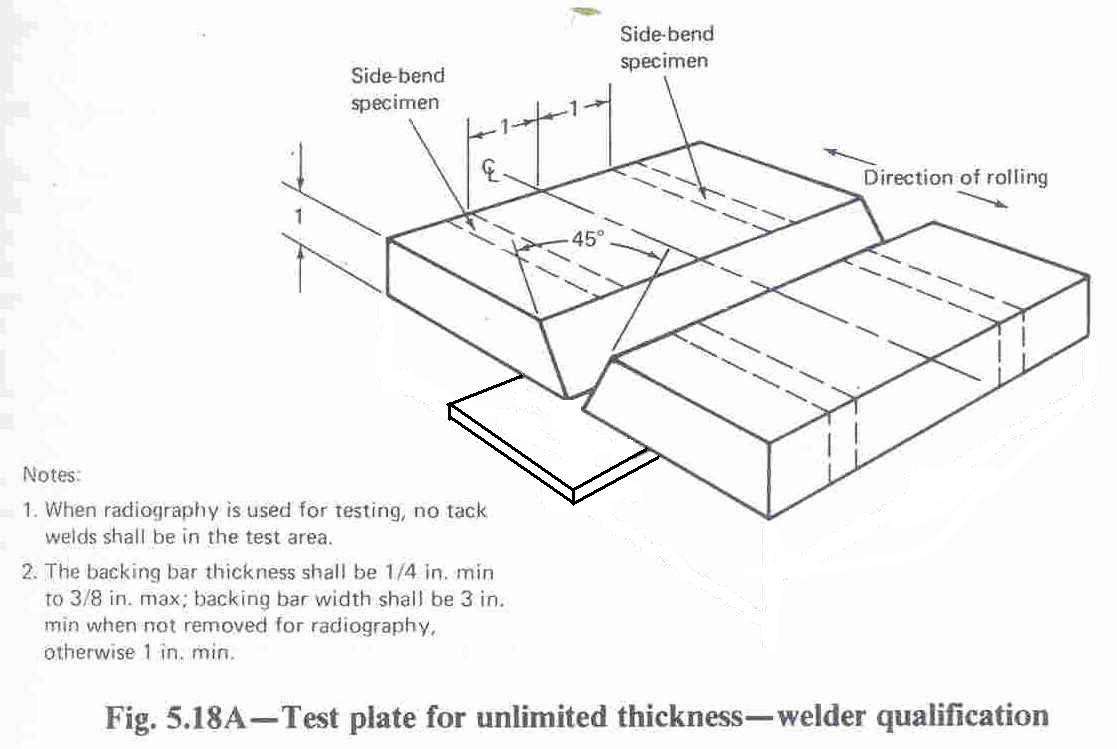
Here is a picture of an AWS unlimited test plate. See how the backing plate is longer on the one end? Normally the backing plate runs long like this, so you can start your weld on the backing plate, and end your weld on the backing plate. Start and stop tabs! :wink:
Billy I ran this weld this morning so you and other members here can see exactly what I'm talking about by ending the weld in the center. When I get ready to stop, I always try to remember to back up about 3/8 to 1/2-inch and let the puddle fill. As you can see in these side view pictures.


Here is a picture of an AWS unlimited test plate. See how the backing plate is longer on the one end? Normally the backing plate runs long like this, so you can start your weld on the backing plate, and end your weld on the backing plate. Start and stop tabs! :wink:

Thats a great photo, my welder has been sitting awhile, think the carb is gummed up, I need to try that out.
I was a construction manager on a 20" diameter pipe job, about 3500 feet, + branch lines, and the 2 welders from the mechanical outfit, union steam fitters in NYC, were certified to weld in the refineries, I always wondered what they did at the end of each pass when butt welding steel pipe, each would work from the top down and meet, all their work passed the magnetic resonance testing, not one weld on the entire length was suspect for any porosity or other problems.
I was a construction manager on a 20" diameter pipe job, about 3500 feet, + branch lines, and the 2 welders from the mechanical outfit, union steam fitters in NYC, were certified to weld in the refineries, I always wondered what they did at the end of each pass when butt welding steel pipe, each would work from the top down and meet, all their work passed the magnetic resonance testing, not one weld on the entire length was suspect for any porosity or other problems.
Billy I've welded a lot of pipe piles, and taken quite a few 6-G pipe welding tests. The pipe piles are generally so big it is like welding on a wall. All of the 6-G pipe tests I've taken were 6-inch. I just never had the opportunity to weld much pipe, it is a union thing here on the west coast! Being as you work in New York City you know all about how powerful the UA is!
In my opinion pipe weldors are the best of the best weldors, that is why I really push Lanse towards learning how to weld pipe.
Here is about as good as it gets with me. Anymore I just don't weld enough, and can't see all that well. Last summer I had cataract surgery in both eyes which was a big help, but being partially blind in one eye doesn't help to be a top weldor.

In my opinion pipe weldors are the best of the best weldors, that is why I really push Lanse towards learning how to weld pipe.
Here is about as good as it gets with me. Anymore I just don't weld enough, and can't see all that well. Last summer I had cataract surgery in both eyes which was a big help, but being partially blind in one eye doesn't help to be a top weldor.

Thats what these steamfitters weldments look like, and pipe fitters often times like these 2 fellows did, have to work in a wet trench, some fabricated sections up top, some in the trench, I have a lot of photos of that job, would have to scan them though.
I worked in the big city for 15 years or so, mostly union trades, some not, mostly building projects, also ran Ironworker crews for 3 years straight, some welding there, I started fooling with it then, when doing mock ups in test labs.
I appreciate what has been posted here on the subject, always something to learn about.
I worked in the big city for 15 years or so, mostly union trades, some not, mostly building projects, also ran Ironworker crews for 3 years straight, some welding there, I started fooling with it then, when doing mock ups in test labs.
I appreciate what has been posted here on the subject, always something to learn about.
WHen I left NYC, they had started rebuilding the FDR Drive on the east side, on the East River, and there was a ton of equipment, barges, temp piers, piles, they were moving the roadway out over the river or some darned thing, so they could rebuild the actual road, and after it was done, they were to take the scrap, which were structures and dump it in the ocean for a reef or something, same kind of large marine outfit like yours, and when you drove that FDR Drive, you got up close views of everything going on, wish I saw it finish, that was in '04 or so, those outfits sure can keep a guy busy, the operating engineers had been real busy since the early/mid 90's down there, with all the equipment being used.

There is a large engineering design company south of Seattle. I've worked on numerous projects they have designed. From aircraft carrier piers to bridges. I think it was the late 1990s they were hired to figure out how to increase the load value of a landing strip in one of the airports in NYC. Can't remember which airport there that the planes land on a dock. All because Boeing was coming out with a much larger airplane, and it would not be able to land on this air strip! Anyway I've worked on several container ship docks in Seattle and Tacoma where this same design firm had us cut holes through the concrete dock, and drive concrete piles through the holes, and pour new caps under the dock, all to increase the load value of the dock. Berger Abam contacted one of the owners of General Construction if see if he and I could fly to NYC and look at the air strip, and give our opinions. I didn't go, don't remember if the one owner went either. But I thought it was interesting that anyone would have airplanes land on a dock! :lol:
http://www.abam.com/
http://www.abam.com/
I'll bet it was LaGuardia Airport, same one Captain Chesley Sullenberger took off from before the geese and emergency water landing.
Its the only airport of the 3 major ones, the others being Kennedy and Newark, that would require that kind of work, its on the water, I've flown out of all 3, that one definitely has some areas that must float or are filled in
LaGuardia
Its the only airport of the 3 major ones, the others being Kennedy and Newark, that would require that kind of work, its on the water, I've flown out of all 3, that one definitely has some areas that must float or are filled in
LaGuardia

We sell tractor parts! We have the parts you need to repair your tractor - the right parts. Our low prices and years of research make us your best choice when you need parts. Shop Online Today.
Copyright © 1997-2025 Yesterday's Tractor Co.
All Rights Reserved. Reproduction of any part of this website, including design and content, without written permission is strictly prohibited. Trade Marks and Trade Names contained and used in this Website are those of others, and are used in this Website in a descriptive sense to refer to the products of others. Use of this Web site constitutes acceptance of our User Agreement and Privacy Policy TRADEMARK DISCLAIMER: Tradenames and Trademarks referred to within Yesterday's Tractor Co. products and within the Yesterday's Tractor Co. websites are the property of their respective trademark holders. None of these trademark holders are affiliated with Yesterday's Tractor Co., our products, or our website nor are we sponsored by them. John Deere and its logos are the registered trademarks of the John Deere Corporation. Agco, Agco Allis, White, Massey Ferguson and their logos are the registered trademarks of AGCO Corporation. Case, Case-IH, Farmall, International Harvester, New Holland and their logos are registered trademarks of CNH Global N.V.
Yesterday's Tractors - Antique Tractor Headquarters
Website Accessibility Policy