grandpa Love

Well-known Member
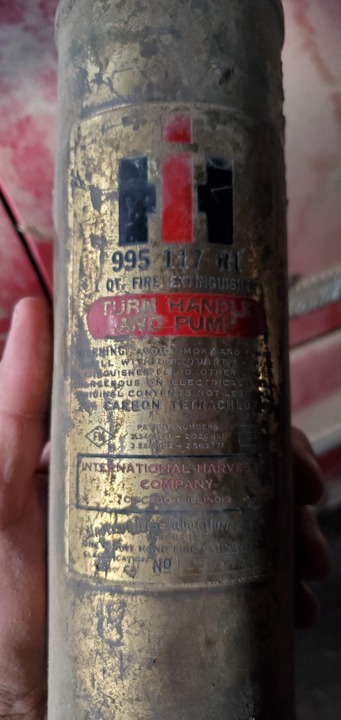
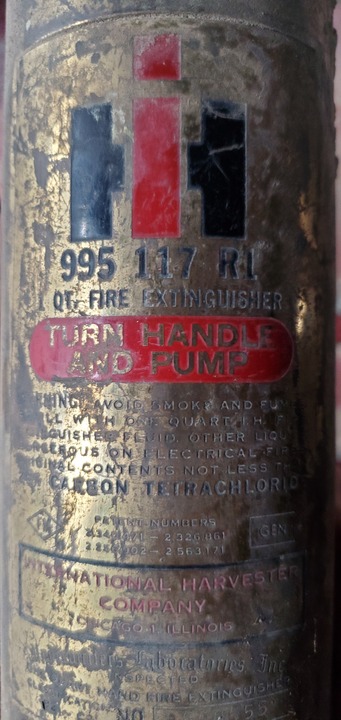
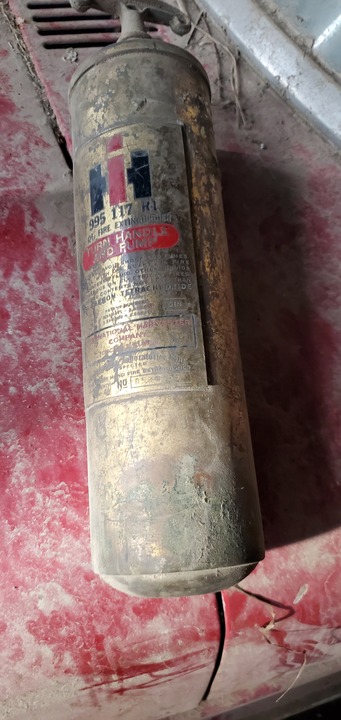
This is in with all those Allis parts .... No markings on it.... Ideas?
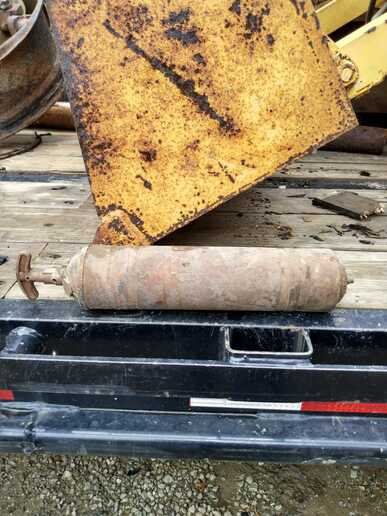
cvphoto122240.jpg
 
Looks like a 50's era fire extinguisher.

Found one just like that when we moved into our present home. It was filled with carbon tetrachloride.....got rid of it in a county hazardous material collection event.
 
Funny. I am going through the rear end on my International WD9, and the service manual says that if the bearings dont come clean in kerosene, clean then with carbon tetrachloride. I had to google what that was. Must have been good stuff cause it was outlawed in the 70s.
 
I remember finding a glass jar of carbon tet in the cabinet when I was a little kid.

No clue what it was, took the lid off and took a big sniff. Almost knocked me down!
 
Carbon Tet fire extinguisher.
Got a couple of them laying around, empty.
Carbon Tet can be nasty. As I recall, it
removes the oxygen from the air somehow.
At one time, Dad had some of those glass balls filled
with Carbon tet in plastic holders mounted on the walls in the house.
Theory was the plastic would melt, ball would break on the floor
and put out the fire.
Thankfully, we never tried them out.
 
If it is full do not use it or contact the contents. The tetra can create phosgene gas. That smells like fresh cut hay and did a number on soldiers of both sides in the First World War.
 
Carbon tetrachloride was used extensively in dry cleaning of garments back in the day. I also used it quite a bit in my later teenage years for cleaning grease and dirt out of ball bearings and roller bearings. I guess I've been exposed to a carcinogen but so far it hasn't dramatically effected me.

Tom in TN
 
Carbon tetrachloride is not too toxic (but not nice to smell when just liquid. But when exposed to combustion temperatures, it changes chemically into phosgene gas. a nerve gas used in war, and very quickly toxic. A fireman in our region used one of those to extinguish a wood stove fire in the floor of a kitchen. Because he was nown getting a better shot at the burning material, he was exposed to the heaver than air fumes. he went into a coma that lasted 6 months before the rest of his body quit working and he died. Chlorinated solvents (spray cans) can also provide that same end product. Jim
 
Chlorinated brake clean makes phosgene gas when heated. Don't use it if you plan on welding or using a torch on whatever you cleaned. Toilet bowl cleaner does too.
 
Good evening: when I was in high school, a friend's dad used carbon tet. in an open pan when he was cleaning some auto engine parts. He died from breathing the fumes.

Dennis M. in W. Tenn.
 
Remodeling in-law's farmhouse we found some glass spheres, about 4 inch diameter, with some brown liquid inside. We didn't know what they were then someone told me it was carbon tet, to be thrown into a wood stove to squelch the fire. I don't remember what was done with them.
 
I believe the manufacturer was "Pyrene". They were a common fire extinguisher in their day, and were sold under several brand names. They showed up in military aircraft and tanks as well. There is one in my shop, hanging above the big lathe. Also have several of the glass ball types. They had a spring loaded hammer held back by a bismuth alloy fusible link. Any heat above 250* would melt the link, the hammer would spring and break the glass globe, and (hopefully) put out the fire. Old technology, I like my CO2 extinguishers better. unc
 
Carbon tetrachloride is a liver and kidney toxin. It is one of the most potent liver toxins known. Prolonged exposure leads to death.
That is a carbon tet fire extinguisher. I used one when I was in my teens. Not good.
There was a movie perphaps a Charlie Chan where it was used to poison someone.
 
Yesterday's Tractor Forums

We sell tractor parts! We have the parts you need to repair your tractor - the right parts. Our low prices and years of research make us your best choice when you need parts. Shop Online Today.

Back
Top