


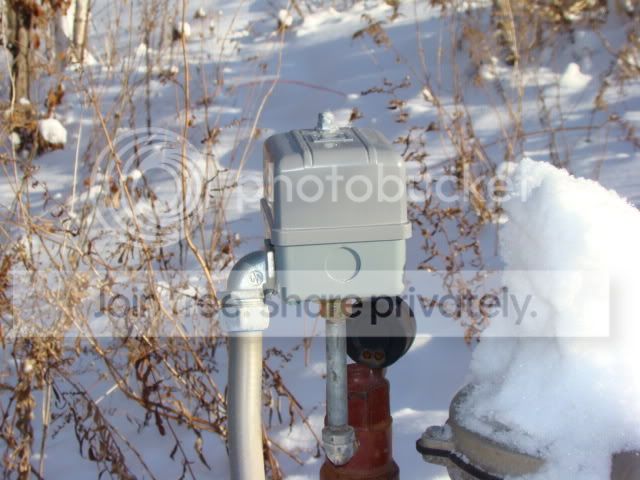
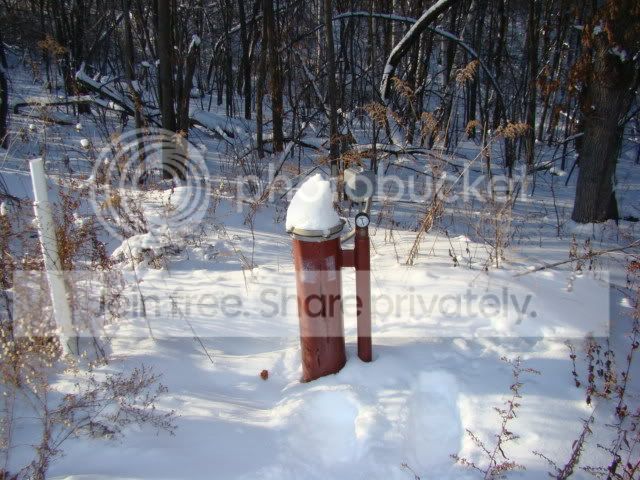
The water for my sons place is supplied from a common well that will serve about four houses. Since this is a newer building area, he is the only one now using it. He has a problem with the pressure switch linkage freezing up. He has heard that there are others in the area that are having the same problem. The switch sits up right out in the open and we are thinking that after being exposed to the sun during the daytime that it draws moist air under the plastic cover when it cools down at night. It is a Square D switch. The well guy came out and replaced the original switch because of this problem and then taped some fiberglass insulation around it. That didn't help as it is still freezing up and not turning the pump on. One time it froze in the on position and built up enough pressure to pop off the relief on his hot water heater. Does anybody have any ideas on how to correct this? A couple of thoughts that we have are to try and seal up the cover so that moist air would not flow under the cover as easily. There is a lot of wind and blowing snow. Another thought would be to have some deicer or something on the linkage. He doesn't really want to have a light bulb going all of the time and it probably is 230 volts at the switch.
You are using an out of date browser. It may not display this or other websites correctly.
You should upgrade or use an alternative browser.
You should upgrade or use an alternative browser.
Having something in the well house to keep the temp up some is about the only way to solve this problem. Bad as I know you/he hates to hear it, a heat tape around the switch, a light, or some other type of heating element are about your only real options. You can get heating elements from places like Grainger, McMaster-Carr, MSC, etc that are designed to run on 220 volt. As for a light, and you didn't hear it from me and I'm not suggesting for anyone to do anything that's not up to code, but there is 120V between one hot leg and ground........mine's been wired like that for 18 years, dad's for nearly 40 years, and several others I know of for alot longer than that (sometimes you've just got to do what you've got to do) all with no problems to speak of (Personally mine has a ground rod driven into the ground right outside the well house so it's not relying on grounding all the way back to the breaker box even though it is tied in there also) You just might get lucky and find that there is a true neutral in the box also if the system is a newer one ...Good luck...
Stewartinpa
Member
A good freind of mine had that problem he built an insulated dog house around it and a 220volt light bulb the only time he has trouble now is when the light burns out
Anonymous-0
Well-known Member
If the pump is running on 230 V two 120v light bulbs in series would last a long time.I can imagine anyone running a pump switch where it snows with out heat.A short heat tape would work fine on 120v,My barn water pipe has heat tape on the pipe where it comes up in the barn cellar.A thermostat turns on the tape at 40 degrees.I put 2 heat tapes on the pipe,one is a spare if the other stops working.
Two 120v bulbs is series would work, but I think they would burn out in about as quick as the would in normal use. I think I would use three bulbs in series. They would not put out as much light/heat but they would not burn out for a long time.
Or maybe some water dispersement like, WD-40, sprayed on the switch might keep moisture from collecting on the switch.
Dusty
Or maybe some water dispersement like, WD-40, sprayed on the switch might keep moisture from collecting on the switch.
Dusty
rotten robert
Member
How cold does it get there? Here in SE Arizona I had to build a cover around mine and stuffed it full of insulation after wrapping an old coat around the pressure switch. I had to wrap the pipes going out as well but the pressure tank still sits in the open. The freezing problem is usaull in the small pipe where the switch screws into the main line.
Anonymous-0
Well-known Member
The "linkage" as you describe that is freezing up, is actually the water in the unit's diaphram area, and pipe stem that are frozen. Which in turn freezes up motion of the switching mechanism.
Myself, on mine, I just took a couple of those bubble lined shipping envelopes, (or any suitable small insulating blanket) and slipped them over each other and around the pipe nipple area to keep the unit above freezing.
As soon as any water comes up from the well through the device it warms it well above freezing, and a little isulation will keep it that way.
Myself, on mine, I just took a couple of those bubble lined shipping envelopes, (or any suitable small insulating blanket) and slipped them over each other and around the pipe nipple area to keep the unit above freezing.
As soon as any water comes up from the well through the device it warms it well above freezing, and a little isulation will keep it that way.
Ive not had city water but well systems for almost 40 years and I agree its water in the lil diaphram area thats freezing n causing it to stick versus the mechanical linkages. Id use a thermostatically controlled heat tape and insulation and/or heat lamps etc. if it were mine.
John T
John T
Here is a little more information on the switch. In this subdivision there are probably ten wells like this that each supply four to five homes. My sons is over 200' from his house. He has lived there for five winters and this morning it was 20 degrees below zero and it didn't freeze up. He said that he has trouble maybe 3 to four times a year and it is usually in the morning when it is shower time. He said that the entire inside area under the plastic cover is frosty including under the cover itself. That is why he thought the linkage was freezing. Thanks for the information on that maybe it is the diaphragm freezing up. Each well has its own pedestal with an electrical panel. There presently two double pole breakers in there and there would be room to install another breaker. Presently he pays $20 into a well trust and they use that money to pay for repairs. The electrical panel has a monthly service charge of $9 and he uses about $3 worth of electricity monthly.
Hi Crem,
I agree with Toomy & John, it's the bellows that's freezing on the switch that's rated for INDOOR use.
Can you build a temporary insulated dog house cover to get you by thru the winter then build a normal pump house building when spring shows up?
Then with a light bulb or heat tape, he's set.
T_Bone
I agree with Toomy & John, it's the bellows that's freezing on the switch that's rated for INDOOR use.
Can you build a temporary insulated dog house cover to get you by thru the winter then build a normal pump house building when spring shows up?
Then with a light bulb or heat tape, he's set.
T_Bone
buickanddeere
Well-known Member
Couple of problems there.
#1 if the low flow section of the pressure switch is freezing on a regular basis. The main pipework is in danger too.
#2 It's the wrong type of pressure control for a submersible well pump.
A single phase well pump with a pressure switch, while it works. Has it's drawbacks, in particular for you son's application.
Get rid of the mechanical pressure switch and mechanical contactor. If already stuck with the troublesome single phase well pump with it's start windings and low electrical efficiency. Get a variable speed pump drive from MonoDrive. It will eliminate most of the start, stop, stop, start, stop which dims lights, wears pumps/pipework and causes check valve water hammer.
It also soft starts which reduces light dimming and pump torque windup. It even senses if the well goes dry to prevent pump burnup.
Today I wouldn't consider anything else but a simple, reliable, efficient, compact three phase well pump without start windings and controls. The drive box takes single phase power. And sends variable speed three phase down the wires to the pump.
#1 if the low flow section of the pressure switch is freezing on a regular basis. The main pipework is in danger too.
#2 It's the wrong type of pressure control for a submersible well pump.
A single phase well pump with a pressure switch, while it works. Has it's drawbacks, in particular for you son's application.
Get rid of the mechanical pressure switch and mechanical contactor. If already stuck with the troublesome single phase well pump with it's start windings and low electrical efficiency. Get a variable speed pump drive from MonoDrive. It will eliminate most of the start, stop, stop, start, stop which dims lights, wears pumps/pipework and causes check valve water hammer.
It also soft starts which reduces light dimming and pump torque windup. It even senses if the well goes dry to prevent pump burnup.
Today I wouldn't consider anything else but a simple, reliable, efficient, compact three phase well pump without start windings and controls. The drive box takes single phase power. And sends variable speed three phase down the wires to the pump.
Anonymous-0
Well-known Member
wrap a big towel around the switch and stem. i had to do that to one i had exposed. works good for me
Soft-start well pumps are nice to have, especially in setups where high start-up current is not available. That's why many off-grid solar users have them. They can also be hooked to small portable generators which is a plus.
That being said, I don't beleive there's a reliability issue with conventoinal, high-draw-at-start pumps when installed right.
The house I'm in now had it's first deep-well pump installed in 1959. I changed it 10 years ago and at that time, it was still working fine. Just made me nervous, so I replaced it. Almost 40 years of use.
I have a house across town where I drilled a well and installed a 1/2 horse pump in 1979 at 200 feet. Still working fine, been lived in full time since the installation. That's 30 years.
Had to fix the pressure switch a few times, that's all. And, the switch never wore out - just the stem got plugged with minerals from the hard water.
Also, from what I've read, there is little overall difference in electric use. One starts fast with high amps, and one starts slow with low amps. Total sum of use doesn't differ much from the specs I've seen.
That being said, I don't beleive there's a reliability issue with conventoinal, high-draw-at-start pumps when installed right.
The house I'm in now had it's first deep-well pump installed in 1959. I changed it 10 years ago and at that time, it was still working fine. Just made me nervous, so I replaced it. Almost 40 years of use.
I have a house across town where I drilled a well and installed a 1/2 horse pump in 1979 at 200 feet. Still working fine, been lived in full time since the installation. That's 30 years.
Had to fix the pressure switch a few times, that's all. And, the switch never wore out - just the stem got plugged with minerals from the hard water.
Also, from what I've read, there is little overall difference in electric use. One starts fast with high amps, and one starts slow with low amps. Total sum of use doesn't differ much from the specs I've seen.
buickanddeere
Well-known Member
I was thinking of the three phase motor being more electrical efficient that a single phase.
Having four homes on the well will use a significant amount of power which will add up.
I'm nervous about my well pump. The former owners were a lot of things. Including the type of people who would let the pressure tank get water logged and stay that way.
As long as water came from the tap they didn't care. The pump would kick on and off twice while drawing a single 8 ounce glass of water when we got here.
Having four homes on the well will use a significant amount of power which will add up.
I'm nervous about my well pump. The former owners were a lot of things. Including the type of people who would let the pressure tank get water logged and stay that way.
As long as water came from the tap they didn't care. The pump would kick on and off twice while drawing a single 8 ounce glass of water when we got here.
Being nervous was the reason I pulled up my 1959 pump - in the summertime - while wearing my T-shirt. Otherwise, I figured it would crap out during the coldeset day of the year.
I've had to fix other people's wells in zero-degree - or colder weather and it is a miserable job. And, what I regarded as a challenge when I was young - I now regard as a royal-pain-in-the-a**.
I'll add the original 1959 setup here was totally buried - with no pitless adapter and no pipe sticking above ground. We had a lot of trouble as it was finding the well in the summer, digging it up, extending the well casing above ground, and cutting a hole for the pitless adapter.
I've had to fix other people's wells in zero-degree - or colder weather and it is a miserable job. And, what I regarded as a challenge when I was young - I now regard as a royal-pain-in-the-a**.
I'll add the original 1959 setup here was totally buried - with no pitless adapter and no pipe sticking above ground. We had a lot of trouble as it was finding the well in the summer, digging it up, extending the well casing above ground, and cutting a hole for the pitless adapter.
Anonymous-0
Well-known Member
No help here from me, but only a story.
My son worked for Water tower paint and repair in Clear Lake Ia. One cold day three guys went from my home town to Clear Lake, then to St. Paul / Miniapolis area for a froze up tower. Total of I think five guys made the trip, I would guess two hrs to Clear Lake and at least three more to the twin cities. In less than five munites the foreman reached over and smacked the guage, and then started towards back home. My son got paid about $400.00 for his small part. His co workers probably the same. He also guessed the boss at his Company made a few cents profit somewhere along the way.
My son worked for Water tower paint and repair in Clear Lake Ia. One cold day three guys went from my home town to Clear Lake, then to St. Paul / Miniapolis area for a froze up tower. Total of I think five guys made the trip, I would guess two hrs to Clear Lake and at least three more to the twin cities. In less than five munites the foreman reached over and smacked the guage, and then started towards back home. My son got paid about $400.00 for his small part. His co workers probably the same. He also guessed the boss at his Company made a few cents profit somewhere along the way.
Its simply freeing up. What you expect its water and its cold out. It need covered up and insulated. All my well pits are that way you automatically covere all well pits with straw etc and hang heat lamp over the pressure switch. doneit for years that way for all the livestock. The one to my house that well system is all located in basement of my house so that solves the freeze up of the pressure switch,uyou still have to keep the exposed well casing cover thou.
Hi RickL, Yes it is freezing but why does it only happen once in awhile? It has not froze now during these coldest below zero days and nights. There are quite a few of these well stations set up around here in the subdivisions and they pressure switch sits right out in the open. Some people mentioned that it probably has an indoor pressure switch. Are there outdoor switches made that might prevent this. The randomness of this had lead us to believe that it was caused by moisture in the air being drawn under the switch cover and freezing the external linkage. There is frost in there at times. Most people said that it was caused by the diaphragm being frozen on the water side. I have not seen how long the pipe is that goes up from the ground to the switch. My son is going to take a picture of it and maybe I can post it here. One question that I have is if there is some air in that pipe above the water? Say for example that the pipe for the switch sticks up two feet above ground, it surely cannot be full of water or it would be frozen solid every time it got below 30 degrees and here in WI it can be exposed to temperatures below -20 F.
Hi Crem,
I the PS was installed correctly, the PS will be located higher than the pressure pipe tap. This allows for "air" to enter the sensor tube to operate the bellows, not water. Water pressure pushes on the air that causes the switching.
Air always seeks the highest point in a closed hydronic system.
T_Bone
I the PS was installed correctly, the PS will be located higher than the pressure pipe tap. This allows for "air" to enter the sensor tube to operate the bellows, not water. Water pressure pushes on the air that causes the switching.
Air always seeks the highest point in a closed hydronic system.
T_Bone
T_Bone, you are right about the pipe below the pressure switch should only contain air. I talked to a well guy and he said that if everything is installed right the switch should not freeze. He said that the street elbow should be installed at the bottom end and not right next to the switch and another problem is if there is an air leak. The water tank below ground should be about 2/3 full of water and the rest should be air all the way up to the switch. Now if there is an air leak then the tank will not have the proper air cushion and the water level also gets closer to the switch. I suppose even if it leaked a little air right next to the switch it could bring a little moisture along with it and freeze the switch diaphragm, so that is something to check for. The air is replenished every time the pump runs so maybe if it did have an air leak there would not be a problem unless the water was not run for awhile. Anyway it is something to look for. I like to post a problem like this as hopefully I and others can learn something.


Similar threads

- Replies
- 25
- Views
- 193K

We sell tractor parts! We have the parts you need to repair your tractor - the right parts. Our low prices and years of research make us your best choice when you need parts. Shop Online Today.
Copyright © 1997-2025 Yesterday's Tractor Co.
All Rights Reserved. Reproduction of any part of this website, including design and content, without written permission is strictly prohibited. Trade Marks and Trade Names contained and used in this Website are those of others, and are used in this Website in a descriptive sense to refer to the products of others. Use of this Web site constitutes acceptance of our User Agreement and Privacy Policy TRADEMARK DISCLAIMER: Tradenames and Trademarks referred to within Yesterday's Tractor Co. products and within the Yesterday's Tractor Co. websites are the property of their respective trademark holders. None of these trademark holders are affiliated with Yesterday's Tractor Co., our products, or our website nor are we sponsored by them. John Deere and its logos are the registered trademarks of the John Deere Corporation. Agco, Agco Allis, White, Massey Ferguson and their logos are the registered trademarks of AGCO Corporation. Case, Case-IH, Farmall, International Harvester, New Holland and their logos are registered trademarks of CNH Global N.V.
Yesterday's Tractors - Antique Tractor Headquarters
Website Accessibility Policy